Virginian Tiger Moth

Virginian Tiger Moth

Spilosoma virginica

Daily sighting probability <5% · Rare
at New York City

In 3 days ~10% in a week ~20%

59 Verified sightings at New York City
315 In all 15 parks From 2019 to 2026
July Best month
☀️ Diurnal When it's spotted

About the Virginian Tiger Moth

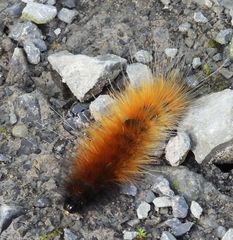
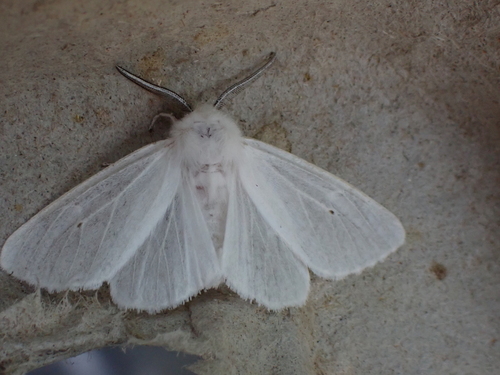
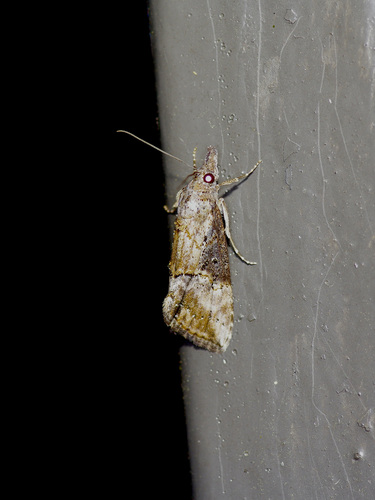
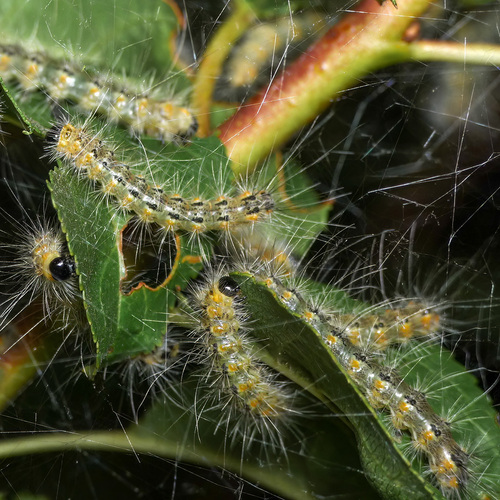
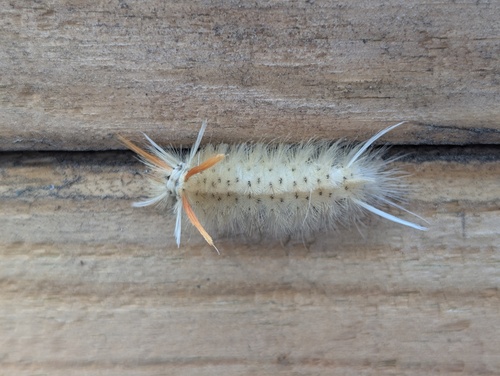
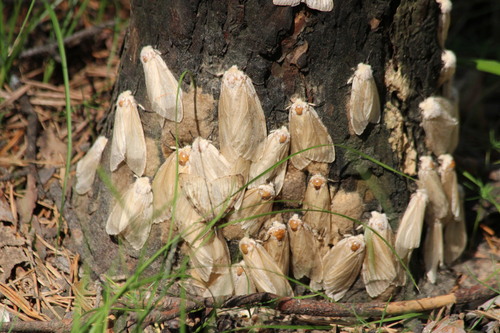
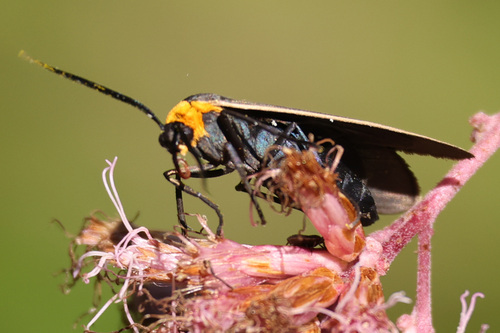
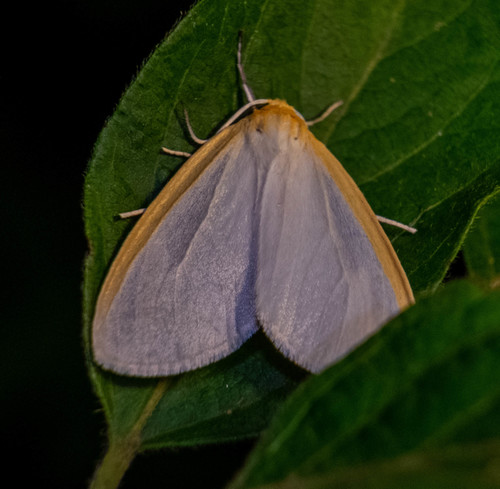
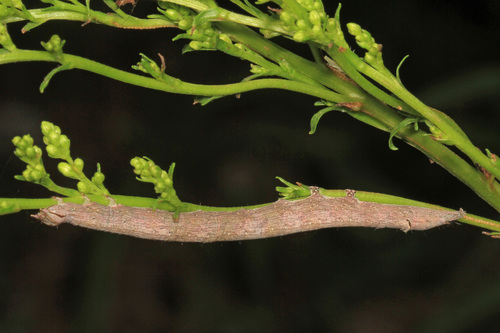
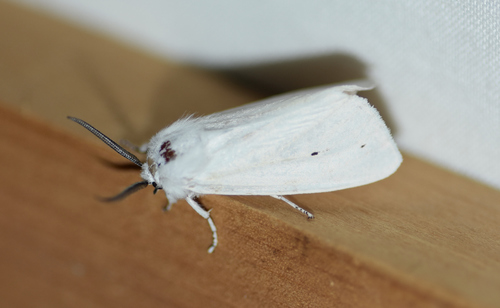
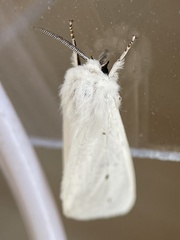
Spilosoma virginica is a species of moth in the subfamily Arctiinae occurring in the United States and southern Canada. As a caterpillar, it is known as the yellow woolly bear or yellow bear caterpillar. As an adult, it is known as the Virginian tiger moth.

It is present throughout Northern America, but is more common in the Western half. The caterpillar is described as one of the most common on plantings about yards and gardens. The caterpillar varies in color but is typically consistent in its coloration in a single specimen, without odd tufts of different-colored hair or separately colored heads.

It has a diet of a wide range of low-growing plants, including ground cover like grass and clover. The larvae are defoliators, skeletonizing the leaves they feed on, but only the late summer batch of caterpillars is plentiful enough to do much damage to crops. This species tends to have two to three life cycles per year, with one hibernating for the winter in temperate climates.

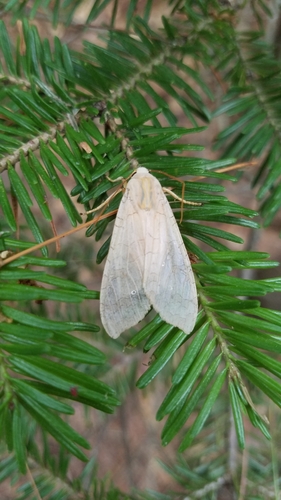
The adult moth tends to tent its wings over its back, rather than sitting with them spread. It is... Wikipedia →
Global Distribution

Parks Where Found

# Park Country Daily sighting probability
1 Isle Royale National Park 🇺🇸 United States
~20%
2 Cape Breton Highlands National Park 🇨🇦 Canada
~20%
3 Elk Island National Park 🇨🇦 Canada
~20%
4 Gros Morne National Park 🇨🇦 Canada
~10%
5 Glacier National Park 🇺🇸 United States
~10%
6 Pacific Rim National Park Reserve 🇨🇦 Canada
~10%
7 Point Pelee National Park 🇨🇦 Canada
~10%
8 Acadia National Park 🇺🇸 United States
~10%
9 Shenandoah National Park 🇺🇸 United States
~10%
10 Great Bear Rainforest 🇨🇦 Canada
~10%
11 Great Smoky Mountains National Park 🇺🇸 United States
~10%
12 Olympic National Park 🇺🇸 United States
~10%
13 Riding Mountain National Park 🇨🇦 Canada
~10%
14 Redwood National Park 🇺🇸 United States
~10%
15 Everglades National Park 🇺🇸 United States
<5%

Cities Where Found

# City Country Daily sighting probability
1 Vancouver 🇨🇦 Canada
~10%
2 Detroit 🇺🇸 United States
~10%
3 Boston 🇺🇸 United States
~10%
4 Montreal 🇨🇦 Canada
~10%
5 Toronto 🇨🇦 Canada
~10%
6 Houston 🇺🇸 United States
~10%
7 Washington 🇺🇸 United States
~10%
8 Minneapolis [Saint Paul] 🇺🇸 United States
~10%
9 Chicago 🇺🇸 United States
~10%
10 Austin 🇺🇸 United States
~10%

Before you go

What are the chances of seeing a Virginian Tiger Moth in New York City?

Rare

Under 5% of wildlife watchers report a Virginian Tiger Moth sighting in New York City on a given day, based on 59 verified sightings from GBIF citizen-science data. It is the 327th most-seen of the 1623 insects we can rate there. Over three days the chance rises to about 10%, and over a week to about 20%, if each day is a fresh chance.

When is the best time to see a Virginian Tiger Moth in New York City?

Any time of year

In every month with enough records, under 5% of wildlife watchers report a Virginian Tiger Moth in New York City on a given day, so our monthly data shows no clear season.

What time of day is best to see a Virginian Tiger Moth?

Between noon and 3 pm

Across all the parks we cover, that three-hour window holds the most Virginian Tiger Moth sightings with a recorded time, and about 9 in 10 of them come between 6 am and 6 pm: it is a daytime animal.

Is New York City the best place to see a Virginian Tiger Moth?

18th of 20

Of the 20 cities where we can rate Virginian Tiger Moth sightings, New York City ranks 18th at under 5%. The best odds are in Vancouver (Canada, about 10%), Detroit (United States, about 10%) and Boston (United States, about 10%).

Where does the Virginian Tiger Moth sighting chance come from?

GBIF citizen-science records

It is estimated from how often the Virginian Tiger Moth is recorded against all the insects logged in New York City (59 verified sightings), calibrated against known sighting rates. Figures are rounded to the nearest 10% because citizen-science data supports honest approximations, not decimals, and months with records from fewer than five people show "—". How it works.

← Back to New York City