Varied Carpet Beetle

Varied Carpet Beetle

Anthrenus verbasci

Daily sighting probability ~10% · With luck
at Osaka

In 3 days ~20% in a week ~40%

18 Verified sightings at Osaka
73 In all 9 parks From 2019 to 2026
May Best month
☀️ Diurnal When it's spotted

About the Varied Carpet Beetle

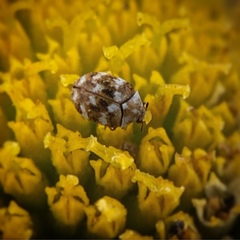
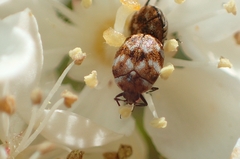
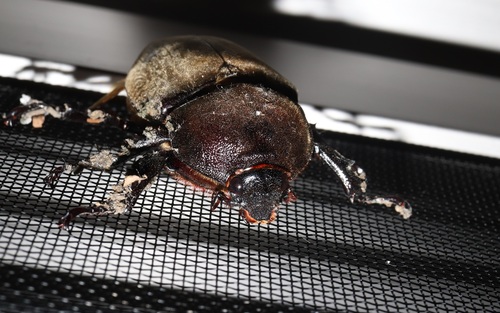
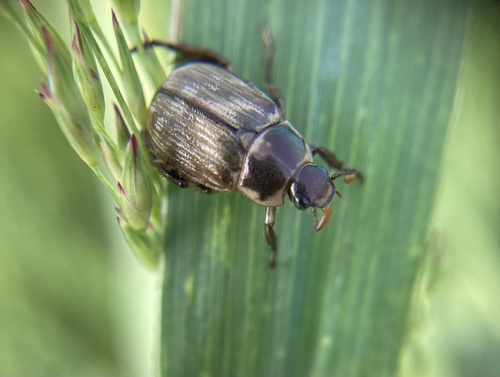
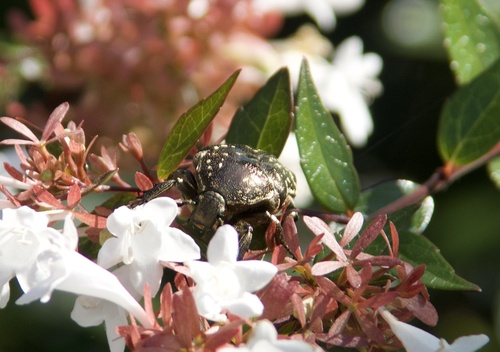
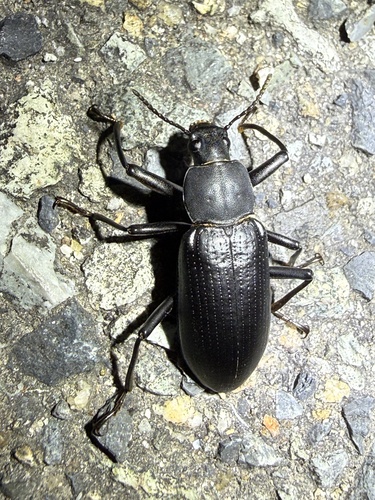
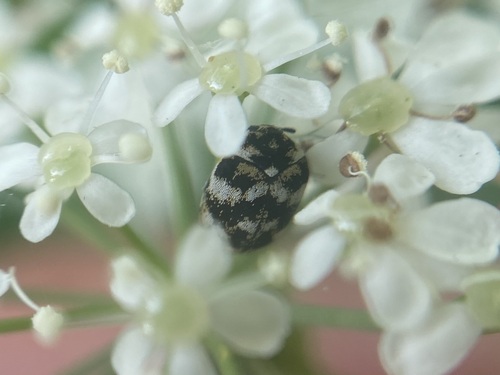
The varied carpet beetle (Anthrenus verbasci) is a 3 mm-long beetle belonging to the family Dermestidae, positioned in subgenus Nathrenus. They are a common species, often considered a pest of domestic houses and, particularly, natural history museums, where the larvae may damage natural fibers and can damage carpets, furniture, clothing, and insect collections. A. verbasci was also the first insect to be shown to have an annual behavioral rhythm and remains a classic example of circannual cycles in animals.

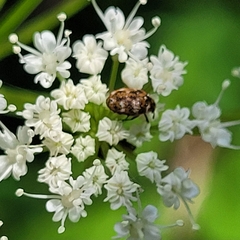
Adult A. verbasci range in length from 1.7 to 3.5 mm (0.07 to 0.14 in). The body is rounded, almost spherical. The elytra and pronotum are covered in fine scales of different colours, creating an irregular pattern of white, brownish and yellowish patches on these features. The white scales are focussed along the lateral margins of the pronotum and on the elytra, where they form three bright, wavy transverse bands. In addition to these morphological features, their antennae are 11-segmented, with a club of 3 segments.

This species is present in most of Europe, in the eastern Palearctic realm, in the Near East, in the Nearctic realm... Wikipedia →
Global Distribution

Parks Where Found

# Park Country Daily sighting probability
1 Monfragüe National Park 🇪🇸 Spain
~10%
2 Bavarian Forest National Park 🇩🇪 Germany
~10%
3 Cévennes National Park 🇫🇷 France
~10%
4 Shenandoah National Park 🇺🇸 United States
~10%
5 Blue Mountains National Park 🇦🇺 Australia
<5%
6 Great Smoky Mountains National Park 🇺🇸 United States
<5%
7 Wadden Sea National Park 🇩🇪 Germany
<5%
8 Pyrénées National Park 🇫🇷 France
<5%
9 Table Mountain National Park 🇿🇦 South Africa
<5%

Cities Where Found

# City Country Daily sighting probability
1 Jerusalem 🇮🇱 Israel
~20%
2 Mendoza 🇦🇷 Argentina
~10%
3 Lyon 🇫🇷 France
~10%
4 Berlin 🇩🇪 Germany
~10%
5 Essen 🇩🇪 Germany
~10%
6 Hamburg 🇩🇪 Germany
~10%
7 London 🇬🇧 United Kingdom
~10%
8 Paris 🇫🇷 France
~10%
9 Algiers 🇩🇿 Algeria
~10%
10 Birmingham 🇬🇧 United Kingdom
~10%

Before you go

What are the chances of seeing a Varied Carpet Beetle in Osaka?

With luck

About 10% of wildlife watchers report a Varied Carpet Beetle sighting in Osaka on a given day, based on 18 verified sightings from GBIF citizen-science data. It is the 134th most-seen of the 352 insects we can rate there. Over three days the chance rises to about 20%, and over a week to about 40%, if each day is a fresh chance.

When is the best time to see a Varied Carpet Beetle in Osaka?

May

In that month about 20% of wildlife watchers report a Varied Carpet Beetle in Osaka on a given day, against under 5% in June to February, the lowest months.

What time of day is best to see a Varied Carpet Beetle?

Between noon and 3 pm

Across all the parks we cover, that three-hour window holds the most Varied Carpet Beetle sightings with a recorded time, and about 9 in 10 of them come between 6 am and 6 pm: it is a daytime animal.

Is Osaka the best place to see a Varied Carpet Beetle?

42nd of 74

Of the 74 cities where we can rate Varied Carpet Beetle sightings, Osaka ranks 42nd at about 10%. The best odds are in Jerusalem (Israel, about 20%), Mendoza (Argentina, about 10%) and Lyon (France, about 10%).

Which relatives of the Varied Carpet Beetle live in Osaka?

Same order: Coleoptera

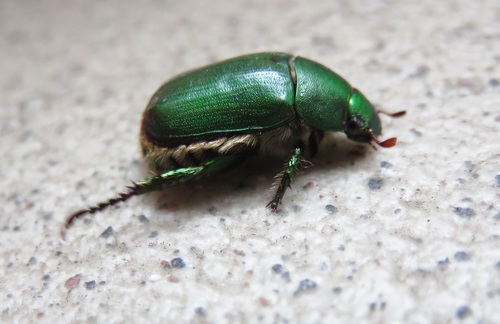
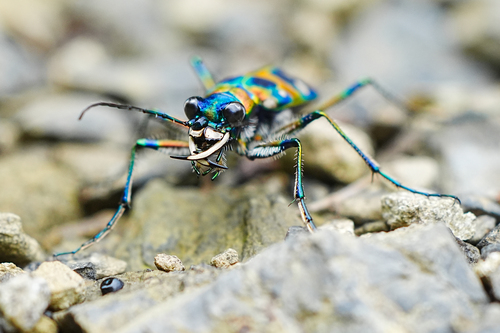
The closest relatives of the Varied Carpet Beetle that you can see in Osaka (order Coleoptera, Beetles) are Green Chafer (about 20%), Asian Lady Beetle (about 20%) and Japanese Tiger Beetle (about 10%), with each one's daily chance of a sighting.

Where does the Varied Carpet Beetle sighting chance come from?

GBIF citizen-science records

It is estimated from how often the Varied Carpet Beetle is recorded against all the insects logged in Osaka (18 verified sightings), calibrated against known sighting rates. Figures are rounded to the nearest 10% because citizen-science data supports honest approximations, not decimals, and months with records from fewer than five people show "—". How it works.

← Back to Osaka