European Comma

European Comma

Polygonia c-album

Daily sighting probability ~20% · Possible
at Paris

In 3 days ~40% in a week ~70%

249 Verified sightings at Paris
917 In all 22 parks From 2019 to 2026
March Best month
☀️ Diurnal When it's spotted

About the European Comma

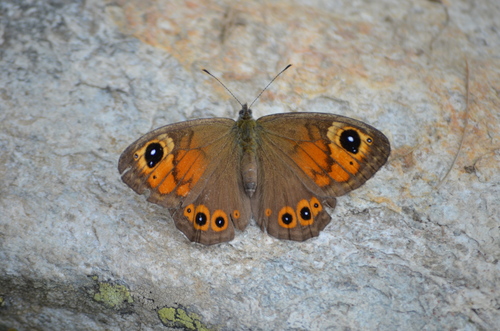
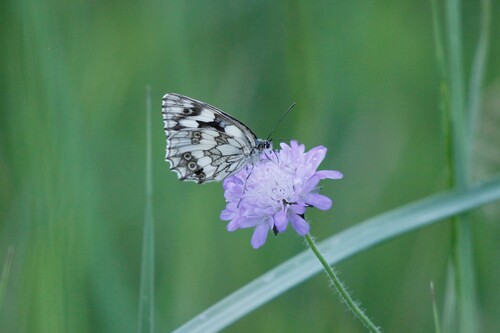
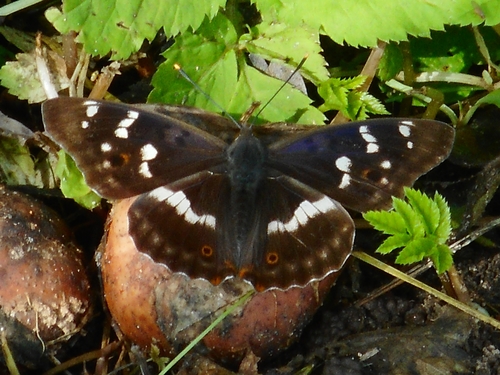
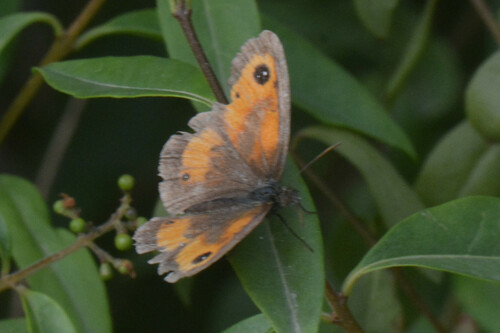
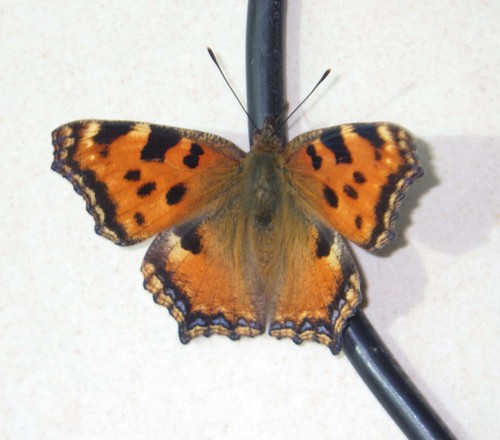
Polygonia c-album, or the comma, is a food generalist (polyphagous) butterfly species belonging to the family Nymphalidae. The angular notches on the edges of the forewings are characteristic of the genus Polygonia, which is why species in the genus are commonly referred to as anglewing butterflies. Comma butterflies can be identified by their prominent orange and dark brown/black dorsal wings.

Both the larval and adult stages exhibit protective camouflage, mimicking bird droppings and fallen leaves respectively, which reduces predation. The pupae are also cryptic, resembling shriveled leaves. During the later stage of development, the larvae also develop strong spines along their backs. The species is commonly found in Europe, North Africa, and Asia, and contains several subspecies. Although the species is not migratory, the butterflies are strong fliers, resulting in an open population structure with high gene flow and increased genetic variation.

The outer margins of the wings are strongly and irregularly dentate, excavated and angulated. The upper side of the wings has a bright orange color, decorated with brown marks and light spots on the edge. The reverse is... Wikipedia →


Global Distribution

Parks Where Found

# Park Country Daily sighting probability
1 Aigüestortes National Park 🇪🇸 Spain
~40%
2 Białowieża National Park 🇵🇱 Poland
~30%
3 Mercantour National Park 🇫🇷 France
~30%
4 Gauja National Park 🇱🇻 Latvia
~30%
5 Triglav National Park 🇸🇮 Slovenia
~30%
6 Bavarian Forest National Park 🇩🇪 Germany
~20%
7 Ordesa y Monte Perdido National Park 🇪🇸 Spain
~20%
8 Biebrza National Park 🇵🇱 Poland
~20%
9 Tatra National Park 🇸🇰 Slovakia
~20%
10 Pyrénées National Park 🇫🇷 France
~20%
11 Snowdonia National Park 🇬🇧 United Kingdom
~20%
12 Picos de Europa National Park 🇪🇸 Spain
~20%
13 Fertő-Hanság National Park 🇭🇺 Hungary
~20%
14 Hohe Tauern National Park 🇦🇹 Austria
~20%
15 Sierra Nevada National Park 🇪🇸 Spain
~20%
16 Taroko National Park 🇹🇼 Taiwan
~20%
17 Vanoise National Park 🇫🇷 France
~10%
18 Cairngorms National Park 🇬🇧 United Kingdom
~10%
19 Sierra de Guadarrama National Park 🇪🇸 Spain
~10%
20 Ecrins National Park 🇫🇷 France
~10%
21 Cévennes National Park 🇫🇷 France
~10%
22 Wadden Sea National Park 🇩🇪 Germany
~10%

Cities Where Found

# City Country Daily sighting probability
1 Liverpool 🇬🇧 United Kingdom
~40%
2 Manchester 🇬🇧 United Kingdom
~30%
3 Birmingham 🇬🇧 United Kingdom
~30%
4 London 🇬🇧 United Kingdom
~30%
5 Leeds 🇬🇧 United Kingdom
~30%
6 Milan 🇮🇹 Italy
~20%
7 Copenhagen 🇩🇰 Denmark
~20%
8 Amsterdam 🇳🇱 Netherlands
~20%
9 Berlin 🇩🇪 Germany
~20%
10 Rotterdam [The Hague] 🇳🇱 Netherlands
~20%

Before you go

What are the chances of seeing a European Comma in Paris?

Possible

About 20% of wildlife watchers report a European Comma sighting in Paris on a given day, based on 249 verified sightings from GBIF citizen-science data. It is the 26th most-seen of the 916 insects we can rate there. Over three days the chance rises to about 40%, and over a week to about 70%, if each day is a fresh chance.

When is the best time to see a European Comma in Paris?

March–April and June–August

In those months about 20% of wildlife watchers report a European Comma in Paris on a given day, against under 5% in November and December, the lowest months.

What time of day is best to see a European Comma?

Between 11 am and 2 pm

Across all the parks we cover, that three-hour window holds the most European Comma sightings with a recorded time, and about 9 in 10 of them come between 6 am and 6 pm: it is a daytime animal.

Is Paris the best place to see a European Comma?

11th of 43

Of the 43 cities where we can rate European Comma sightings, Paris ranks 11th at about 20%. The best odds are in Liverpool (United Kingdom, about 40%), Manchester (United Kingdom, about 30%) and Birmingham (United Kingdom, about 30%).

Which relatives of the European Comma live in Paris?

Same family: Nymphalidae

The closest relatives of the European Comma that you can see in Paris (family Nymphalidae, Brush-footed Butterflies) are Red Admiral (about 30%), Speckled Wood (about 30%) and Large Wall Brown (about 20%), with each one's daily chance of a sighting.

Where does the European Comma sighting chance come from?

GBIF citizen-science records

It is estimated from how often the European Comma is recorded against all the insects logged in Paris (249 verified sightings), calibrated against known sighting rates. Figures are rounded to the nearest 10% because citizen-science data supports honest approximations, not decimals, and months with records from fewer than five people show "—". How it works.

← Back to Paris