



Completed

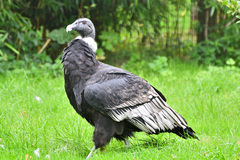


Andean Condor
Vultur gryphus
Silhouette: Mark P. Witton & Darren Naish · PhyloPic
- KingdomAnimalia (Animals)
- PhylumChordata (Chordates)
- ClassAves (Birds)
- OrderAccipitriformes (Hawks, Eagles, Kites, and Allies)
- FamilyCathartidae (New World Vultures)
- GenusVultur (South American Condors)
- SpeciesVultur gryphus (Andean Condor)
In 3 days <5%
10 Verified sightings at Quito
2,741 In all 8 parks From 2019 to 2026
January Best month
☀️ Diurnal When it's spotted


Completed
About the Andean Condor
The Andean condor (Vultur gryphus) is a South American New World vulture and is the only extant member of the genus Vultur. It is found in the Andes mountains and adjacent Pacific coasts of western South America. With a maximum wingspan of 3.3 m (10 ft 10 in) and weight of 15 kg (33 lb), the Andean condor is one of the largest flying birds in the world, and is generally considered to be the largest bird of prey in the world.
One of two species commonly referred to as condors, it is a large black vulture with a ruff of white feathers surrounding the base of the neck and, especially in the male, large white patches on the wings. The head and neck are nearly featherless, and are a dull red color, which may flush and therefore change color in response to the bird's emotional state. In the male, there is a wattle on the neck and a large, dark red comb or caruncle on the crown of the head. The female condor is smaller than the male, an exception to the usual sexual dimorphism seen in birds of prey.
The condor is primarily a scavenger, feeding on carrion. It prefers large carcasses, such as those of deer or cattle. It reaches sexual maturity at five or six years of age and nests at elevations of up to 5,000 m (16,000 ft), generally on inaccessible rock ledges. One or two eggs are usually laid per clutch. It is one of the world's longest-living birds, with a lifespan of over 70 years in some cases.
The Andean condor is a national symbol of Bolivia, Chile, Colombia, Ecuador, and Peru and plays an important role in the folklore and mythology of the Andean regions. The Andean condor is considered vulnerable by the IUCN. It is threatened by habitat loss and by secondary poisoning from lead in carcasses killed by hunters. Captive breeding programs have been instituted in several countries. Wikipedia →
Recent sightings of Andean Condor in Quito
LIVEiNaturalistGlobal Distribution
Parks Where Found
| # | Park | Country | Daily sighting probability |
|---|---|---|---|
| 1 | Torres del Paine National Park | 🇨🇱 Chile | |
| 2 | Amboró National Park | 🇧🇴 Bolivia | |
| 3 | Tierra del Fuego National Park | 🇦🇷 Argentina | |
| 4 | Nahuel Huapi National Park | 🇦🇷 Argentina | |
| 5 | Lauca National Park | 🇨🇱 Chile | |
| 6 | Los Nevados National Natural Park | 🇨🇴 Colombia | |
| 7 | Vicente Pérez Rosales National Park | 🇨🇱 Chile | |
| 8 | Chingaza National Natural Park | 🇨🇴 Colombia |
Zoos & Centres Where Found
| # | Zoo / Centre | Country | |
|---|---|---|---|
| 1 | Le rocher des aigles | 🇫🇷 France | |
| 2 | Zoo Gdańsk | 🇵🇱 Poland | |
| 3 | Bioparque Municipal Vesty Pakos | 🇧🇴 Bolivia | |
| 4 | Connecticut's Beardsley Zoo | 🇺🇸 United States | |
| 5 | Akron Zoo | 🇺🇸 United States | |
| 6 | Agroflori Parque de las Aves | 🇧🇴 Bolivia | |
| 7 | Wild Life Sydney | 🇦🇺 Australia | |
| 8 | Greifvogelwarte Riegersburg | 🇦🇹 Austria | |
| 9 | Трогательный зоопарк | 🇷🇺 Russia |
Closest Relatives at Quito





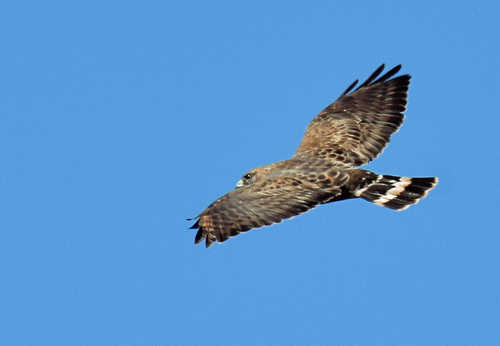


Before you go
What are the chances of seeing an Andean Condor in Quito?
Rare
Under 5% of wildlife watchers report an Andean Condor sighting in Quito on a given day, based on 10 verified sightings from GBIF citizen-science data. It is the 161st most-seen of the 167 birds we can rate there. Over three days the chance rises to under 5%, if each day is a fresh chance.
When is the best time to see an Andean Condor in Quito?
Any time of year
In every month with enough records, under 5% of wildlife watchers report an Andean Condor in Quito on a given day, so our monthly data shows no clear season.
What time of day is best to see an Andean Condor?
Between 11 am and 2 pm
Across all the parks we cover, that three-hour window holds the most Andean Condor sightings with a recorded time, and about 9 in 10 of them come between 6 am and 6 pm: it is a daytime animal.
Is Quito the best place to see an Andean Condor?
Among the best
Of the 2 cities where we can rate Andean Condor sightings, Quito ranks 2nd at under 5%, level with the leaders once rounded. The best odds are in Santiago (Chile, under 5%).
Where does the Andean Condor sighting chance come from?
GBIF citizen-science records
It is estimated from how often the Andean Condor is recorded against all the birds logged in Quito (10 verified sightings), calibrated against known sighting rates. Figures are rounded to the nearest 10% because citizen-science data supports honest approximations, not decimals, and months with records from fewer than five people show "—". How it works.
