


Completed


Mule Deer
Odocoileus hemionus
Silhouette: xgirouxb · PhyloPic
- KingdomAnimalia (Animals)
- PhylumChordata (Chordates)
- ClassMammalia (Mammals)
- OrderArtiodactyla (Even-toed Ungulates and Cetaceans)
- FamilyCervidae (Deer)
- GenusOdocoileus (White-tailed and Mule Deer)
- SpeciesOdocoileus hemionus (Mule Deer)
In 3 days ~80% in a week >90%
902 Verified sightings at Sacramento
13,954 In all 22 parks From 2019 to 2026
November Best month
☀️ Diurnal When it's spotted
About the Mule Deer
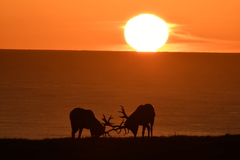
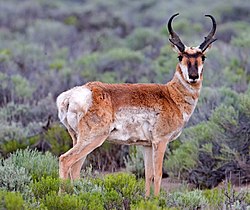
The mule deer (Odocoileus hemionus) is a deer indigenous to western North America; it is named for its ears, which are large like those of the mule. Two subspecies of mule deer are grouped into the black-tailed deer. Mule deer are found in the western and central parts of North America. Various subspecies range from the western Great Plains to the Rocky Mountains, the southwest United States and northern Mexico, and the west coast of the continent. Their range is smaller than the related white-tailed deer, which are found throughout most of North America east of the Rocky Mountains and in the valleys of the Rocky Mountains from Idaho and Wyoming northward. Mule deer have also been introduced to Argentina and Kauai, Hawaii.
Mule deer can be divided into two main groups: the mule deer (sensu stricto) and the black-tailed deer. The two main groups have been treated as separate species, but they hybridize, and virtually all recent authorities treat the mule deer and black-tailed deer as conspecific. Mule deer apparently evolved from the black-tailed... Wikipedia →
Sounds
Recording0:13
Mexico · 2025
© valledetempebc · iNaturalist · CC BY-NC 4.0
Recording0:08
United States · 2024
rdclark86 · iNaturalist · CC0
Recording0:20
United States · 2023
© Richard Hasegawa · iNaturalist · CC BY-NC 4.0
Recent sightings of Mule Deer in Sacramento
LIVEiNaturalistGlobal Distribution
Parks Where Found
| # | Park | Country | Daily sighting probability |
|---|---|---|---|
| 1 | Zion National Park | 🇺🇸 United States | |
| 2 | Sequoia and Kings Canyon National Parks | 🇺🇸 United States | |
| 3 | Badlands National Park | 🇺🇸 United States | |
| 4 | Rocky Mountain National Park | 🇺🇸 United States | |
| 5 | Yosemite National Park | 🇺🇸 United States | |
| 6 | Olympic National Park | 🇺🇸 United States | |
| 7 | Grand Canyon National Park | 🇺🇸 United States | |
| 8 | Grand Teton National Park | 🇺🇸 United States | |
| 9 | Great Bear Rainforest | 🇨🇦 Canada | |
| 10 | Glacier National Park | 🇺🇸 United States | |
| 11 | Guadalupe Mountains National Park | 🇺🇸 United States | |
| 12 | Banff National Park | 🇨🇦 Canada | |
| 13 | Yellowstone National Park | 🇺🇸 United States | |
| 14 | Redwood National Park | 🇺🇸 United States | |
| 15 | Jasper National Park | 🇨🇦 Canada | |
| 16 | Elk Island National Park | 🇨🇦 Canada | |
| 17 | Pacific Rim National Park Reserve | 🇨🇦 Canada | |
| 18 | El Vizcaíno Biosphere Reserve | 🇲🇽 Mexico | |
| 19 | Big Bend National Park | 🇺🇸 United States | |
| 20 | Saguaro National Park | 🇺🇸 United States | |
| 21 | Death Valley National Park | 🇺🇸 United States | |
| 22 | Joshua Tree National Park | 🇺🇸 United States |
Cities Where Found
| # | City | Country | Daily sighting probability |
|---|---|---|---|
| 1 | Sacramento | 🇺🇸 United States | |
| 2 | Salt Lake City | 🇺🇸 United States | |
| 3 | Portland | 🇺🇸 United States | |
| 4 | Calgary | 🇨🇦 Canada | |
| 5 | Vancouver | 🇨🇦 Canada | |
| 6 | San Francisco | 🇺🇸 United States | |
| 7 | Seattle | 🇺🇸 United States | |
| 8 | Denver | 🇺🇸 United States | |
| 9 | Los Angeles | 🇺🇸 United States | |
| 10 | Edmonton | 🇨🇦 Canada |
Zoos & Centres Where Found
| # | Zoo / Centre | Country | |
|---|---|---|---|
| 1 | Yukon Wildlife Preserve | 🇨🇦 Canada | |
| 2 | Northwest Trek Wildlife Park | 🇺🇸 United States | |
| 3 | San Diego Zoo Safari Park | 🇺🇸 United States | |
| 4 | Wildlife Safari | 🇺🇸 United States | |
| 5 | Ecological Center of Sonora | 🇲🇽 Mexico | |
| 6 | Bearizona | 🇺🇸 United States | |
| 7 | Wildlife World Zoo | 🇺🇸 United States | |
| 8 | Alaska Wildlife Conservation Center | 🇺🇸 United States | |
| 9 | Bear Country USA | 🇺🇸 United States | |
| 10 | Dakota Zoo | 🇺🇸 United States | |
| 11 | Zoológico de San Juan de Aragón | 🇲🇽 Mexico | |
| 12 | Arizona-Sonora Desert Museum | 🇺🇸 United States | |
| 13 | Yellowstone Bear World | 🇺🇸 United States | |
| 14 | British Columbia Wildlife Park | 🇨🇦 Canada | |
| 15 | Royev Ruchey Zoo | 🇷🇺 Russia | |
| 16 | Zoo Idaho | 🇺🇸 United States | |
| 17 | Wamerú zoo | 🇲🇽 Mexico | |
| 18 | Heritage Park Zoological Sanctuary | 🇺🇸 United States | |
| 19 | Folsom City Zoo Sanctuary | 🇺🇸 United States | |
| 20 | Big Bear Alpine Zoo | 🇺🇸 United States | |
| 21 | Orange County Zoo | 🇺🇸 United States |
Closest Relatives at Sacramento
No species of the same family or order lives in Sacramento, so these are its closest relatives here: other mammals.




Before you go
What are the chances of seeing a Mule Deer in Sacramento?
Likely
About 40% of wildlife watchers report a Mule Deer sighting in Sacramento on a given day, based on 902 verified sightings from GBIF citizen-science data. It is the 2nd most-seen of the 22 mammals we can rate there. Over three days the chance rises to about 80%, and over a week to over 90%, if each day is a fresh chance.
When is the best time to see a Mule Deer in Sacramento?
November
In that month about 50% of wildlife watchers report a Mule Deer in Sacramento on a given day, against about 30% in March and December, the lowest months.
What time of day is best to see a Mule Deer?
Between 9 am and noon
Across all the parks we cover, that three-hour window holds the most Mule Deer sightings with a recorded time, and about 7 in 10 of them come between 6 am and 6 pm: it is a daytime animal.
Is Sacramento the best place to see a Mule Deer?
Yes
Of the 11 cities where we can rate Mule Deer sightings, Sacramento has the highest daily chance: about 40%. Next come Salt Lake City (United States, about 40%) and Portland (United States, about 30%).
Where does the Mule Deer sighting chance come from?
GBIF citizen-science records
It is estimated from how often the Mule Deer is recorded against all the mammals logged in Sacramento (902 verified sightings), calibrated against known sighting rates. Figures are rounded to the nearest 10% because citizen-science data supports honest approximations, not decimals, and months with records from fewer than five people show "—". How it works.
