Polyphemus Moth

Polyphemus Moth

Antheraea polyphemus

Daily sighting probability ~10% · With luck
at San Antonio

In 3 days ~40% in a week ~70%

353 Verified sightings at San Antonio
274 In all 17 parks From 2019 to 2026
September Best month
☀️ Diurnal When it's spotted

About the Polyphemus Moth

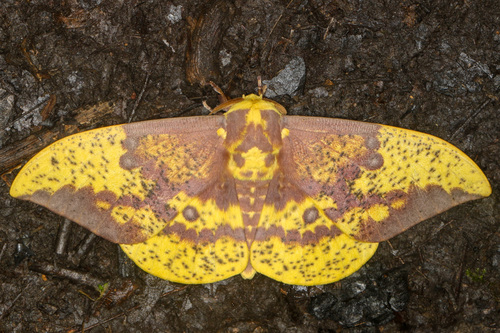
Antheraea polyphemus, the Polyphemus moth, is a North American member of the family Saturniidae, the giant silk moths. It is a tan-colored moth, with an average wingspan of 15 cm (6 in). The most noticeable feature of the moth is the large, purplish eyespot on each hindwing; its name is from the Greek myth of the cyclops Polyphemus. The species, first described by Pieter Cramer in 1776, is widespread in continental North America, with local populations found throughout subarctic Canada and in all of the United States except Arizona and Nevada.

Polyphemus moths inhabit deciduous hardwood forests, orchards, urban areas, and wetlands. The caterpillar can eat a total of 86,000 times its weight in the first eight weeks after it emerges. Polyphemus moths are considered to be very polyphagous, meaning they eat from a wide variety of plants.

The life cycle of the moth is much like that of any other Saturniidae species. It lays flat, light-brown eggs on the leaves of a number of host trees, preferring Ulmus americana (American elm), Betula (birch), Salix (willow), but also, more rarely, can survive on other trees, including: Quercus (oak), Acer (maple), Carya (hickory), Fagus... Wikipedia →

Global Distribution

Parks Where Found

# Park Country Daily sighting probability
1 Cape Breton Highlands National Park 🇨🇦 Canada
~20%
2 Elk Island National Park 🇨🇦 Canada
~20%
3 Congaree National Park 🇺🇸 United States
~10%
4 Great Smoky Mountains National Park 🇺🇸 United States
~10%
5 Shenandoah National Park 🇺🇸 United States
~10%
6 Gros Morne National Park 🇨🇦 Canada
~10%
7 Acadia National Park 🇺🇸 United States
~10%
8 Riding Mountain National Park 🇨🇦 Canada
~10%
9 Great Bear Rainforest 🇨🇦 Canada
~10%
10 Big Cypress National Preserve 🇺🇸 United States
~10%
11 Olympic National Park 🇺🇸 United States
~10%
12 Glacier National Park 🇺🇸 United States
~10%
13 Redwood National Park 🇺🇸 United States
~10%
14 Merritt Island National Wildlife Refuge 🇺🇸 United States
~10%
15 Point Pelee National Park 🇨🇦 Canada
~10%
16 Everglades National Park 🇺🇸 United States
<5%
17 Cumbres de Monterrey National Park 🇲🇽 Mexico
<5%

Cities Where Found

# City Country Daily sighting probability
1 San Antonio 🇺🇸 United States
~10%
2 Orlando 🇺🇸 United States
~10%
3 Houston 🇺🇸 United States
~10%
4 Detroit 🇺🇸 United States
~10%
5 Austin 🇺🇸 United States
~10%
6 Washington 🇺🇸 United States
~10%
7 Philadelphia 🇺🇸 United States
~10%
8 Toronto 🇨🇦 Canada
~10%
9 Baltimore 🇺🇸 United States
~10%
10 Minneapolis [Saint Paul] 🇺🇸 United States
~10%

Before you go

What are the chances of seeing a Polyphemus Moth in San Antonio?

With luck

About 10% of wildlife watchers report a Polyphemus Moth sighting in San Antonio on a given day, based on 353 verified sightings from GBIF citizen-science data. It is the 27th most-seen of the 697 insects we can rate there. Over three days the chance rises to about 40%, and over a week to about 70%, if each day is a fresh chance.

When is the best time to see a Polyphemus Moth in San Antonio?

September

In that month about 30% of wildlife watchers report a Polyphemus Moth in San Antonio on a given day, against about 10% in January–February, April–August and October–November, the lowest months. That is one of San Antonio's wettest months, with about 95 mm of rain against 35 mm in February.

What time of day is best to see a Polyphemus Moth?

Between 8 and 11 am

Across all the parks we cover, that three-hour window holds the most Polyphemus Moth sightings with a recorded time, and about 8 in 10 of them come between 6 am and 6 pm: it is a daytime animal.

Is San Antonio the best place to see a Polyphemus Moth?

Yes

Of the 25 cities where we can rate Polyphemus Moth sightings, San Antonio has the highest daily chance: about 10%. Next come Orlando (United States, about 10%) and Houston (United States, about 10%).

Which relatives of the Polyphemus Moth live in San Antonio?

Same family: Saturniidae

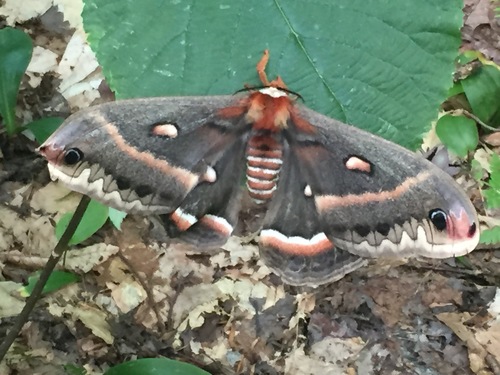
The closest relatives of the Polyphemus Moth that you can see in San Antonio (family Saturniidae, Emperor and Giant Silk Moths) are Texas Buck Moth (about 10%) and Calleta Silkmoth (about 10%), with each one's daily chance of a sighting.

Where does the Polyphemus Moth sighting chance come from?

GBIF citizen-science records

It is estimated from how often the Polyphemus Moth is recorded against all the insects logged in San Antonio (353 verified sightings), calibrated against known sighting rates. Figures are rounded to the nearest 10% because citizen-science data supports honest approximations, not decimals, and months with records from fewer than five people show "—". How it works.

← Back to San Antonio