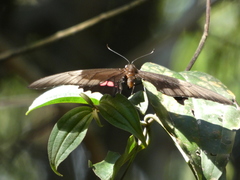
Ruby-Spotted Swallowtail

Ruby-Spotted Swallowtail

Papilio anchisiades

Daily sighting probability ~10% · With luck
at San José

In 3 days ~30% in a week ~50%

38 Verified sightings at San José
193 In all 8 parks From 2019 to 2026
August Best month
☀️ Diurnal When it's spotted

About the Ruby-Spotted Swallowtail

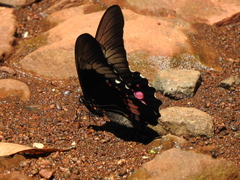
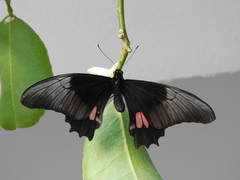
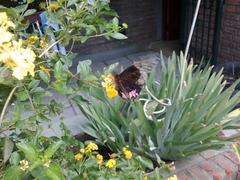
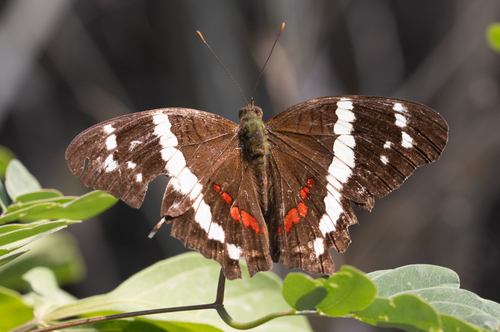
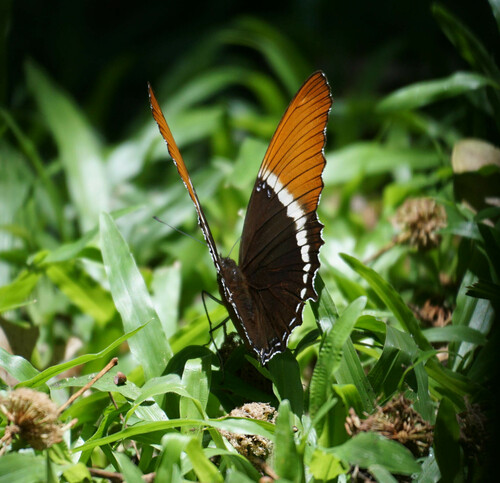
Papilio anchisiades, the ruby-spotted swallowtail or red-spotted swallowtail, is a butterfly of the family Papilionidae. It is found from southern Texas south to Argentina. Rare strays can be found up to Kansas, southeastern Arizona, and western Texas.

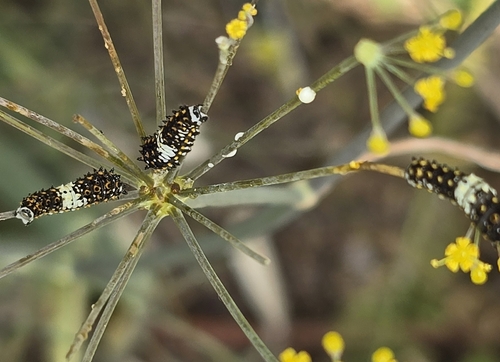
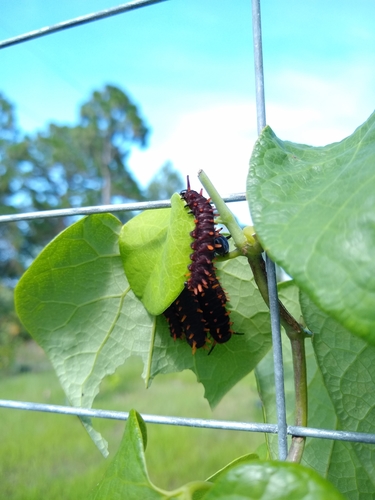
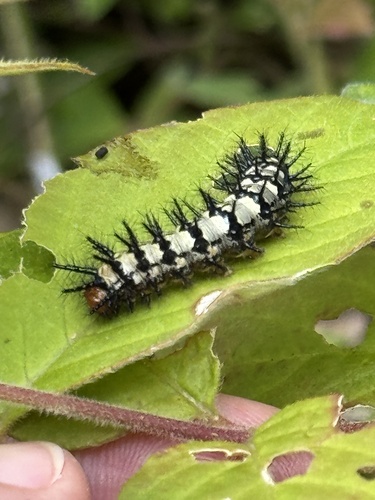
The wingspan is 70–100 mm.P. anchisiades. A widely distributed variable species. Hindwing posteriorly somewhat prolonged, less triangular; the tail is wanting or is only somewhat longer than the other marginal teeth, yet in the female sometimes as long and pointed as in the following species. The red spots of both the rows of the hindwing on the underside partly contiguous, or at least two pairs placed quite close together. Larva often resting together in hundreds on the stems of citrus. A very common insect, which is fond drinking at moist places on the banks of rivers; not a forest species.

— idaeus F. (=pandion Feldr., pandonius Stgr.). Forewing usually with a distinct white spot at the end of the cell above and beneath or only beneath. Central America, from Mexico to Panama. — anchisiades Esp. (= anchises L. partim, theramenes Fldr,, pompeius Kirby) (10d). Very variable. Forewing with two white spots... Wikipedia →
Global Distribution

Parks Where Found

# Park Country Daily sighting probability
1 Iguazú National Park 🇦🇷 Argentina
~20%
2 Iguaçu National Park 🇧🇷 Brazil
~20%
3 Serra dos Órgãos National Park 🇧🇷 Brazil
~10%
4 Cumbres de Monterrey National Park 🇲🇽 Mexico
~10%
5 Monteverde Cloud Forest Reserve 🇨🇷 Costa Rica
~10%
6 Yasuní National Park 🇪🇨 Ecuador
~10%
7 Braulio Carrillo National Park 🇨🇷 Costa Rica
~10%
8 Soberanía National Park 🇵🇦 Panama
~10%

Cities Where Found

# City Country Daily sighting probability
1 Porto Alegre 🇧🇷 Brazil
~20%
2 São Luís 🇧🇷 Brazil
~20%
3 Recife 🇧🇷 Brazil
~20%
4 Salvador 🇧🇷 Brazil
~20%
5 São Paulo 🇧🇷 Brazil
~10%
6 Brasilia 🇧🇷 Brazil
~10%
7 Belo Horizonte 🇧🇷 Brazil
~10%
8 Curitiba 🇧🇷 Brazil
~10%
9 Vitória 🇧🇷 Brazil
~10%
10 Goiânia 🇧🇷 Brazil
~10%

Before you go

What are the chances of seeing a Ruby-Spotted Swallowtail in San José?

With luck

About 10% of wildlife watchers report a Ruby-Spotted Swallowtail sighting in San José on a given day, based on 38 verified sightings from GBIF citizen-science data. It is the 37th most-seen of the 239 insects we can rate there. Over three days the chance rises to about 30%, and over a week to about 50%, if each day is a fresh chance.

When is the best time to see a Ruby-Spotted Swallowtail in San José?

August

In that month about 20% of wildlife watchers report a Ruby-Spotted Swallowtail in San José on a given day, against under 5% in February and April, the lowest months.

What time of day is best to see a Ruby-Spotted Swallowtail?

Between 10 am and 1 pm

Across all the parks we cover, that three-hour window holds the most Ruby-Spotted Swallowtail sightings with a recorded time, and about 9 in 10 of them come between 6 am and 6 pm: it is a daytime animal.

Is San José the best place to see a Ruby-Spotted Swallowtail?

13th of 20

Of the 20 cities where we can rate Ruby-Spotted Swallowtail sightings, San José ranks 13th at about 10%. The best odds are in Porto Alegre (Brazil, about 20%), São Luís (Brazil, about 20%) and Recife (Brazil, about 20%).

Which relatives of the Ruby-Spotted Swallowtail live in San José?

Same genus: Papilio

The closest relatives of the Ruby-Spotted Swallowtail that you can see in San José (genus Papilio, Common Swallowtails) are Black Swallowtail (about 10%) and Thoas Swallowtail (about 10%), with each one's daily chance of a sighting.

Where does the Ruby-Spotted Swallowtail sighting chance come from?

GBIF citizen-science records

It is estimated from how often the Ruby-Spotted Swallowtail is recorded against all the insects logged in San José (38 verified sightings), calibrated against known sighting rates. Figures are rounded to the nearest 10% because citizen-science data supports honest approximations, not decimals, and months with records from fewer than five people show "—". How it works.

← Back to San José