


Completed



Hooded Crow
Corvus cornix
Silhouette: Peileppe · PhyloPic
- KingdomAnimalia (Animals)
- PhylumChordata (Chordates)
- ClassAves (Birds)
- OrderPasseriformes (Perching Birds)
- FamilyCorvidae (Crows, Jays, and Magpies)
- GenusCorvus (Crows and Ravens)
- SpeciesCorvus cornix (Hooded Crow)
In 3 days >90%
48 Verified sightings at Sincan
5,824 In all 13 parks From 2019 to 2026
June Best month
☀️ Diurnal When it's spotted





Completed
About the Hooded Crow
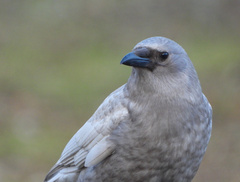
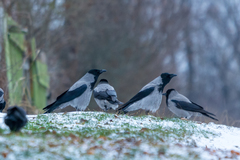
The hooded crow (Corvus corone cornix), also colloquially called just hoodie, is a Eurasian bird subspecies of the carrion crow (Corvus corone) in the genus Corvus. Widely distributed, it is found across Northern, Eastern, and Southeastern Europe, as well as parts of the Middle East. It is an ashy-grey bird with black head, throat, wings, tail, and thigh feathers, as well as a black bill, eyes, and feet. Like other corvids, it is an omnivorous and opportunistic forager and feeder.
In 2002, the hooded crow was separated from the carrion crow and classified as its own species by the British Ornithologists' Union. However, in 2025, the new global AviBase re-classified the hooded and carrion crows as the same species, with the species divided into six subspecies, of which four are 'hooded' grey-and-black, and two are all-black.
The hooded crow was one of the many species originally described by Carl Linnaeus in his landmark 1758 10th edition of Systema Naturae; he gave it the binomial name Corvus cornix. Linnaeus specified the type locality as "Europa", but this was restricted to Sweden by the German ornithologist Ernst Hartert in 1903. The genus name Corvus is Latin for... Wikipedia →
Sounds
Call0:35
Italy · 2026
© Francesco Sottile · XC1180273 · CC BY-NC-SA 4.0
Recording0:05
Lithuania · 2025
© Andrejus Gaidamavičius · iNaturalist · CC BY 4.0
Recording0:07
Italy · 2024
© roby · iNaturalist · CC BY-NC 4.0
Recent sightings of Hooded Crow in Sincan
LIVEiNaturalistGlobal Distribution
Parks Where Found
| # | Park | Country | Daily sighting probability |
|---|---|---|---|
| 1 | Gauja National Park | 🇱🇻 Latvia | |
| 2 | Kiskunság National Park | 🇭🇺 Hungary | |
| 3 | Biebrza National Park | 🇵🇱 Poland | |
| 4 | Hortobágy National Park | 🇭🇺 Hungary | |
| 5 | Fertő-Hanság National Park | 🇭🇺 Hungary | |
| 6 | Triglav National Park | 🇸🇮 Slovenia | |
| 7 | Vatnajokull National Park | 🇮🇸 Iceland | |
| 8 | Plitvice Lakes National Park | 🇭🇷 Croatia | |
| 9 | Wadden Sea National Park | 🇩🇪 Germany | |
| 10 | Mercantour National Park | 🇫🇷 France | |
| 11 | Tatra National Park | 🇸🇰 Slovakia | |
| 12 | Białowieża National Park | 🇵🇱 Poland | |
| 13 | Cairngorms National Park | 🇬🇧 United Kingdom |
Zoos & Centres Where Found
| # | Zoo / Centre | Country | |
|---|---|---|---|
| 1 | Kaliningrad Zoo | 🇷🇺 Russia | |
| 2 | bioparco | 🇮🇹 Italy |
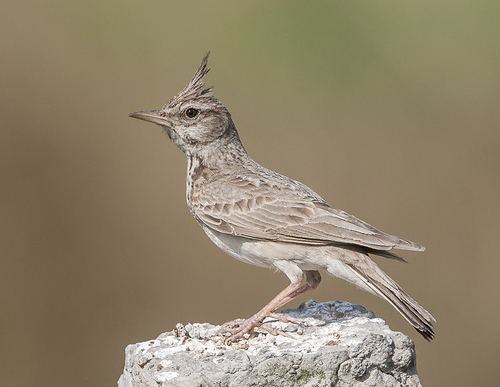
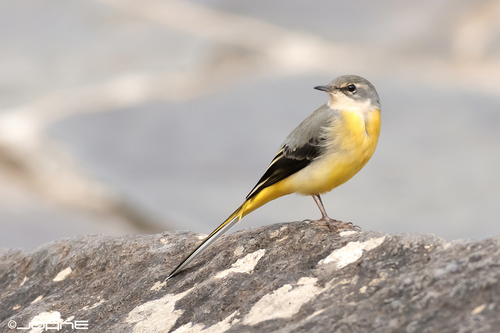
Closest Relatives at Sincan





Before you go
What are the chances of seeing a Hooded Crow in Sincan?
Very likely
About 70% of wildlife watchers report a Hooded Crow sighting in Sincan on a given day, based on 48 verified sightings from GBIF citizen-science data. It is the 5th most-seen of the 64 birds we can rate there. Over three days the chance rises to over 90%, if each day is a fresh chance.
When is the best time to see a Hooded Crow in Sincan?
June
In that month about 90% of wildlife watchers report a Hooded Crow in Sincan on a given day, against about 50% in March and September, the lowest months. July and August have too few records to rate.
What time of day is best to see a Hooded Crow?
Between 11 am and 2 pm
Across all the parks we cover, that three-hour window holds the most Hooded Crow sightings with a recorded time, and about 9 in 10 of them come between 6 am and 6 pm: it is a daytime animal.
Is Sincan the best place to see a Hooded Crow?
39th of 55
Of the 55 cities where we can rate Hooded Crow sightings, Sincan ranks 39th at about 70%. The best odds are in Jerusalem (Israel, over 90%), Ramallah (Palestine, over 90%) and Tehran (Iran, over 90%).
Where does the Hooded Crow sighting chance come from?
GBIF citizen-science records
It is estimated from how often the Hooded Crow is recorded against all the birds logged in Sincan (48 verified sightings), calibrated against known sighting rates. Figures are rounded to the nearest 10% because citizen-science data supports honest approximations, not decimals, and months with records from fewer than five people show "—". How it works.
