Vestal

Vestal

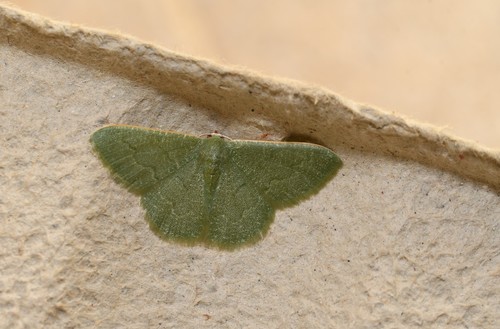
Rhodometra sacraria

Daily sighting probability ~10% · With luck
at Tel Aviv

In 3 days ~40% in a week ~70%

39 Verified sightings at Tel Aviv
250 In all 13 parks From 2019 to 2026
November Best month
☀️🌙 Day & Night When it's spotted

About the Vestal

Rhodometra sacraria, the vestal, is a moth of the family Geometridae. The species was first described by Carl Linnaeus in his 1767 12th edition of Systema Naturae. It can be found throughout Europe, in the Near East, in North Africa, in the Afrotropical realm and in large parts of Asia. It is also found in South America (Chile and Argentina).

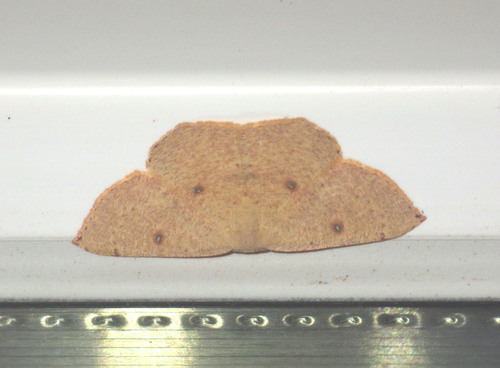
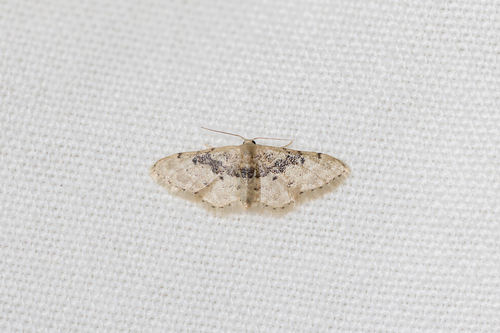
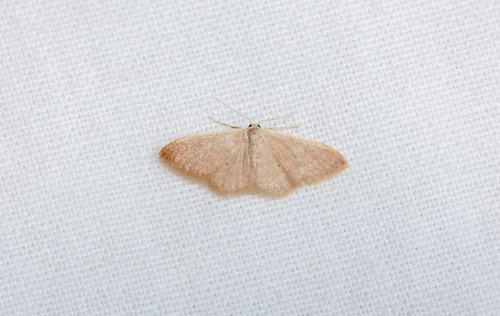
Rhodometra sacraria inhabits meadows, forest clearing, paths, gardens and urban environments. Rhodometra sacraria has a wingspan reaching 22–28 mm, while the length of the forewings is 12–14 mm. The late generations are smaller and the wingspan has an average of 16–26 mm. These moths are easily distinguishable from the mahogany or pink stripe, located on yellowish or cream background, crossing diagonally the dorsal sides of the upperwings from the posterior margin up to the apex. Discal spots are usually present and have the same colour as the postmedial line.

The dorsal sides of the hindwings are whitish and unmarked. The fringes on the wings are mostly in the basic colour. The abdomen is pure white. Head and thorax are straw yellow. In males the antennae are bipectinated to three-fourths length... Wikipedia →

Global Distribution

Parks Where Found

# Park Country Daily sighting probability
1 Sierra Nevada National Park 🇪🇸 Spain
~20%
2 Monfragüe National Park 🇪🇸 Spain
~10%
3 Picos de Europa National Park 🇪🇸 Spain
~10%
4 Kgalagadi Transfrontier Park 🇿🇦 South Africa
~10%
5 Sierra de Guadarrama National Park 🇪🇸 Spain
~10%
6 Doñana National Park 🇪🇸 Spain
~10%
7 Pyrénées National Park 🇫🇷 France
~10%
8 Kruger National Park 🇿🇦 South Africa
~10%
9 Cévennes National Park 🇫🇷 France
~10%
10 Addo Elephant National Park 🇿🇦 South Africa
~10%
11 iSimangaliso Wetland Park 🇿🇦 South Africa
~10%
12 Garden Route National Park 🇿🇦 South Africa
~10%
13 Table Mountain National Park 🇿🇦 South Africa
<5%

Cities Where Found

# City Country Daily sighting probability
1 Valencia 🇪🇸 Spain
~50%
2 Kuwait City 🇰🇼 Kuwait
~20%
3 Algiers 🇩🇿 Algeria
~20%
4 Porto 🇵🇹 Portugal
~20%
5 Turin 🇮🇹 Italy
~20%
6 Madrid 🇪🇸 Spain
~20%
7 Naples 🇮🇹 Italy
~20%
8 Barcelona 🇪🇸 Spain
~20%
9 Rome 🇮🇹 Italy
~10%
10 Tel Aviv 🇮🇱 Israel
~10%

Before you go

What are the chances of seeing a Vestal in Tel Aviv?

With luck

About 10% of wildlife watchers report a Vestal sighting in Tel Aviv on a given day, based on 39 verified sightings from GBIF citizen-science data. It is the 40th most-seen of the 264 insects we can rate there. Over three days the chance rises to about 40%, and over a week to about 70%, if each day is a fresh chance.

When is the best time to see a Vestal in Tel Aviv?

March–May and October–December

In those months about 20% of wildlife watchers report a Vestal in Tel Aviv on a given day, against under 5% in January and June–July, the lowest months.

What time of day is best to see a Vestal?

Between 9 pm and midnight

Across all the parks we cover, that three-hour window holds the most Vestal sightings with a recorded time, and about half of them come between 6 pm and 6 am: it is seen both by day and at night.

Is Tel Aviv the best place to see a Vestal?

10th of 25

Of the 25 cities where we can rate Vestal sightings, Tel Aviv ranks 10th at about 10%. The best odds are in Valencia (Spain, about 50%), Kuwait City (Kuwait, about 20%) and Algiers (Algeria, about 20%).

Which relatives of the Vestal live in Tel Aviv?

Same family: Geometridae

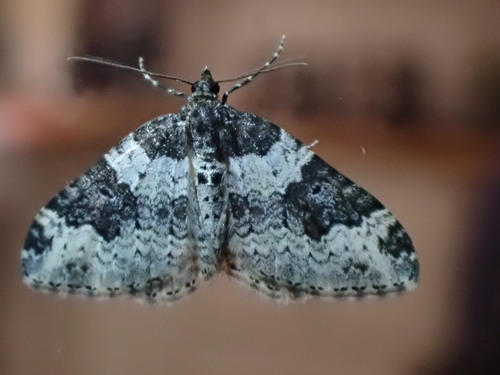
The closest relatives of the Vestal that you can see in Tel Aviv (family Geometridae, Geometer Moths) are Laned Wave (about 10%), Blair's Mocha (about 10%) and Garden Carpet (about 10%), with each one's daily chance of a sighting.

Where does the Vestal sighting chance come from?

GBIF citizen-science records

It is estimated from how often the Vestal is recorded against all the insects logged in Tel Aviv (39 verified sightings), calibrated against known sighting rates. Figures are rounded to the nearest 10% because citizen-science data supports honest approximations, not decimals, and months with records from fewer than five people show "—". How it works.

← Back to Tel Aviv