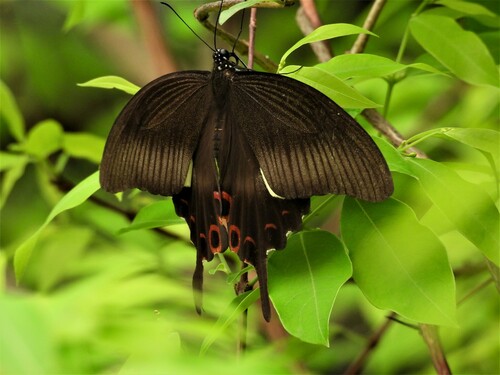
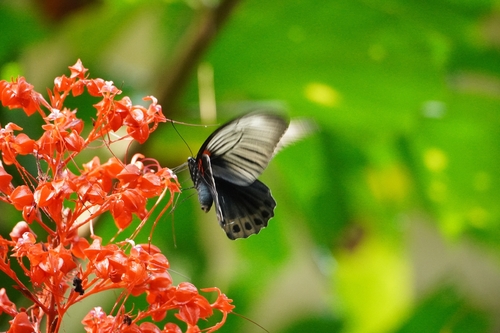
Daily sighting probability ~20% · Possible
at Cuc Phuong National Park

In 3 days ~60% in a week ~90%

10 Verified sightings at Cuc Phuong National Park From 2019 to 2026
241 In all 11 parks
June Best month
☀️ Diurnal When it's spotted

About the Tailed Jay

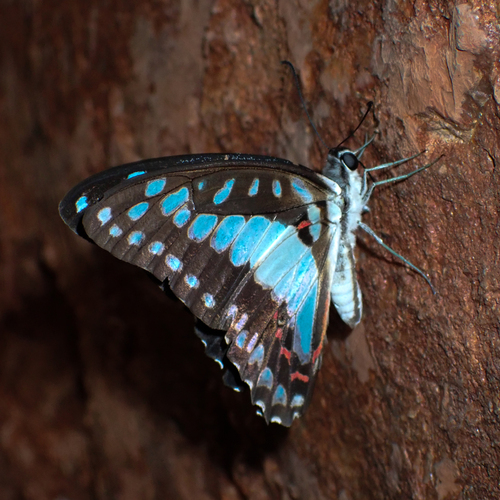
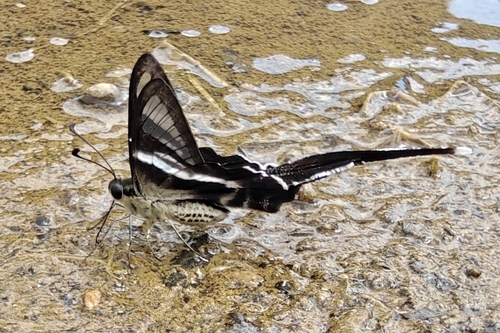
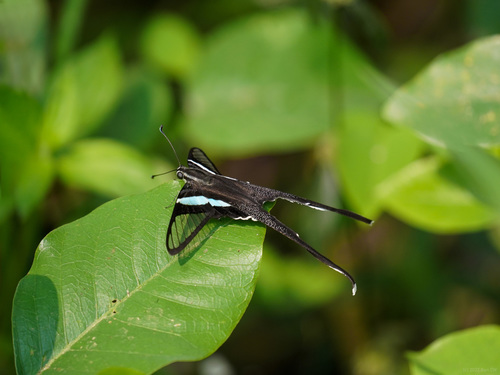
Graphium agamemnon, the tailed jay, is a predominantly green and black tropical butterfly that belongs to the swallowtail family. The butterfly is also called the green-spotted triangle, tailed green jay, or green triangle. It is a common, non-threatened species native to Nepal, India and Sri Lanka, through Southeast Asia to Australia. Several geographic races are recognized. The species was first described by Carl Linnaeus in his 1758 10th edition of Systema Naturae.

Southern India to Saurashtra, northern India (Kumaon to Assam), Nepal, Sri Lanka, Andamans, Nicobars, Bangladesh, Brunei, Myanmar, Thailand, Malaysia, Laos, Cambodia, Indonesia, Vietnam, Singapore, southern China (including Hainan), Taiwan, Japan (Ryukyu Islands), South East Asia to New Guinea, Bougainville, Solomon Islands, and Australia (northern Queensland).

Male upperside black. Forewing with the following green markings: a spot at the extreme base of the costal margin, a transverse short bar near base of cell and seven spots beyond, two and two except the apical spot which is single; two spots beyond apex of cell; a spot at base of interspaces 1a and 1, followed by two oblique short... Wikipedia →
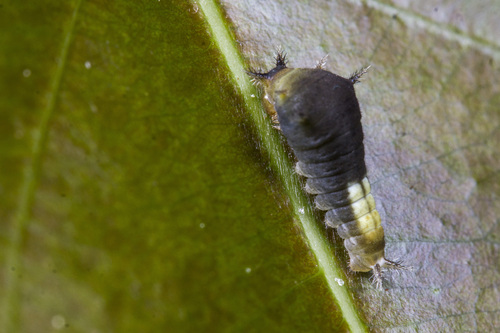
Global Distribution

Parks Where Found

# Park Country Daily sighting probability
1 Namdapha National Park 🇮🇳 India
~30%
2 Kaeng Krachan National Park 🇹🇭 Thailand
~30%
3 Cat Tien National Park 🇻🇳 Vietnam
~30%
4 Cuc Phuong National Park 🇻🇳 Vietnam
~20%
5 Gunung Leuser National Park 🇮🇩 Indonesia
~20%
6 Sinharaja Forest Reserve 🇱🇰 Sri Lanka
~20%
7 Daintree National Park 🇦🇺 Australia
~20%
8 Khao Yai National Park 🇹🇭 Thailand
~20%
9 Kinabatangan Wildlife Sanctuary 🇲🇾 Malaysia
~10%
10 Kinabalu Park 🇲🇾 Malaysia
~10%
11 Taroko National Park 🇹🇼 Taiwan
~10%

Cities Where Found

# City Country Daily sighting probability
1 Kochi 🇮🇳 India
~40%
2 Kalyan-Dombivli 🇮🇳 India
~40%
3 Mumbai 🇮🇳 India
~40%
4 Pune 🇮🇳 India
~40%
5 Visakhapatnam 🇮🇳 India
~30%
6 Jakarta 🇮🇩 Indonesia
~30%
7 Denpasar 🇮🇩 Indonesia
~30%
8 Kathmandu 🇳🇵 Nepal
~30%
9 Bhubaneshwar 🇮🇳 India
~30%
10 Surat 🇮🇳 India
~30%

Before you go

What are the chances of seeing a Tailed Jay in Cuc Phuong National Park?

Possible

About 20% of wildlife watchers report a Tailed Jay sighting in Cuc Phuong National Park on a given day, based on 10 verified sightings from GBIF citizen-science data from 2019 to 2026. It is the 82nd most-seen of the 126 insects we can rate there. Over three days the chance rises to about 60%, and over a week to about 90%, if each day is a fresh chance.

When is the best time to see a Tailed Jay in Cuc Phuong National Park?

June

In that month about 60% of wildlife watchers report a Tailed Jay in Cuc Phuong National Park on a given day, against under 5% in February–May, August and October–December, the lowest months.

What time of day is best to see a Tailed Jay?

Between 9 am and noon

Across all the parks we cover, that three-hour window holds the most Tailed Jay sightings with a recorded time, and about 9 in 10 of them come between 6 am and 6 pm: it is a daytime animal.

Which relatives of the Tailed Jay live in Cuc Phuong National Park?

Same genus: Graphium

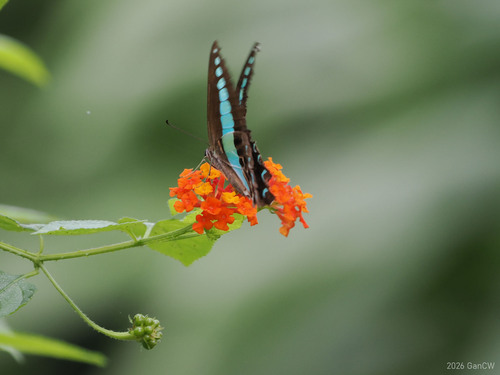
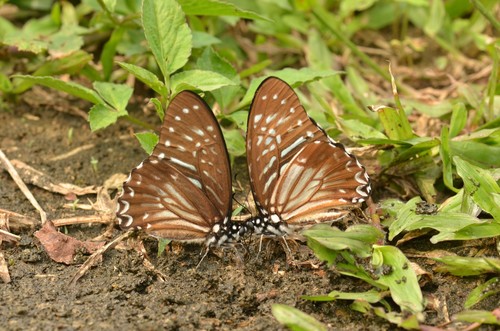
The closest relatives of the Tailed Jay that you can see in Cuc Phuong National Park (genus Graphium, Swordtails, Jays, Bluebottles and allies) are Common Bluebottle (about 30%), Common Jay (about 30%) and Lesser Zebra (about 30%), with each one's daily chance of a sighting.

Where does the Tailed Jay sighting chance come from?

GBIF citizen-science records

It is estimated from how often the Tailed Jay is recorded against all the insects logged in Cuc Phuong National Park (10 verified sightings from 2019 to 2026), calibrated against known sighting rates. Figures are rounded to the nearest 10% because citizen-science data supports honest approximations, not decimals, and months with records from fewer than five people show "—". How it works.

← Back to Cuc Phuong National Park