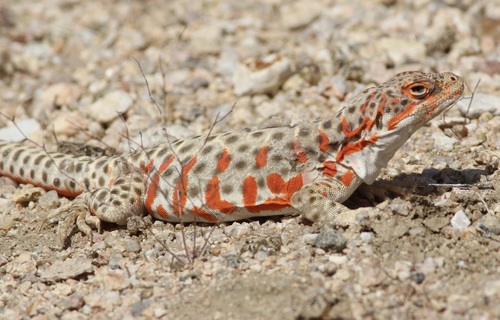
Northern Three-lined Boa

Northern Three-lined Boa

Lichanura orcutti

Silhouette: Alex Slavenko · PhyloPic

LCLeast ConcernNTVUENCR
Daily sighting probability ~10% · With luck
at Death Valley National Park

In 3 days ~30% in a week ~50%

19 Verified sightings at Death Valley National Park From 2019 to 2026
78 In all 2 parks
June Best month
☀️🌙 Day & Night When it's spotted

About the Northern Three-lined Boa

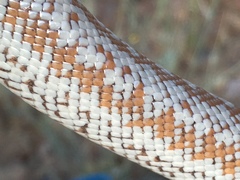
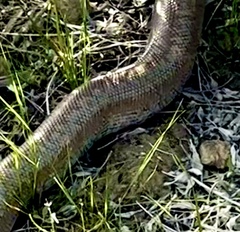
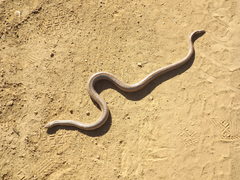
Lichanura orcutti, also known as the rosy boa, the coastal rosy boa, or the northern three-lined boa, is a species of snake in the family Boidae. This species is found North of the US–Mexico border within San Diego County in California and along the coastal Peninsular Ranges, northward into the Mojave Desert and eastward in the Sonoran Desert of California and Arizona. Lichanura orcutti is one of four boa species native to the continental United States, the other three being the desert rosy boa (Lichanura trivirgata), and the two species of rubber boas (Charina).

Zoologist Leonhard Stejneger described the species in 1889. Lichanura taxonomy is not well understood; some taxonomists have challenged the Lichanura genus and suggest that these species be grouped with Charina, the rubber boas. L. orcutti was previously considered to be a subspecies of L. trivirgata; DNA analysis later identified L. orcutti as a distinct species. Confusion over scientific names is compounded by the fact that Lichanura species are popular as pets and reptile keepers frequently use outdated taxonomy.

Lichanura orcutti is a heavy-bodied snake with smooth scales and a tapered... Wikipedia →

Global Distribution

Parks Where Found

# Park Country Daily sighting probability
1 Joshua Tree National Park 🇺🇸 United States
~20%
2 Death Valley National Park 🇺🇸 United States
~10%

Cities Where Found

# City Country Daily sighting probability
1 San Diego 🇺🇸 United States
<5%

Zoos & Centres Where Found

# Zoo / Centre Country
1 Disney's Animal Kingdom 🇺🇸 United States In captivity
2 San Diego Zoo 🇺🇸 United States In captivity
3 Caldwell Zoo 🇺🇸 United States In captivity
4 Siam Serpentarium 🇹🇭 Thailand In captivity
5 Aquarium of the Bay 🇺🇸 United States In captivity

Closest Relatives at Death Valley National Park

No species of the same family or order lives in Death Valley National Park, so these are its closest relatives here: other reptiles.

Before you go

What are the chances of seeing a Northern Three-lined Boa in Death Valley National Park?

With luck

About 10% of wildlife watchers report a Northern Three-lined Boa sighting in Death Valley National Park on a given day, based on 19 verified sightings from GBIF citizen-science data from 2019 to 2026. It is the 28th most-seen of the 30 reptiles we can rate there. Over three days the chance rises to about 30%, and over a week to about 50%, if each day is a fresh chance.

When is the best time to see a Northern Three-lined Boa in Death Valley National Park?

June

In that month about 20% of wildlife watchers report a Northern Three-lined Boa in Death Valley National Park on a given day, against under 5% in February and September–December, the lowest months. That is one of Death Valley National Park's driest months, with about 5 mm of rain against 30 mm in March.

What time of day is best to see a Northern Three-lined Boa?

Between 8 and 11 am

Across all the parks we cover, that three-hour window holds the most Northern Three-lined Boa sightings with a recorded time, and about 6 in 10 of them come between 6 am and 6 pm: it is seen both by day and at night.

Is Death Valley National Park the best place to see a Northern Three-lined Boa?

2nd of 2

Of the 2 parks where we can rate Northern Three-lined Boa sightings, Death Valley National Park ranks 2nd at about 10%. The best odds are in Joshua Tree National Park (United States, about 20%).

Where does the Northern Three-lined Boa sighting chance come from?

GBIF citizen-science records

It is estimated from how often the Northern Three-lined Boa is recorded against all the reptiles logged in Death Valley National Park (19 verified sightings from 2019 to 2026), calibrated against known sighting rates. Figures are rounded to the nearest 10% because citizen-science data supports honest approximations, not decimals, and months with records from fewer than five people show "—". How it works.

← Back to Death Valley National Park