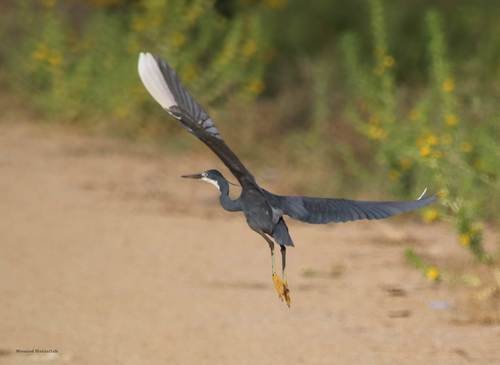
Black Heron

Black Heron

Egretta ardesiaca

Silhouette: L. Shyamal Β· PhyloPic

LCLeast ConcernNTVUENCR
Daily sighting probability ~50% Β· Likely
at Djoudj National Bird Sanctuary

In 3 days ~90% in a week >90%

95 Verified sightings at Djoudj National Bird Sanctuary From 2019 to 2026
1,435 In all 30 parks
February Best month
β˜€οΈ Diurnal When it's spotted

About the Black Heron

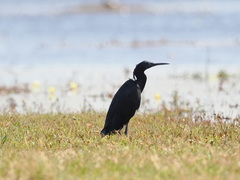
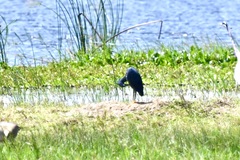
The black heron (Egretta ardesiaca), also known as the black egret, is an African heron. It uses its wings to form a canopy when fishing. The black heron is a medium-sized bird, with a typical height range of 42.5 to 66 cm (16.7 to 26.0 in). Their weight can range from 0.27 to 0.39 kg (0.60 to 0.86 lb). They are known for their black plumage, black bill, and yellow feet. In breeding plumage it grows long plumes on the crown and nape.

The black heron occurs patchily through Sub-Saharan Africa, from Senegal and Sudan to South Africa, but is found mainly on the eastern half of the continent and in Madagascar. It has also been observed in Greece and Italy.

It prefers shallow open waters, such as the edges of freshwater lakes and ponds. It may also be found in marshes, river edges, rice fields, and seasonally flooded grasslands. In coastal areas, it may be found feeding along tidal rivers and creeks, in alkaline lakes, and tidal flats.

The black heron uses a hunting method called canopy feeding β€” it uses its wings like an umbrella, creating shade that attracts fish. This technique was documented on episode 5 of the BBC's The...

Wikipedia β†’

Sounds

Call0:12

Madagascar Β· 2025

Β© Frank Lambert Β· XC1065621 Β· CC BY-NC-ND 4.0

Call0:23

Madagascar Β· 2021

Β© Ken Behrens Β· XC697847 Β· CC BY-NC-SA 4.0

Call0:09

Ethiopia Β· 2015

Β© Peter Boesman Β· XC300267 Β· CC BY-NC-ND 4.0

Global Distribution

Parks Where Found

# Park Country Daily sighting probability
1 Djoudj National Bird Sanctuary πŸ‡ΈπŸ‡³ Senegal
~50%
2 Chobe National Park πŸ‡§πŸ‡Ό Botswana
~20%
3 Lake Manyara National Park πŸ‡ΉπŸ‡Ώ Tanzania
~10%
4 Akagera National Park πŸ‡·πŸ‡Ό Rwanda
~10%
5 Moremi Game Reserve πŸ‡§πŸ‡Ό Botswana
~10%
6 Lower Zambezi National Park πŸ‡ΏπŸ‡² Zambia
~10%
7 Liwonde National Park πŸ‡²πŸ‡Ό Malawi
~10%
8 Mana Pools National Park πŸ‡ΏπŸ‡Ό Zimbabwe
~10%
9 iSimangaliso Wetland Park πŸ‡ΏπŸ‡¦ South Africa
~10%
10 Amboseli National Park πŸ‡°πŸ‡ͺ Kenya
~10%
11 Berenty Reserve πŸ‡²πŸ‡¬ Madagascar
<5%
12 Awash National Park πŸ‡ͺπŸ‡Ή Ethiopia
<5%
13 Tsavo West National Park πŸ‡°πŸ‡ͺ Kenya
<5%
14 Kafue National Park πŸ‡ΏπŸ‡² Zambia
<5%
15 Arusha National Park πŸ‡ΉπŸ‡Ώ Tanzania
<5%
16 Lake Nakuru National Park πŸ‡°πŸ‡ͺ Kenya
<5%
17 Ankarafantsika National Park πŸ‡²πŸ‡¬ Madagascar
<5%
18 uMkhuze Game Reserve πŸ‡ΏπŸ‡¦ South Africa
<5%
19 Pilanesberg National Park πŸ‡ΏπŸ‡¦ South Africa
<5%
20 Kruger National Park πŸ‡ΏπŸ‡¦ South Africa
<5%
21 South Luangwa National Park πŸ‡ΏπŸ‡² Zambia
<5%
22 Murchison Falls National Park πŸ‡ΊπŸ‡¬ Uganda
<5%
23 Tsavo East National Park πŸ‡°πŸ‡ͺ Kenya
<5%
24 Mantadia National Park πŸ‡²πŸ‡¬ Madagascar
<5%
25 Queen Elizabeth National Park πŸ‡ΊπŸ‡¬ Uganda
<5%
26 Ngorongoro Conservation Area πŸ‡ΉπŸ‡Ώ Tanzania
<5%
27 Tarangire National Park πŸ‡ΉπŸ‡Ώ Tanzania
<5%
28 Ranomafana National Park πŸ‡²πŸ‡¬ Madagascar
<5%
29 Serengeti National Park πŸ‡ΉπŸ‡Ώ Tanzania
<5%
30 Table Mountain National Park πŸ‡ΏπŸ‡¦ South Africa
<5%

Cities Where Found

# City Country Daily sighting probability
1 Antananarivo πŸ‡²πŸ‡¬ Madagascar
~70%
2 Serrekunda πŸ‡¬πŸ‡² Gambia
~20%
3 Accra πŸ‡¬πŸ‡­ Ghana
~20%
4 Dakar πŸ‡ΈπŸ‡³ Senegal
~20%
5 Zanzibar City πŸ‡ΉπŸ‡Ώ Tanzania
~20%
6 Dar es-Salaam πŸ‡ΉπŸ‡Ώ Tanzania
~20%
7 Lagos πŸ‡³πŸ‡¬ Nigeria
~20%
8 Monrovia πŸ‡±πŸ‡· Liberia
~20%
9 Cotonou πŸ‡§πŸ‡― Benin
~10%
10 Mombasa πŸ‡°πŸ‡ͺ Kenya
~10%

Zoos & Centres Where Found

# Zoo / Centre Country
1 San Diego Zoo πŸ‡ΊπŸ‡Έ United States In captivity

Before you go

What are the chances of seeing a Black Heron in Djoudj National Bird Sanctuary?

Likely

About 50% of wildlife watchers report a Black Heron sighting in Djoudj National Bird Sanctuary on a given day, based on 95 verified sightings from GBIF citizen-science data from 2019 to 2026. It is the 37th most-seen of the 173 birds we can rate there. Over three days the chance rises to about 90%, and over a week to over 90%, if each day is a fresh chance.

When is the best time to see a Black Heron in Djoudj National Bird Sanctuary?

January and February

In those months about 60% of wildlife watchers report a Black Heron in Djoudj National Bird Sanctuary on a given day, against about 40% in November, the lowest month. Those are among Djoudj National Bird Sanctuary's driest months, with almost no rain against 55 mm in August. May to October have too few records to rate.

What time of day is best to see a Black Heron?

Between 7 and 10 am

Across all the parks we cover, that three-hour window holds the most Black Heron sightings with a recorded time, and about 9 in 10 of them come between 6 am and 6 pm: it is a daytime animal.

Is Djoudj National Bird Sanctuary the best place to see a Black Heron?

Yes

Of the 30 parks where we can rate Black Heron sightings, Djoudj National Bird Sanctuary has the highest daily chance: about 50%. Next come Chobe National Park (Botswana, about 20%) and Lake Manyara National Park (Tanzania, about 10%).

Which relatives of the Black Heron live in Djoudj National Bird Sanctuary?

Same genus: Egretta

The closest relatives of the Black Heron that you can see in Djoudj National Bird Sanctuary (genus Egretta, Small Egrets and Herons) are Little Egret (about 70%), Western Reef Egret (about 30%) and intermediate egret (about 30%), with each one's daily chance of a sighting.

Where does the Black Heron sighting chance come from?

GBIF citizen-science records

It is estimated from how often the Black Heron is recorded against all the birds logged in Djoudj National Bird Sanctuary (95 verified sightings from 2019 to 2026), calibrated against known sighting rates. Figures are rounded to the nearest 10% because citizen-science data supports honest approximations, not decimals, and months with records from fewer than five people show "β€”". How it works.

← Back to Djoudj National Bird Sanctuary