Mediterranean Gull

Mediterranean Gull

Ichthyaetus melanocephalus

Silhouette: Sheatherius · PhyloPic

Daily sighting probability <5% · Rare
at Doñana National Park

In 3 days ~10% in a week ~30%

143 Verified sightings at Doñana National Park From 2019 to 2026
1,164 In all 9 parks
July Best month
☀️ Diurnal When it's spotted

About the Mediterranean Gull

The Mediterranean gull (Ichthyaetus melanocephalus) is a small gull. The scientific name is from Ancient Greek. The genus Ichthyaetus is from ikhthus, "fish", and aetos, "eagle", and the specific melanocephalus is from melas, "black", and -kephalos "-headed".

This gull breeds almost entirely in the Western Palearctic, mainly in the south east, especially around the Black Sea, and in central Turkey. There are colonies elsewhere in southern Europe, and this species has undergone a dramatic range expansion in recent decades. As is the case with many gulls, it has traditionally been placed in the genus Larus.

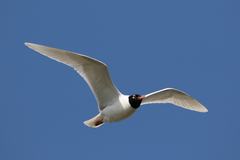
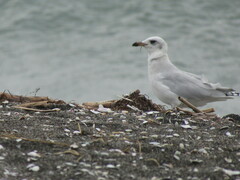
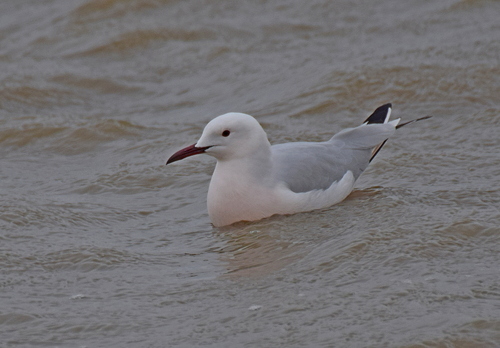
The Mediterranean gull is slightly larger and bulkier than the black-headed gull with a heavier bill and longer, darker legs. The breeding plumage adult is a distinctive white gull, with a very pale grey mantle and wings with white primary feathers without black tips. The black hood extends down the nape and shows distinct white eye crescents. The sharp-tipped, parallel sided, dark red bill has a black subterminal band. The non breeding adult is similar but the hood is reduced to an extensive dusky "bandit" mask through the eye. This bird takes two years to reach... Wikipedia →

Sounds

Call0:26

France · 2026

© Thierry THOMAS · XC1146620 · CC BY-NC-SA 4.0

Nocturnal flight call0:10

Netherlands · 2026

© Joost van Bruggen · XC1103760 · CC BY-NC-ND 4.0

Flight call0:05

France · 2026

© Le Louaver Manuel · XC1101857 · CC BY-NC-SA 4.0

Global Distribution

Parks Where Found

# Park Country Daily sighting probability
1 Kiskunság National Park 🇭🇺 Hungary
~20%
2 Camargue 🇫🇷 France
~20%
3 Fertő-Hanság National Park 🇭🇺 Hungary
~10%
4 Doñana National Park 🇪🇸 Spain
<5%
5 Wadden Sea National Park 🇩🇪 Germany
<5%
6 Hortobágy National Park 🇭🇺 Hungary
<5%
7 Bavarian Forest National Park 🇩🇪 Germany
<5%
8 Snowdonia National Park 🇬🇧 United Kingdom
<5%
9 Sierra de Guadarrama National Park 🇪🇸 Spain
<5%

Cities Where Found

# City Country Daily sighting probability
1 Antalya 🇹🇷 Turkey
~20%
2 Algiers 🇩🇿 Algeria
~20%
3 Casablanca 🇲🇦 Morocco
~20%
4 Rabat 🇲🇦 Morocco
~20%
5 Dublin 🇮🇪 Ireland
~20%
6 Liverpool 🇬🇧 United Kingdom
~20%
7 Porto 🇵🇹 Portugal
~10%
8 Izmir 🇹🇷 Turkey
~10%
9 Istanbul 🇹🇷 Turkey
~10%
10 Lisbon 🇵🇹 Portugal
~10%

Before you go

What are the chances of seeing a Mediterranean Gull in Doñana National Park?

Rare

Under 5% of wildlife watchers report a Mediterranean Gull sighting in Doñana National Park on a given day, based on 143 verified sightings from GBIF citizen-science data from 2019 to 2026. It is the 150th most-seen of the 234 birds we can rate there. Over three days the chance rises to about 10%, and over a week to about 30%, if each day is a fresh chance.

When is the best time to see a Mediterranean Gull in Doñana National Park?

July

In that month about 20% of wildlife watchers report a Mediterranean Gull in Doñana National Park on a given day, against under 5% in March–May and September–November, the lowest months. That is one of Doñana National Park's driest months, with almost no rain against 90 mm in October.

What time of day is best to see a Mediterranean Gull?

Between 9 am and noon

Across all the parks we cover, that three-hour window holds the most Mediterranean Gull sightings with a recorded time, and about 9 in 10 of them come between 6 am and 6 pm: it is a daytime animal.

Is Doñana National Park the best place to see a Mediterranean Gull?

4th of 9

Of the 9 parks where we can rate Mediterranean Gull sightings, Doñana National Park ranks 4th at under 5%. The best odds are in Kiskunság National Park (Hungary, about 20%), Camargue (France, about 20%) and Fertő-Hanság National Park (Hungary, about 10%).

Where does the Mediterranean Gull sighting chance come from?

GBIF citizen-science records

It is estimated from how often the Mediterranean Gull is recorded against all the birds logged in Doñana National Park (143 verified sightings from 2019 to 2026), calibrated against known sighting rates. Figures are rounded to the nearest 10% because citizen-science data supports honest approximations, not decimals, and months with records from fewer than five people show "—". How it works.

← Back to Doñana National Park