


Completed


Harbor Seal
Phoca vitulina
Silhouette: Andy Wilson · PhyloPic
- KingdomAnimalia (Animals)
- PhylumChordata (Chordates)
- ClassMammalia (Mammals)
- OrderCarnivora (Carnivorans)
- FamilyPhocidae (Earless Seals)
- GenusPhoca (common seals)
- SpeciesPhoca vitulina (Harbor Seal)
In 3 days ~40% in a week ~60%
7 Verified sightings at El Vizcaíno Biosphere Reserve From 2019 to 2026
2,733 In all 14 parks
May Best month
☀️ Diurnal When it's spotted
About the Harbor Seal
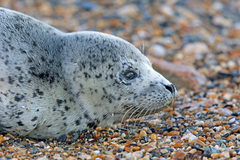
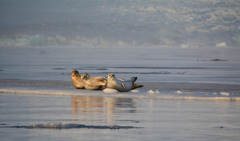
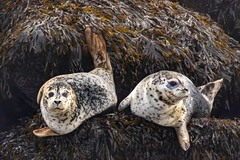
The harbor (or harbour) seal (Phoca vitulina), also known as the common seal, is a true seal found along temperate and Arctic marine coastlines of the Northern Hemisphere. The most widely distributed species of pinniped (walruses, eared seals, and true seals), they are found in coastal waters of the northern Atlantic and Pacific oceans, Baltic and North seas.
Harbor seals are brown, silvery white, tan, or grey, with distinctive V-shaped nostrils. An adult can attain a length of 1.85 m (6.1 ft) and weigh up to 168 kg (370 lb). Blubber under the seal's skin helps to maintain body temperature. Females outlive males (30–35 years versus 20–25 years). Harbor seals stick to familiar resting spots or haulout sites, generally rocky areas (although ice, sand, and mud may also be used) where they are protected from adverse weather conditions and predation, near a foraging area. Males may fight over mates under water and on land. Females bear a single pup after a nine-month gestation, which they care for alone. Pups can weigh up to 16 kg (35 lb) and are able to swim and dive within hours of birth. They develop quickly on their mothers' fat-rich milk, and are weaned after four to six weeks.
The global population of harbor seals is 350,000–500,000, but the freshwater subspecies Ungava seal in Northern Quebec is endangered. Once a common practice, sealing is now illegal in many nations within the animal's range. Wikipedia →
Sounds
Recording0:12
United States · 2026
© Cat Chang · iNaturalist · CC BY-NC 4.0
Recording0:11
Germany · 2016
© Jorick van de Westeringh · Observation.org, Nature data from around the World · CC BY-NC-ND 4.0
Recent sightings of Harbor Seal in El Vizcaíno Biosphere Reserve
LIVEiNaturalistGlobal Distribution
Parks Where Found
| # | Park | Country | Daily sighting probability |
|---|---|---|---|
| 1 | Kenai Fjords National Park | 🇺🇸 United States | |
| 2 | Vatnajokull National Park | 🇮🇸 Iceland | |
| 3 | Wrangell-St. Elias National Park | 🇺🇸 United States | |
| 4 | Svalbard | 🇳🇴 Norway | |
| 5 | Wadden Sea National Park | 🇩🇪 Germany | |
| 6 | Great Bear Rainforest | 🇨🇦 Canada | |
| 7 | Redwood National Park | 🇺🇸 United States | |
| 8 | Acadia National Park | 🇺🇸 United States | |
| 9 | Pacific Rim National Park Reserve | 🇨🇦 Canada | |
| 10 | Katmai National Park | 🇺🇸 United States | |
| 11 | Channel Islands National Park | 🇺🇸 United States | |
| 12 | Olympic National Park | 🇺🇸 United States | |
| 13 | Gros Morne National Park | 🇨🇦 Canada | |
| 14 | El Vizcaíno Biosphere Reserve | 🇲🇽 Mexico |
Cities Where Found
| # | City | Country | Daily sighting probability |
|---|---|---|---|
| 1 | Seattle | 🇺🇸 United States | |
| 2 | Vancouver | 🇨🇦 Canada | |
| 3 | San Diego | 🇺🇸 United States | |
| 4 | Rotterdam [The Hague] | 🇳🇱 Netherlands | |
| 5 | San Francisco | 🇺🇸 United States | |
| 6 | Dublin | 🇮🇪 Ireland | |
| 7 | Boston | 🇺🇸 United States | |
| 8 | Los Angeles | 🇺🇸 United States | |
| 9 | New York City | 🇺🇸 United States | |
| 10 | London | 🇬🇧 United Kingdom |
Zoos & Centres Where Found
Closest Relatives at El Vizcaíno Biosphere Reserve


Before you go
What are the chances of seeing a Harbor Seal in El Vizcaíno Biosphere Reserve?
With luck
About 10% of wildlife watchers report a Harbor Seal sighting in El Vizcaíno Biosphere Reserve on a given day, based on 7 verified sightings from GBIF citizen-science data from 2019 to 2026. It is the 13th most-seen of the 16 mammals we can rate there. Over three days the chance rises to about 40%, and over a week to about 60%, if each day is a fresh chance.
When is the best time to see a Harbor Seal in El Vizcaíno Biosphere Reserve?
May, July and September
In those months about 30% of wildlife watchers report a Harbor Seal in El Vizcaíno Biosphere Reserve on a given day, against under 5% in January–April, August and October–November, the lowest months.
What time of day is best to see a Harbor Seal?
Between 9 am and noon
Across all the parks we cover, that three-hour window holds the most Harbor Seal sightings with a recorded time, and about 8 in 10 of them come between 6 am and 6 pm: it is a daytime animal.
Is El Vizcaíno Biosphere Reserve the best place to see a Harbor Seal?
14th of 14
Of the 14 parks where we can rate Harbor Seal sightings, El Vizcaíno Biosphere Reserve ranks 14th at about 10%. The best odds are in Kenai Fjords National Park (United States, about 80%), Vatnajokull National Park (Iceland, about 70%) and Wrangell-St. Elias National Park (United States, about 70%). All parks ranked.
Which relatives of the Harbor Seal live in El Vizcaíno Biosphere Reserve?
Same order: Carnivora
The closest relatives of the Harbor Seal that you can see in El Vizcaíno Biosphere Reserve (order Carnivora, Carnivorans) are Coyote (about 50%), California Sea Lion (about 40%) and Common Raccoon (about 20%), with each one's daily chance of a sighting.
Where does the Harbor Seal sighting chance come from?
GBIF citizen-science records
It is estimated from how often the Harbor Seal is recorded against all the mammals logged in El Vizcaíno Biosphere Reserve (7 verified sightings from 2019 to 2026), calibrated against known sighting rates. Figures are rounded to the nearest 10% because citizen-science data supports honest approximations, not decimals, and months with records from fewer than five people show "—". How it works.
