About the Botany Bay Diamond Weevil
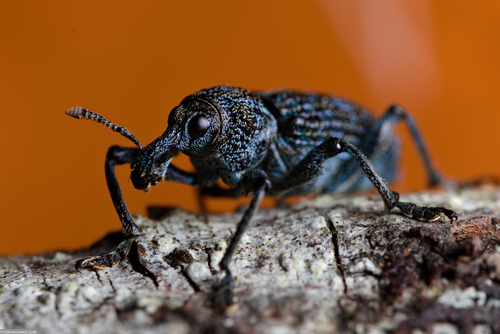
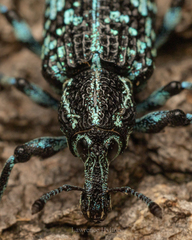
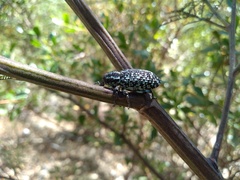
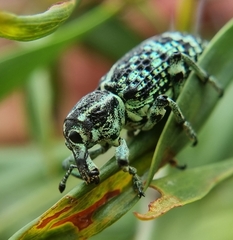
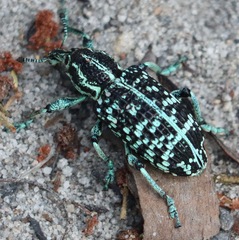
Chrysolopus spectabilis (common names include Botany Bay diamond weevil, Botany Bay diamond beetle and sapphire weevil) is a species of weevil found in south-eastern Australia. It was discovered during James Cook's first voyage, and became one of the first insects to be described from Australia. The weevil measures up to 25 mm (1.0 in) long and includes distinctive metallic green and black scales. It feeds only on 28 species of the plant genus Acacia.
Chrysolopus spectabilis was first described in 1775 by the Danish entomologist Johan Christian Fabricius, in his work Systema Entomologiae, making it one of the first insects to be described from Australia. Fabricius named the species Curculio spectabilis, where the specific epithet spectabilis translates as "remarkable" or "admirable". Fabricius would have had ample opportunity on visits to London in the previous years to examine the insect collections from Cook's expeditions. Fabricius' species was transferred in 1817 by Ernst Friedrich Germar to the genus Chrysolopus, and so reached its current scientific name. Since then, other species have been added to the genus, which now contains 11 species, all native to Oceania... Wikipedia →