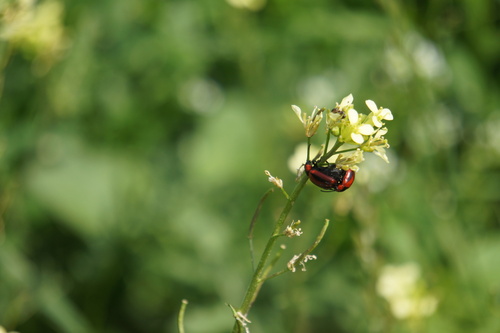
Convergent Lady Beetle

Convergent Lady Beetle

Hippodamia convergens

Daily sighting probability ~10% · With luck
at Glacier National Park

In 3 days ~10% in a week ~30%

5 Verified sightings at Glacier National Park From 2019 to 2026
876 In all 16 parks
August Best month
☀️ Diurnal When it's spotted

About the Convergent Lady Beetle

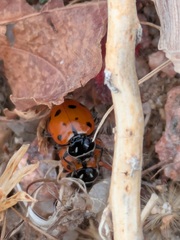
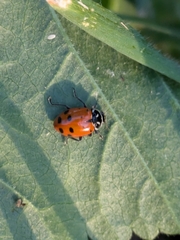
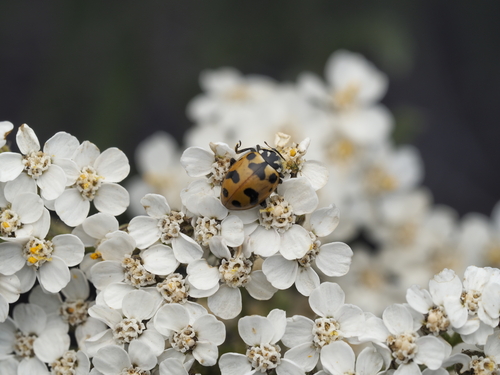
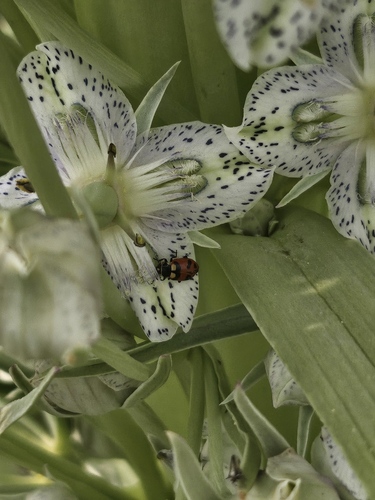
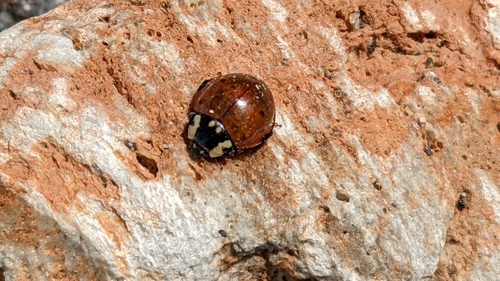
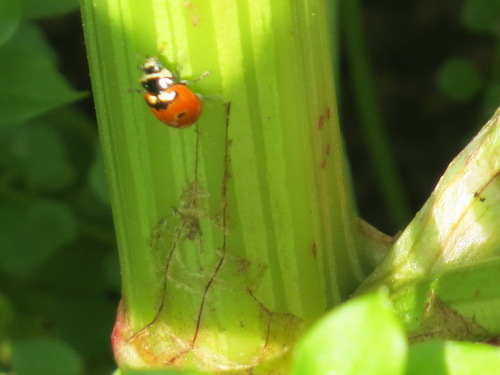
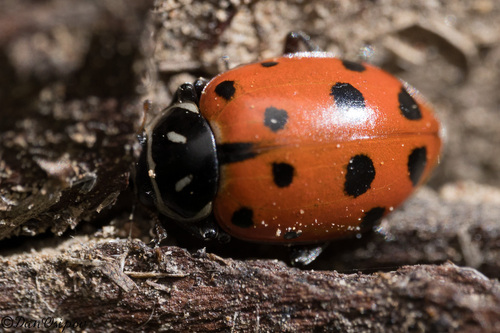
Hippodamia convergens, commonly known as the convergent lady beetle, is one of the most common lady beetles in North America and is found throughout the continent. They tend to live a variety of habitats, including grasslands and forests.

Female H. convergens can lay over 1000 eggs over the span of a few months during the spring or early summer. In some populations, the beetles may undergo diapause if there are limited food resources to delay reproduction.

H. convergens eat soft-bodied insects, with aphids being the primary food resource. Aphids are a known pest, so the H. convergens has been used as a method to control aphids by releasing the beetles to act as a predator for the aphids.

Convergent lady beetles are native to North America, but have also been found in South America after they were imported from California. H. convergens tend to be more successful and more likely to survive to adulthood in warmer temperatures.

In some areas, they gather on sunflower patches, having moved from wheat fields. They use the petioles of the sunflowers to hydrate, particularly in arid summer months. They populate grasslands, forests, agricultural fields, gardens... Wikipedia →
Global Distribution

Parks Where Found

# Park Country Daily sighting probability
1 Sequoia and Kings Canyon National Parks 🇺🇸 United States
~40%
2 Death Valley National Park 🇺🇸 United States
~30%
3 Yosemite National Park 🇺🇸 United States
~30%
4 Big Bend National Park 🇺🇸 United States
~20%
5 Joshua Tree National Park 🇺🇸 United States
~20%
6 Grand Canyon National Park 🇺🇸 United States
~20%
7 Guadalupe Mountains National Park 🇺🇸 United States
~20%
8 Badlands National Park 🇺🇸 United States
~20%
9 Channel Islands National Park 🇺🇸 United States
~20%
10 Zion National Park 🇺🇸 United States
~10%
11 Saguaro National Park 🇺🇸 United States
~10%
12 Bahía de Loreto National Park 🇲🇽 Mexico
~10%
13 Cumbres de Monterrey National Park 🇲🇽 Mexico
~10%
14 Rocky Mountain National Park 🇺🇸 United States
~10%
15 Glacier National Park 🇺🇸 United States
~10%
16 Yellowstone National Park 🇺🇸 United States
<5%

Cities Where Found

# City Country Daily sighting probability
1 Quito 🇪🇨 Ecuador
~50%
2 Ciudad Juárez 🇲🇽 México
~30%
3 La Paz 🇧🇴 Bolivia
~30%
4 Arequipa 🇵🇪 Peru
~30%
5 Cochabamba 🇧🇴 Bolivia
~30%
6 Denver 🇺🇸 United States
~20%
7 Sacramento 🇺🇸 United States
~20%
8 Torreón 🇲🇽 México
~20%
9 Toluca 🇲🇽 México
~20%
10 Puebla 🇲🇽 México
~20%

Before you go

What are the chances of seeing a Convergent Lady Beetle in Glacier National Park?

With luck

About 10% of wildlife watchers report a Convergent Lady Beetle sighting in Glacier National Park on a given day, based on 5 verified sightings from GBIF citizen-science data from 2019 to 2026. It is the 134th most-seen of the 147 insects we can rate there. Over three days the chance rises to about 10%, and over a week to about 30%, if each day is a fresh chance.

When is the best time to see a Convergent Lady Beetle in Glacier National Park?

July to September

In those months about 10% of wildlife watchers report a Convergent Lady Beetle in Glacier National Park on a given day, against under 5% in October to June, the lowest months. Those are among Glacier National Park's driest months, with about 35 mm of rain a month against 80 mm in February.

What time of day is best to see a Convergent Lady Beetle?

Between 11 am and 2 pm

Across all the parks we cover, that three-hour window holds the most Convergent Lady Beetle sightings with a recorded time, and about 9 in 10 of them come between 6 am and 6 pm: it is a daytime animal.

Which relatives of the Convergent Lady Beetle live in Glacier National Park?

Same genus: Hippodamia

The closest relatives of the Convergent Lady Beetle that you can see in Glacier National Park (genus Hippodamia, Oblong Lady Beetles) are Casey's Lady Beetle (about 10%) and Oregon Lady Beetle (about 10%), with each one's daily chance of a sighting.

Where does the Convergent Lady Beetle sighting chance come from?

GBIF citizen-science records

It is estimated from how often the Convergent Lady Beetle is recorded against all the insects logged in Glacier National Park (5 verified sightings from 2019 to 2026), calibrated against known sighting rates. Figures are rounded to the nearest 10% because citizen-science data supports honest approximations, not decimals, and months with records from fewer than five people show "—". How it works.

← Back to Glacier National Park