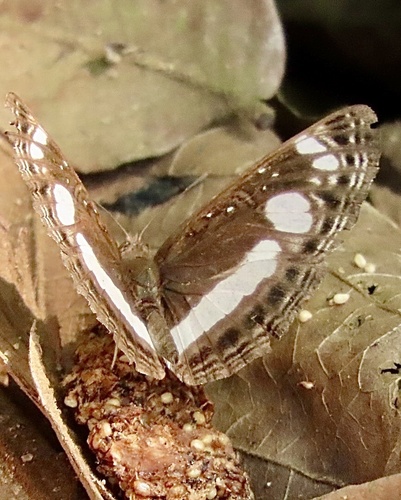
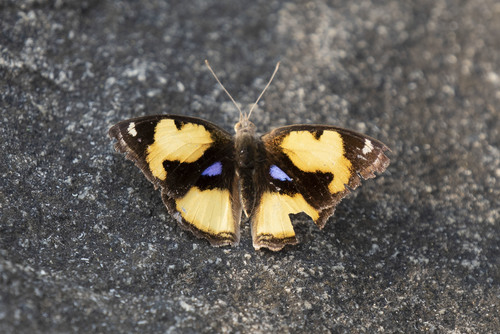
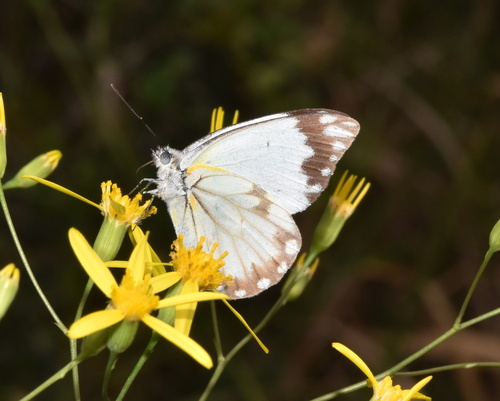
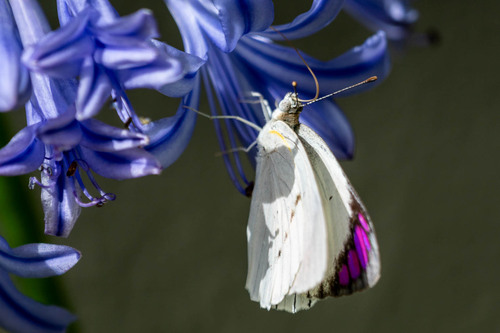
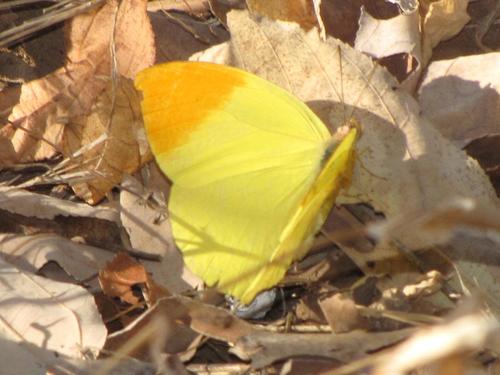
Dancing Amber

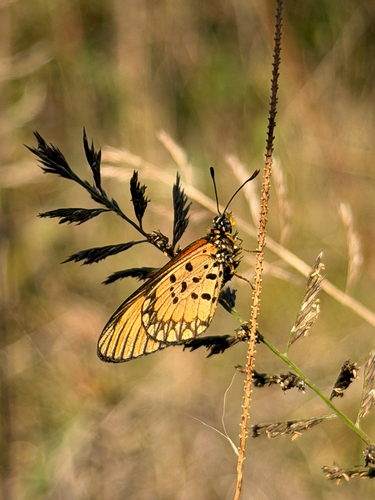
Dancing Amber

Telchinia serena

Daily sighting probability ~40% · Likely
at Gonarezhou National Park

In 3 days ~80% in a week >90%

15 Verified sightings at Gonarezhou National Park From 2019 to 2026
491 In all 12 parks
May Best month
☀️ Diurnal When it's spotted

About the Dancing Amber

Acraea serena, the dancing acraea, is a butterfly of the family Nymphalidae. It is found throughout Africa south of the Sahara. It is the most common of the Acraea, from Dakar to Fort-Dauphin and from Yemen to the Cape. This is the type species of the old genus Telchinia, which may warrant re-separation from Acraea. Formerly, A. serena was often misidentified as Acraea eponina (small orange acraea) or Acraea terpsicore (tawny coaster).

It is very likely that the butterfly's black-spotted orange markings are a sign of unpalatability and it may well form part of a mimicry ring with Erikssonia edgei. Acraea manjaca from Madagascar, now considered to be conspecific with Acraea serena, has a complex taxonomic history which illustrates the problems in interpreting the genus as a whole. Here is an account of how Acraea manjaca was placed by different authors.

Boisduval notes the proximity with eponina Cramer in his original description of 1833. Aurivillius (1898) considers... Wikipedia →

Global Distribution

Parks Where Found

# Park Country Daily sighting probability
1 Gonarezhou National Park 🇿🇼 Zimbabwe
~40%
2 iSimangaliso Wetland Park 🇿🇦 South Africa
~30%
3 Gorongosa National Park 🇲🇿 Mozambique
~30%
4 South Luangwa National Park 🇿🇲 Zambia
~20%
5 Kruger National Park 🇿🇦 South Africa
~20%
6 uMkhuze Game Reserve 🇿🇦 South Africa
~20%
7 Hwange National Park 🇿🇼 Zimbabwe
~20%
8 Odzala-Kokoua National Park 🇨🇬 Republic of the Congo
~20%
9 Pilanesberg National Park 🇿🇦 South Africa
~10%
10 Nairobi National Park 🇰🇪 Kenya
~10%
11 Hluhluwe-Imfolozi Park 🇿🇦 South Africa
~10%
12 Chobe National Park 🇧🇼 Botswana
~10%

Cities Where Found

# City Country Daily sighting probability
1 Maputo 🇲🇿 Mozambique
~40%
2 Accra 🇬🇭 Ghana
~40%
3 Cotonou 🇧🇯 Benin
~40%
4 Serrekunda 🇬🇲 Gambia
~30%
5 Ouagadougou 🇧🇫 Burkina Faso
~20%
6 Pretoria 🇿🇦 South Africa
~20%
7 Dar es-Salaam 🇹🇿 Tanzania
~20%
8 Antananarivo 🇲🇬 Madagascar
~20%
9 Kampala 🇺🇬 Uganda
~20%
10 Harare 🇿🇼 Zimbabwe
~20%

Before you go

What are the chances of seeing a Dancing Amber in Gonarezhou National Park?

Likely

About 40% of wildlife watchers report a Dancing Amber sighting in Gonarezhou National Park on a given day, based on 15 verified sightings from GBIF citizen-science data from 2019 to 2026. It is the 2nd most-seen of the 31 insects we can rate there. Over three days the chance rises to about 80%, and over a week to over 90%, if each day is a fresh chance.

When is the best time to see a Dancing Amber in Gonarezhou National Park?

May

In that month about 70% of wildlife watchers report a Dancing Amber in Gonarezhou National Park on a given day, against under 5% in March, July–September and November, the lowest months. That is one of Gonarezhou National Park's driest months, with about 10 mm of rain against 150 mm in January.

What time of day is best to see a Dancing Amber?

Between 10 am and 1 pm

Across all the parks we cover, that three-hour window holds the most Dancing Amber sightings with a recorded time, and nearly all of them come between 6 am and 6 pm: it is a daytime animal.

Is Gonarezhou National Park the best place to see a Dancing Amber?

Yes

Of the 12 parks where we can rate Dancing Amber sightings, Gonarezhou National Park has the highest daily chance: about 40%. Next come iSimangaliso Wetland Park (South Africa, about 30%) and Gorongosa National Park (Mozambique, about 30%).

Which relatives of the Dancing Amber live in Gonarezhou National Park?

Same family: Nymphalidae

The closest relatives of the Dancing Amber that you can see in Gonarezhou National Park (family Nymphalidae, Brush-footed Butterflies) are Two-Tailed Pasha (about 30%), Spotted Sailer (about 30%) and White-Barred Emperor (about 30%), with each one's daily chance of a sighting.

Where does the Dancing Amber sighting chance come from?

GBIF citizen-science records

It is estimated from how often the Dancing Amber is recorded against all the insects logged in Gonarezhou National Park (15 verified sightings from 2019 to 2026), calibrated against known sighting rates. Figures are rounded to the nearest 10% because citizen-science data supports honest approximations, not decimals, and months with records from fewer than five people show "—". How it works.
← Back to Gonarezhou National Park