


Completed



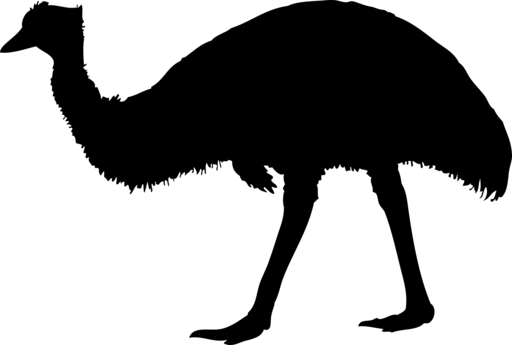
Emu
Dromaius novaehollandiae
Silhouette: Darren Naish (vectorize by T. Michael Keesey) · PhyloPic
- KingdomAnimalia (Animals)
- PhylumChordata (Chordates)
- ClassAves (Birds)
- OrderCasuariiformes (Cassowaries and Emus)
- FamilyDromaiidae
- GenusDromaius (Emus)
- SpeciesDromaius novaehollandiae (Emu)
In 3 days ~70% in a week ~90%
554 Verified sightings at Grampians National Park From 2019 to 2026
2,338 In all 9 parks
January Best month
☀️ Diurnal When it's spotted
About the Emu
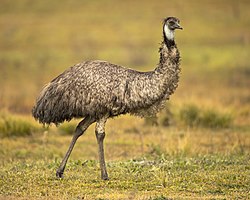
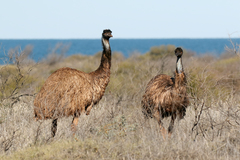
The emu (Dromaius novaehollandiae) is a species of flightless bird endemic to Australia, where it is the tallest native bird. It is the only extant member of the genus Dromaius and the third-tallest living bird after its African ratite relatives, the common ostrich and Somali ostrich. The emu's native ranges cover most of the Australian mainland. The Tasmanian, Kangaroo Island and King Island subspecies became extinct after the European settlement of Australia in 1788.
The emu has soft, brown feathers, a long neck, and long legs. It can grow up to 1.9 m (6 ft 3 in) in height. It is a robust bipedal runner that can travel great distances, and when necessary can sprint at 48 km/h (30 mph). It is omnivorous and forages on a variety of plants and insects, and can go for weeks without eating. It drinks infrequently, but takes in copious amounts of fresh water when the opportunity arises.
Breeding takes place in May and June, and fighting among females for a mate is common. Females can mate several times and lay several clutches of eggs in one season. The male incubates the eggs; during this process he hardly eats or drinks and loses a significant amount of weight. The eggs hatch after around eight weeks, and the young are nurtured by their fathers. They reach full size after around six months, but can remain as a family unit until the next breeding season.
The emu is sufficiently common to be rated as a least-concern species by the International Union for Conservation of Nature. Despite this, some local populations are listed as endangered, with all the insular subspecies going extinct by the 1800s. Threats to their survival include egg predation by other animals (especially invasive species), roadkills and habitat fragmentation.
The emu is an important cultural icon of Australia, appearing on the coat of arms and various coinages. The bird features prominently in Indigenous Australian mythologies. Wikipedia →
Recent sightings of Emu in Grampians National Park
LIVEiNaturalistGlobal Distribution
Parks Where Found
| # | Park | Country | Daily sighting probability |
|---|---|---|---|
| 1 | Flinders Ranges National Park | 🇦🇺 Australia | |
| 2 | Hattah-Kulkyne National Park | 🇦🇺 Australia | |
| 3 | Grampians National Park | 🇦🇺 Australia | |
| 4 | Wilsons Promontory National Park | 🇦🇺 Australia | |
| 5 | Great Otway National Park | 🇦🇺 Australia | |
| 6 | Kosciuszko National Park | 🇦🇺 Australia | |
| 7 | Ningaloo Marine Park | 🇦🇺 Australia | |
| 8 | Kakadu National Park | 🇦🇺 Australia | |
| 9 | Litchfield National Park | 🇦🇺 Australia |
Zoos & Centres Where Found
Closest Relatives at Grampians National Park
No species of the same family or order lives in Grampians National Park, so these are its closest relatives here: other birds.




Before you go
What are the chances of seeing an Emu in Grampians National Park?
Possible
About 30% of wildlife watchers report an Emu sighting in Grampians National Park on a given day, based on 554 verified sightings from GBIF citizen-science data from 2019 to 2026. It is the 21st most-seen of the 145 birds we can rate there. Over three days the chance rises to about 70%, and over a week to about 90%, if each day is a fresh chance.
When is the best time to see an Emu in Grampians National Park?
June, August and December–February
In those months about 40% of wildlife watchers report an Emu in Grampians National Park on a given day, against about 20% in May, the lowest month.
What time of day is best to see an Emu?
Between 1 and 4 pm
Across all the parks we cover, that three-hour window holds the most Emu sightings with a recorded time, and about 9 in 10 of them come between 6 am and 6 pm: it is a daytime animal.
Is Grampians National Park the best place to see an Emu?
3rd of 9
Of the 9 parks where we can rate Emu sightings, Grampians National Park ranks 3rd at about 30%. The best odds are in Flinders Ranges National Park (Australia, about 60%) and Hattah-Kulkyne National Park (Australia, about 40%). All parks ranked.
Where does the Emu sighting chance come from?
GBIF citizen-science records
It is estimated from how often the Emu is recorded against all the birds logged in Grampians National Park (554 verified sightings from 2019 to 2026), calibrated against known sighting rates. Figures are rounded to the nearest 10% because citizen-science data supports honest approximations, not decimals, and months with records from fewer than five people show "—". How it works.
