Sooty Oystercatcher

Sooty Oystercatcher

Haematopus fuliginosus

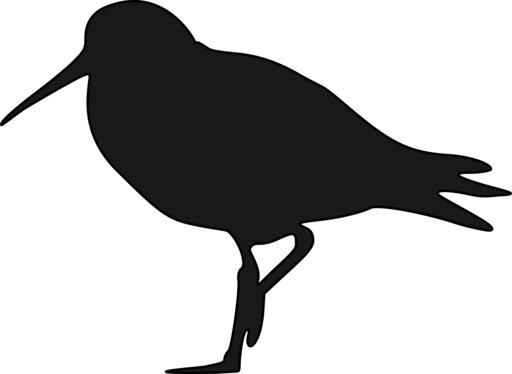
Silhouette: terngirl · PhyloPic

LCLeast ConcernNTVUENCR Endemic
Daily sighting probability ~20% · Possible
at Phillip Island Nature Park

In 3 days ~50% in a week ~80%

547 Verified sightings at Phillip Island Nature Park From 2019 to 2026
1,694 In all 10 parks
October Best month
☀️ Diurnal When it's spotted

About the Sooty Oystercatcher

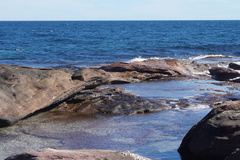
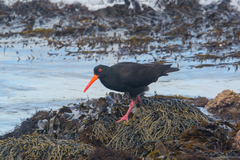
The sooty oystercatcher (Haematopus fuliginosus) is a species of oystercatcher. It is a wading bird endemic to Australia and commonly found on its coastline. It prefers rocky coastlines, but will occasionally live in estuaries. All of its feathers are black. It has a red eye, eye ring and bill, and pink legs.

John Gould described the sooty oystercatcher in 1845. Its species name is the Latin adjective fuliginosus, "sooty". Two subspecies are recognised, the nominate from the coastline of southern Australia and subspecies ophthalmicus from northern Australia. The southern subspecies is larger and heavier than the northern. The northern one, with a more yellowish eye ring, is found from the Kimberleys across the top of the country to Mackay in central Queensland. There is considerable overlap, as the southern subspecies has been found up to Cape York. Subspecies ophthalmicus has been thought distinctive enough to warrant species status and needs further investigation. Black redbill is a local name.

Measuring 42 to 52 cm (16.5 to 20.5 in) long with a bill length of 5–8 cm (2–3 in), the sooty oystercatcher has all black plumage, with pink-red legs and scarlet...

Wikipedia →

Sounds

Call0:48

Australia · 2023

© Peter Boesman · XC859895 · CC BY-NC-ND 4.0

Alarm call0:07

Australia · 2021

© Drew Davison · XC670803 · CC BY-NC-ND 4.0

Flight call0:12

Australia · 2019

© Ramit Singal · XC495760 · CC BY-NC-SA 4.0

Global Distribution

Parks Where Found

# Park Country Daily sighting probability
1 Freycinet National Park 🇦🇺 Australia
~40%
2 Wilsons Promontory National Park 🇦🇺 Australia
~40%
3 Flinders Chase 🇦🇺 Australia
~20%
4 Phillip Island Nature Park 🇦🇺 Australia
~20%
5 Maria Island National Park 🇦🇺 Australia
~20%
6 Booderee National Park 🇦🇺 Australia
~10%
7 Rottnest Island 🇦🇺 Australia
~10%
8 Great Otway National Park 🇦🇺 Australia
~10%
9 Noosa National Park 🇦🇺 Australia
~10%
10 Royal National Park 🇦🇺 Australia
<5%

Cities Where Found

# City Country Daily sighting probability
1 Sydney 🇦🇺 Australia
<5%
2 Melbourne 🇦🇺 Australia
<5%
3 Brisbane 🇦🇺 Australia
<5%

Before you go

What are the chances of seeing a Sooty Oystercatcher in Phillip Island Nature Park?

Possible

About 20% of wildlife watchers report a Sooty Oystercatcher sighting in Phillip Island Nature Park on a given day, based on 547 verified sightings from GBIF citizen-science data from 2019 to 2026. It is the 49th most-seen of the 149 birds we can rate there. Over three days the chance rises to about 50%, and over a week to about 80%, if each day is a fresh chance.

When is the best time to see a Sooty Oystercatcher in Phillip Island Nature Park?

January, August and October

In those months about 30% of wildlife watchers report a Sooty Oystercatcher in Phillip Island Nature Park on a given day, against about 10% in April, the lowest month.

What time of day is best to see a Sooty Oystercatcher?

Between noon and 3 pm

Across all the parks we cover, that three-hour window holds the most Sooty Oystercatcher sightings with a recorded time, and nearly all of them come between 6 am and 6 pm: it is a daytime animal.

Where does the Sooty Oystercatcher sighting chance come from?

GBIF citizen-science records

It is estimated from how often the Sooty Oystercatcher is recorded against all the birds logged in Phillip Island Nature Park (547 verified sightings from 2019 to 2026), calibrated against known sighting rates. Figures are rounded to the nearest 10% because citizen-science data supports honest approximations, not decimals, and months with records from fewer than five people show "—". How it works.

← Back to Phillip Island Nature Park