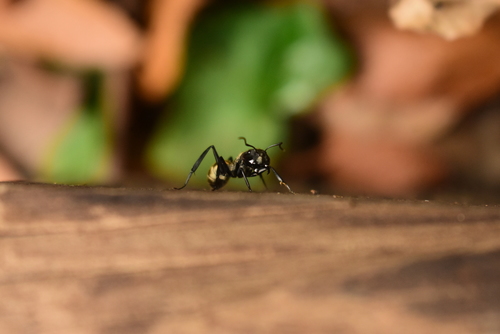
Harlequin Beetle

Harlequin Beetle

Acrocinus longimanus

Daily sighting probability ~10% · With luck
at Piedras Blancas National Park

In 3 days ~40% in a week ~60%

9 Verified sightings at Piedras Blancas National Park From 2019 to 2026
114 In all 9 parks
February Best month
☀️🌙 Day & Night When it's spotted

About the Harlequin Beetle

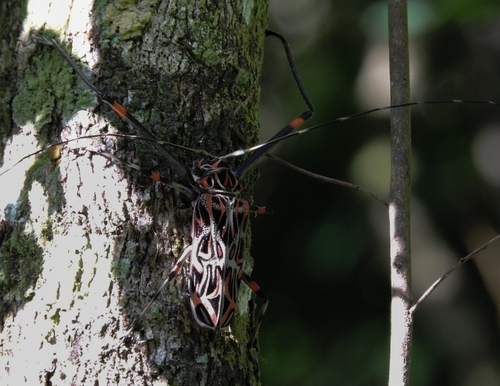
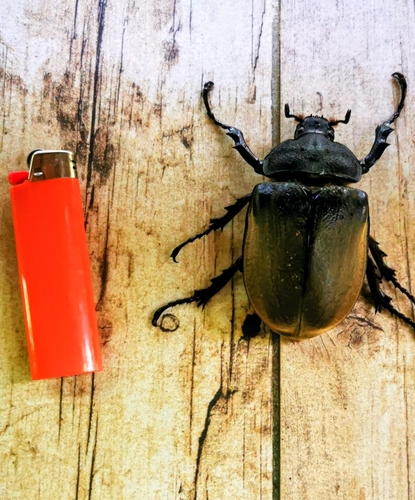
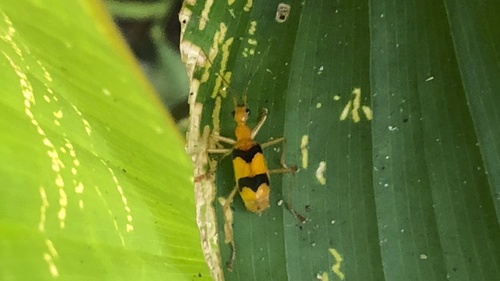
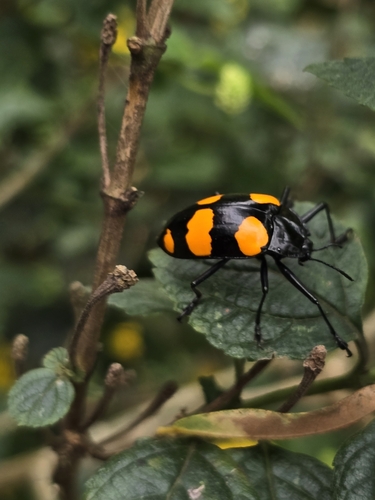
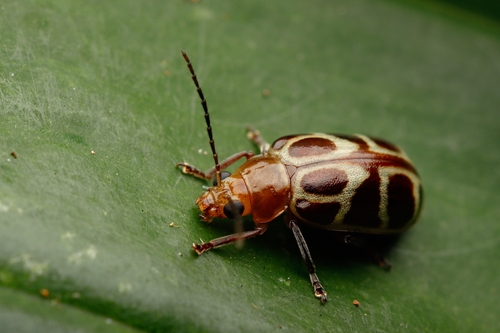
The harlequin beetle (Acrocinus longimanus) is a large and distinctly colored species of longhorn beetle from the Neotropics and the only member of the genus Acrocinus. It is given its English name because of the elaborate pattern of black, orange-red and greenish-yellow markings in both sexes; despite this the beetle is quite well-camouflaged when perched on a lichen or fungus covered tree trunk. The species name longimanus is a Latin word that refers to the extremely long forelegs (manus) of the large males, which are longer than the beetle's entire body. The head-and-body of this beetle measures 4.3 to 7.5 cm (1.7–3.0 in) long. The size and unusual appearance of the harlequin beetle has made it popular among insect collectors. Although essentially harmless to humans, it may bite in self-defense with its strong mandibles.

The harlequin beetle was first scientifically described as Cerambyx longimanus by Linnaeus in the 10th edition of Systema Naturae in 1758. In 1806, it was moved to the newly coined genus Acrocinus by Illiger. Although recent authorities have consistently recognized it as the only member of this genus, the relationship to other genera of longhorned... Wikipedia →

Global Distribution

Parks Where Found

# Park Country Daily sighting probability
1 Braulio Carrillo National Park 🇨🇷 Costa Rica
~20%
2 Rincón de la Vieja National Park 🇨🇷 Costa Rica
~20%
3 Piedras Blancas National Park 🇨🇷 Costa Rica
~10%
4 Manu National Park 🇵🇪 Peru
~10%
5 Yasuní National Park 🇪🇨 Ecuador
~10%
6 Corcovado National Park 🇨🇷 Costa Rica
~10%
7 Tambopata National Reserve 🇵🇪 Peru
~10%
8 Arenal Volcano National Park 🇨🇷 Costa Rica
~10%
9 La Amistad International Park (Panama) 🇵🇦 Panama
<5%

Cities Where Found

# City Country Daily sighting probability
1 Panama City 🇵🇦 Panama
~10%
2 San José 🇨🇷 Costa Rica
<5%

Before you go

What are the chances of seeing a Harlequin Beetle in Piedras Blancas National Park?

With luck

About 10% of wildlife watchers report a Harlequin Beetle sighting in Piedras Blancas National Park on a given day, based on 9 verified sightings from GBIF citizen-science data from 2019 to 2026. It is the 49th most-seen of the 117 insects we can rate there. Over three days the chance rises to about 40%, and over a week to about 60%, if each day is a fresh chance.

When is the best time to see a Harlequin Beetle in Piedras Blancas National Park?

February

In that month about 40% of wildlife watchers report a Harlequin Beetle in Piedras Blancas National Park on a given day, against under 5% in May to December, the lowest months. That is one of Piedras Blancas National Park's driest months, with about 55 mm of rain against 650 mm in October.

What time of day is best to see a Harlequin Beetle?

Between 7 and 10 pm

Across all the parks we cover, that three-hour window holds the most Harlequin Beetle sightings with a recorded time, and about half of them come between 6 am and 6 pm: it is seen both by day and at night.

Is Piedras Blancas National Park the best place to see a Harlequin Beetle?

3rd of 9

Of the 9 parks where we can rate Harlequin Beetle sightings, Piedras Blancas National Park ranks 3rd at about 10%. The best odds are in Braulio Carrillo National Park (Costa Rica, about 20%) and Rincón de la Vieja National Park (Costa Rica, about 20%).

Where does the Harlequin Beetle sighting chance come from?

GBIF citizen-science records

It is estimated from how often the Harlequin Beetle is recorded against all the insects logged in Piedras Blancas National Park (9 verified sightings from 2019 to 2026), calibrated against known sighting rates. Figures are rounded to the nearest 10% because citizen-science data supports honest approximations, not decimals, and months with records from fewer than five people show "—". How it works.

← Back to Piedras Blancas National Park