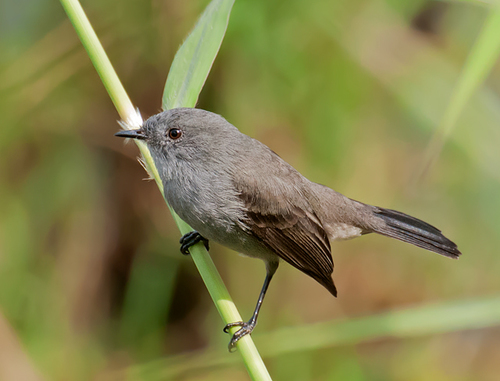
Grey Monjita

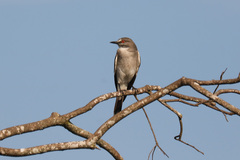
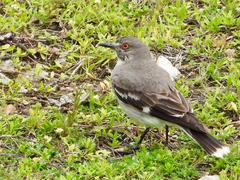
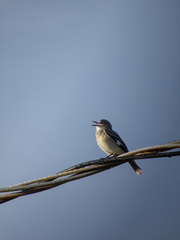
Grey Monjita

Xolmis cinereus

Silhouette: Edwin Price · PhyloPic

LCLeast ConcernNTVUENCR
Daily sighting probability ~30% · Possible
at Serra da Canastra National Park

In 3 days ~60% in a week ~90%

189 Verified sightings at Serra da Canastra National Park From 2019 to 2026
798 In all 6 parks
October Best month
☀️ Diurnal When it's spotted

About the Grey Monjita

The grey monjita (Nengetus cinereus) is a species of bird in the family Tyrannidae, the tyrant flycatchers. It is found in Argentina, Bolivia, Brazil, Paraguay, Peru, Suriname, and Uruguay. The grey monjita has a complicated taxonomic history. It was formally described in 1816 as Tyrannus cinereus. It was later moved to genus Nengetus that had been erected in 1827. Throughout most of the twentieth century it was assigned to genus Xolmis. Studies published in 2018 and 2020 showed that it should be returned to Nengetus and taxonomic systems began moving it there in 2021. However, as of December 2024 BirdLife International's Handbook of the Birds of the World retained the species in Xolmis. Because the reassignment to Nengetus and other reassignments from Xolmis resulted in species of several genera having the English name "monjita", the South American Classification Committee of the American Ornithological Society is seeking a proposal to consider English name changes.

The grey monjita is the only species in genus Nengetus. The grey monjita... Wikipedia →

Sounds

Recording0:02

Brazil · 2015

© Luciano Bernardes · iNaturalist · CC BY-NC 4.0

Recording0:13

Brazil · 2022

Fernando Sessegolo · iNaturalist · CC0

Recording0:04

Brazil · 2026

© Miguel A. Paixão · iNaturalist · CC BY 4.0

Global Distribution

Parks Where Found

# Park Country Daily sighting probability
1 Emas National Park 🇧🇷 Brazil
~50%
2 Serra da Canastra National Park 🇧🇷 Brazil
~30%
3 Iberá National Park 🇦🇷 Argentina
~20%
4 El Palmar National Park 🇦🇷 Argentina
~20%
5 Chapada dos Guimarães National Park 🇧🇷 Brazil
<5%
6 Parque Estadual Encontro das Águas 🇧🇷 Brazil
<5%

Cities Where Found

# City Country Daily sighting probability
1 Montevideo 🇺🇾 Uruguay
~10%
2 Brasilia 🇧🇷 Brazil
~10%
3 Campo Grande 🇧🇷 Brazil
~10%
4 Asuncion 🇵🇾 Paraguay
~10%
5 Campinas 🇧🇷 Brazil
<5%
6 Belo Horizonte 🇧🇷 Brazil
<5%
7 São Paulo 🇧🇷 Brazil
<5%
8 Buenos Aires 🇦🇷 Argentina
<5%

Before you go

What are the chances of seeing a Grey Monjita in Serra da Canastra National Park?

Possible

About 30% of wildlife watchers report a Grey Monjita sighting in Serra da Canastra National Park on a given day, based on 189 verified sightings from GBIF citizen-science data from 2019 to 2026. It is the 66th most-seen of the 294 birds we can rate there. Over three days the chance rises to about 60%, and over a week to about 90%, if each day is a fresh chance.

When is the best time to see a Grey Monjita in Serra da Canastra National Park?

October

In that month about 50% of wildlife watchers report a Grey Monjita in Serra da Canastra National Park on a given day, against about 10% in March, the lowest month.

What time of day is best to see a Grey Monjita?

Between 8 and 11 am

Across all the parks we cover, that three-hour window holds the most Grey Monjita sightings with a recorded time, and about 9 in 10 of them come between 6 am and 6 pm: it is a daytime animal.

Is Serra da Canastra National Park the best place to see a Grey Monjita?

2nd of 6

Of the 6 parks where we can rate Grey Monjita sightings, Serra da Canastra National Park ranks 2nd at about 30%. The best odds are in Emas National Park (Brazil, about 50%). All parks ranked.

Where does the Grey Monjita sighting chance come from?

GBIF citizen-science records

It is estimated from how often the Grey Monjita is recorded against all the birds logged in Serra da Canastra National Park (189 verified sightings from 2019 to 2026), calibrated against known sighting rates. Figures are rounded to the nearest 10% because citizen-science data supports honest approximations, not decimals, and months with records from fewer than five people show "—". How it works.

← Back to Serra da Canastra National Park