Sooty Tyrannulet

Sooty Tyrannulet

Serpophaga nigricans

Silhouette: Emily Willoughby · PhyloPic

LCLeast ConcernNTVUENCR
Daily sighting probability ~40% · Likely
at Serra da Canastra National Park

In 3 days ~80% in a week >90%

257 Verified sightings at Serra da Canastra National Park From 2019 to 2026
884 In all 6 parks
August Best month
☀️ Diurnal When it's spotted

About the Sooty Tyrannulet

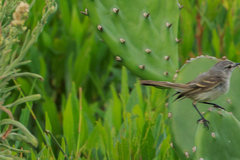
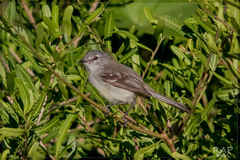
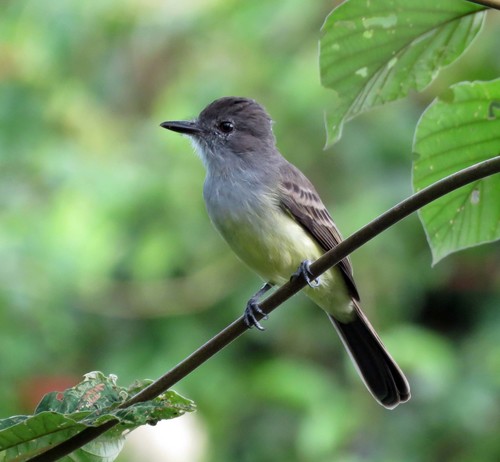
The sooty tyrannulet (Serpophaga nigricans) is a species of bird in the family Tyrannidae, the tyrant flycatchers. It is small, usually weighing 9 grams with a length of 12 centimeters, and has gray or brownish-grey feathers with black tail feathers.

It is found in Argentina, Brazil, and Uruguay; also southern Paraguay. A small extension of its range is in southeastern Bolivia. Its natural habitats are subtropical or tropical moist shrubland, rivers, and swamps. The sooty tyrannulet was first described by the French ornithologist Louis Pierre Vieillot based on observations by the Spanish military officer Félix de Azara from 1805. Azara gave it the name "Tachuri obscurito menor". In 1817, Vieillot gave it the scientific name Sylvia nigricans. In 1927, the ornithologist Carl Eduard Hellmayr placed the sooty tyrannulet in the genus Serpophaga with the name Serpophaga nigricans. It does not have any subspecies. It was once thought be most closely related to Urich's tyrannulet, however a mitochondrial DNA study has shown that it is most closely related to the torrent tyrannulet.

The sooty tyrannulet is overall a dark grey colour, with a brownish tinge to... Wikipedia →
Sounds

Duet0:05

Brazil · 2025

© Robson Silva e Silva · XC1027673 · CC BY-NC-SA 4.0

Call0:41

Brazil · 2023

© Vinícius Soares Domingues · XC839556 · CC BY-NC-SA 4.0

Song0:32

Argentina · 2023

© Bernard BOUSQUET · XC824805 · CC BY-NC-SA 4.0

Global Distribution

Parks Where Found

# Park Country Daily sighting probability
1 Serra da Canastra National Park 🇧🇷 Brazil
~40%
2 Iberá National Park 🇦🇷 Argentina
~30%
3 Emas National Park 🇧🇷 Brazil
<5%
4 Itatiaia National Park 🇧🇷 Brazil
<5%
5 Iguaçu National Park 🇧🇷 Brazil
<5%
6 Iguazú National Park 🇦🇷 Argentina
<5%

Cities Where Found

# City Country Daily sighting probability
1 Buenos Aires 🇦🇷 Argentina
<5%
2 Curitiba 🇧🇷 Brazil
<5%
3 Porto Alegre 🇧🇷 Brazil
<5%
4 Cordoba 🇦🇷 Argentina
<5%
5 São Paulo 🇧🇷 Brazil
<5%

Before you go

What are the chances of seeing a Sooty Tyrannulet in Serra da Canastra National Park?

Likely

About 40% of wildlife watchers report a Sooty Tyrannulet sighting in Serra da Canastra National Park on a given day, based on 257 verified sightings from GBIF citizen-science data from 2019 to 2026. It is the 26th most-seen of the 294 birds we can rate there. Over three days the chance rises to about 80%, and over a week to over 90%, if each day is a fresh chance.

When is the best time to see a Sooty Tyrannulet in Serra da Canastra National Park?

August

In that month about 60% of wildlife watchers report a Sooty Tyrannulet in Serra da Canastra National Park on a given day, against about 30% in March and November–January, the lowest months. That is one of Serra da Canastra National Park's driest months, with about 20 mm of rain against 280 mm in January.

What time of day is best to see a Sooty Tyrannulet?

Between 9 am and noon

Across all the parks we cover, that three-hour window holds the most Sooty Tyrannulet sightings with a recorded time, and about 9 in 10 of them come between 6 am and 6 pm: it is a daytime animal.

Is Serra da Canastra National Park the best place to see a Sooty Tyrannulet?

Yes

Of the 6 parks where we can rate Sooty Tyrannulet sightings, Serra da Canastra National Park has the highest daily chance: about 40%. Next come Iberá National Park (Argentina, about 30%) and Emas National Park (Brazil, under 5%).

Where does the Sooty Tyrannulet sighting chance come from?

GBIF citizen-science records

It is estimated from how often the Sooty Tyrannulet is recorded against all the birds logged in Serra da Canastra National Park (257 verified sightings from 2019 to 2026), calibrated against known sighting rates. Figures are rounded to the nearest 10% because citizen-science data supports honest approximations, not decimals, and months with records from fewer than five people show "—". How it works.

← Back to Serra da Canastra National Park