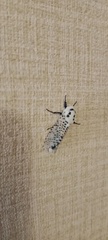
Wood Leopard Moth

Wood Leopard Moth

Zeuzera pyrina

Daily sighting probability ~10% · With luck
at Sierra Nevada National Park

In 3 days ~30% in a week ~50%

19 Verified sightings at Sierra Nevada National Park From 2019 to 2026
129 In all 6 parks
July Best month
☀️🌙 Day & Night When it's spotted

About the Wood Leopard Moth

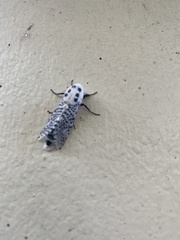
Zeuzera pyrina, the leopard moth or wood leopard moth, is a moth of the family Cossidae. It is considered a pest by fruit growers, as the larvae feed on branches of many kinds of fruit trees. Olive trees in particular are very susceptible and can be killed by the larvae burrowing within them.

This species can be found primarily in Europe (excluding Ireland) but also in northern Africa (Algeria, Egypt, Libya, Morocco) and Asia (Taiwan, India, Iran, Iraq, Israel, Japan, Korea, Lebanon, Sri Lanka, Syria, Turkey). It was introduced into the northeastern United States prior to 1879 and has a range including Maine, Pennsylvania, Tennessee and Texas.

These moths are associated with woodland, gardens and orchards. Zeuzera pyrina has a wingspan of 35–60 millimetres (1.4–2.4 in). They are a highly distinctive species. The length of the abdomen of the female is about 45–50 millimetres (1.8–2.0 in). The... Wikipedia →

Global Distribution

Parks Where Found

# Park Country Daily sighting probability
1 Sierra Nevada National Park 🇪🇸 Spain
~10%
2 Cévennes National Park 🇫🇷 France
~10%
3 Pyrénées National Park 🇫🇷 France
~10%
4 Sierra de Guadarrama National Park 🇪🇸 Spain
~10%
5 Bavarian Forest National Park 🇩🇪 Germany
~10%
6 Wadden Sea National Park 🇩🇪 Germany
<5%

Cities Where Found

# City Country Daily sighting probability
1 Bucharest 🇷🇴 Romania
~10%
2 Budapest 🇭🇺 Hungary
~10%
3 Vienna 🇦🇹 Austria
~10%
4 Essen 🇩🇪 Germany
~10%
5 Belgrade 🇷🇸 Serbia
~10%
6 Porto 🇵🇹 Portugal
~10%
7 Paris 🇫🇷 France
~10%
8 Warsaw 🇵🇱 Poland
~10%
9 Istanbul 🇹🇷 Turkey
~10%
10 London 🇬🇧 United Kingdom
~10%

Before you go

What are the chances of seeing a Wood Leopard Moth in Sierra Nevada National Park?

With luck

About 10% of wildlife watchers report a Wood Leopard Moth sighting in Sierra Nevada National Park on a given day, based on 19 verified sightings from GBIF citizen-science data from 2019 to 2026. It is the 282nd most-seen of the 479 insects we can rate there. Over three days the chance rises to about 30%, and over a week to about 50%, if each day is a fresh chance.

When is the best time to see a Wood Leopard Moth in Sierra Nevada National Park?

June and July

In those months about 20% of wildlife watchers report a Wood Leopard Moth in Sierra Nevada National Park on a given day, against under 5% in August to May, the lowest months.

What time of day is best to see a Wood Leopard Moth?

Between 10 pm and 1 am

Across all the parks we cover, that three-hour window holds the most Wood Leopard Moth sightings with a recorded time, and about 7 in 10 of them come between 6 pm and 6 am: it is seen both by day and at night.

Is Sierra Nevada National Park the best place to see a Wood Leopard Moth?

Yes

Of the 6 parks where we can rate Wood Leopard Moth sightings, Sierra Nevada National Park has the highest daily chance: about 10%. Next come Cévennes National Park (France, about 10%) and Pyrénées National Park (France, about 10%).

Which relatives of the Wood Leopard Moth live in Sierra Nevada National Park?

Same order: Lepidoptera

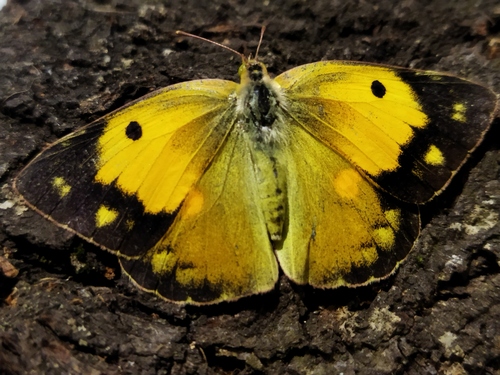
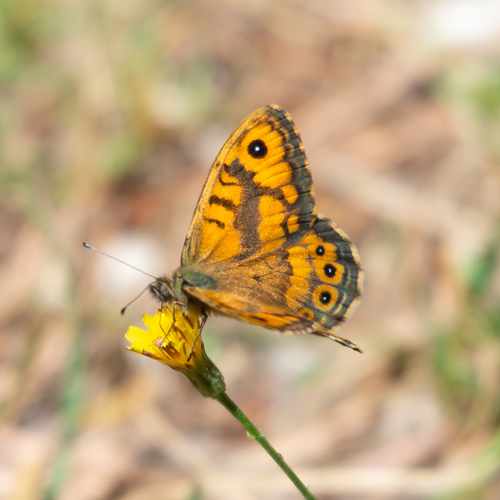
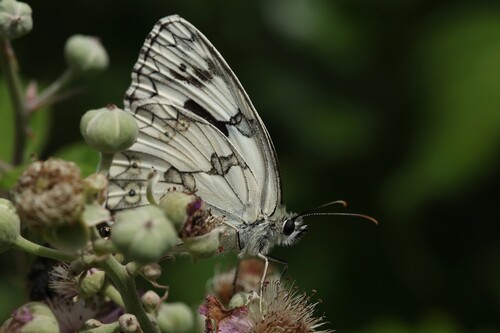
The closest relatives of the Wood Leopard Moth that you can see in Sierra Nevada National Park (order Lepidoptera, Butterflies and Moths) are Clouded Yellow (about 40%), Wall Brown (about 40%) and Iberian Marbled White (about 30%), with each one's daily chance of a sighting.

Where does the Wood Leopard Moth sighting chance come from?

GBIF citizen-science records

It is estimated from how often the Wood Leopard Moth is recorded against all the insects logged in Sierra Nevada National Park (19 verified sightings from 2019 to 2026), calibrated against known sighting rates. Figures are rounded to the nearest 10% because citizen-science data supports honest approximations, not decimals, and months with records from fewer than five people show "—". How it works.

← Back to Sierra Nevada National Park