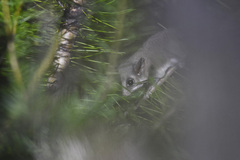
Eastern Pygmy Possum

Eastern Pygmy Possum

Cercartetus nanus

Silhouette: T. Michael Keesey · PhyloPic

LCLeast ConcernNTVUENCR
Daily sighting probability ~10% · With luck
at Springbrook National Park

In 3 days ~20% in a week ~40%

7 Verified sightings at Springbrook National Park From 2019 to 2026
33 In all 4 parks
October Best month
🌙 Nocturnal When it's spotted

About the Eastern Pygmy Possum

The eastern pygmy possum (Cercartetus nanus) is a diprotodont marsupial of south-eastern Australia. Occurring from southern Queensland to eastern South Australia and also Tasmania, it is found in a range of habitats, including rainforest, sclerophyll forest, woodland and heath.

The eastern pygmy possum is the type species of the genus Cercartetus (family Burramyidae), and was first described as Phalangista nana with the specific name meaning 'dwarf' in Latin. Currently, the authority for the specific name is widely accepted as Desmarest 1818, but in a review recently published, it was pointed out that an earlier version of Desmarest's account was published in 1817.

Vernacular names that have been used for this species include dwarf phalanger, minute phalanger, dwarf cuscus, pigmy phalanger, Bell's Dromicia, opossum mouse, dusky Dromicia, pygmy opossum, thick-tailed Dromicia... Wikipedia →

Global Distribution

Parks Where Found

# Park Country Daily sighting probability
1 Lamington National Park 🇦🇺 Australia
~10%
2 Springbrook National Park 🇦🇺 Australia
~10%
3 Blue Mountains National Park 🇦🇺 Australia
~10%
4 Great Otway National Park 🇦🇺 Australia
~10%

Before you go

What are the chances of seeing an Eastern Pygmy Possum in Springbrook National Park?

With luck

About 10% of wildlife watchers report an Eastern Pygmy Possum sighting in Springbrook National Park on a given day, based on 7 verified sightings from GBIF citizen-science data from 2019 to 2026. It is the 17th most-seen of the 22 mammals we can rate there. Over three days the chance rises to about 20%, and over a week to about 40%, if each day is a fresh chance.

When is the best time to see an Eastern Pygmy Possum in Springbrook National Park?

September and October

In those months about 20% of wildlife watchers report an Eastern Pygmy Possum in Springbrook National Park on a given day, against under 5% in May–August and November–March, the lowest months.

What time of day is best to see an Eastern Pygmy Possum?

Between 7 and 10 pm

Across all the parks we cover, that three-hour window holds the most Eastern Pygmy Possum sightings with a recorded time, and about 7 in 10 of them come between 6 pm and 6 am: it is mostly seen at night.

Is Springbrook National Park the best place to see an Eastern Pygmy Possum?

Among the best

Of the 4 parks where we can rate Eastern Pygmy Possum sightings, Springbrook National Park ranks 2nd at about 10%, level with the leaders once rounded. The best odds are in Lamington National Park (Australia, about 10%).

Which relatives of the Eastern Pygmy Possum live in Springbrook National Park?

Same order: Diprotodontia

The closest relatives of the Eastern Pygmy Possum that you can see in Springbrook National Park (order Diprotodontia, Kangaroos, Possums, Wombats, and Allies) are Red-legged Pademelon (about 70%), Koala (about 60%) and Red-necked Pademelon (about 50%), with each one's daily chance of a sighting.

Where does the Eastern Pygmy Possum sighting chance come from?

GBIF citizen-science records

It is estimated from how often the Eastern Pygmy Possum is recorded against all the mammals logged in Springbrook National Park (7 verified sightings from 2019 to 2026), calibrated against known sighting rates. Figures are rounded to the nearest 10% because citizen-science data supports honest approximations, not decimals, and months with records from fewer than five people show "—". How it works.

← Back to Springbrook National Park