

Completed
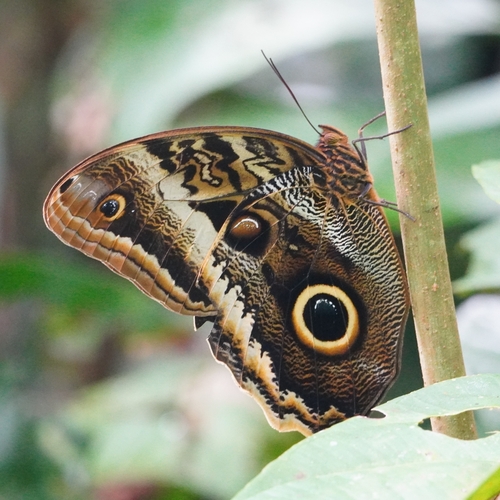
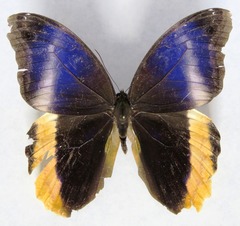
Banded Owl-Butterfly
Caligo atreus
- KingdomAnimalia (Animals)
- PhylumArthropoda (Arthropods)
- ClassInsecta (Insects)
- OrderLepidoptera (Butterflies and Moths)
- FamilyNymphalidae (Brush-footed Butterflies)
- GenusCaligo (Owl-Butterflies)
- SpeciesCaligo atreus (Banded Owl-Butterfly)
In 3 days ~60% in a week ~90%
42 Verified sightings at Tortuguero National Park From 2019 to 2026
431 In all 16 parks
December Best month
☀️🌙 Day & Night When it's spotted
About the Banded Owl-Butterfly
Caligo atreus, the yellow-edged giant owl, is a butterfly of the family Nymphalidae. The species can be found from Mexico to Peru. The wingspan is 140–160 mm. The larvae feed on Musa and Heliconia species and can be a pest for banana cultivation. Adults feed on juices of rotting fruit.
Adults are known for their relatively long lifespan compared to other butterflies. Up to 3-4+ months. Adults are slow and often are attacked by birds. Adult males remaining inactive for most of the day until around 6 AM and 6 PM for an hour.
Chrysalis mimic dead leaves with shiny gold spots. They remain in this stage for about 22 days until emerging. Adults are common in butterfly houses because of their relative ease to breed. Wikipedia →
Recent sightings of Banded Owl-Butterfly in Tortuguero National Park
LIVEiNaturalistGlobal Distribution
Parks Where Found
| # | Park | Country | Daily sighting probability |
|---|---|---|---|
| 1 | Braulio Carrillo National Park | 🇨🇷 Costa Rica | |
| 2 | Tenorio Volcano National Park | 🇨🇷 Costa Rica | |
| 3 | Tortuguero National Park | 🇨🇷 Costa Rica | |
| 4 | Arenal Volcano National Park | 🇨🇷 Costa Rica | |
| 5 | Bastimentos Island National Marine Park | 🇵🇦 Panama | |
| 6 | Gandoca-Manzanillo Wildlife Refuge | 🇨🇷 Costa Rica | |
| 7 | Monteverde Cloud Forest Reserve | 🇨🇷 Costa Rica | |
| 8 | Marino Ballena National Park | 🇨🇷 Costa Rica | |
| 9 | Chirripó National Park | 🇨🇷 Costa Rica | |
| 10 | Corcovado National Park | 🇨🇷 Costa Rica | |
| 11 | Farallones de Cali National Natural Park | 🇨🇴 Colombia | |
| 12 | Piedras Blancas National Park | 🇨🇷 Costa Rica | |
| 13 | La Amistad International Park (Panama) | 🇵🇦 Panama | |
| 14 | Tapantí-Macizo de la Muerte National Park | 🇨🇷 Costa Rica | |
| 15 | Cahuita National Park | 🇨🇷 Costa Rica | |
| 16 | Manuel Antonio National Park | 🇨🇷 Costa Rica |
Cities Where Found
| # | City | Country | Daily sighting probability |
|---|---|---|---|
| 1 | San José | 🇨🇷 Costa Rica |
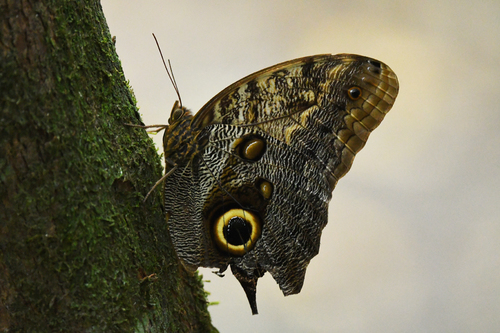
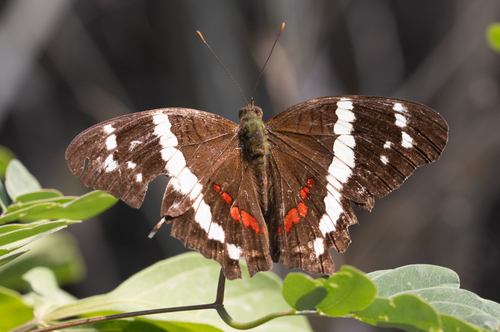
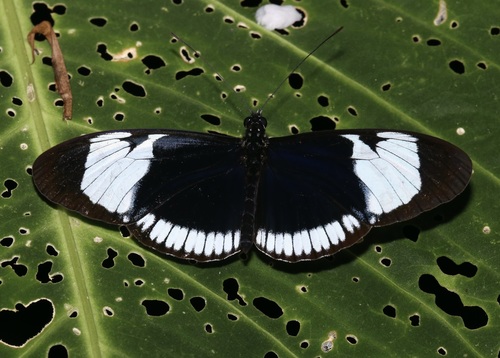
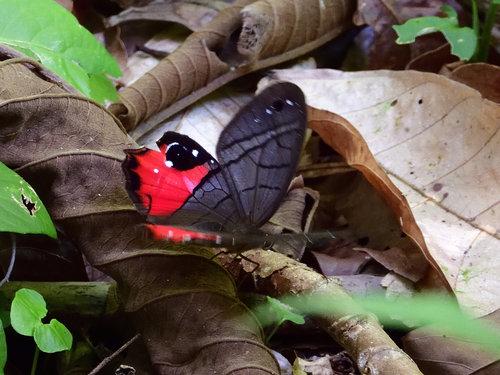
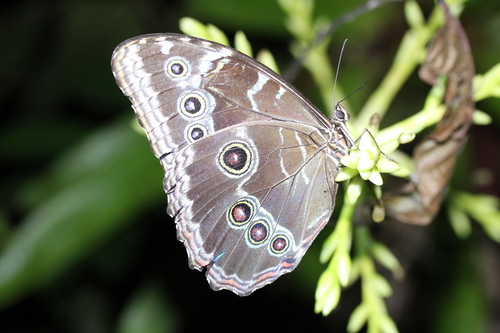
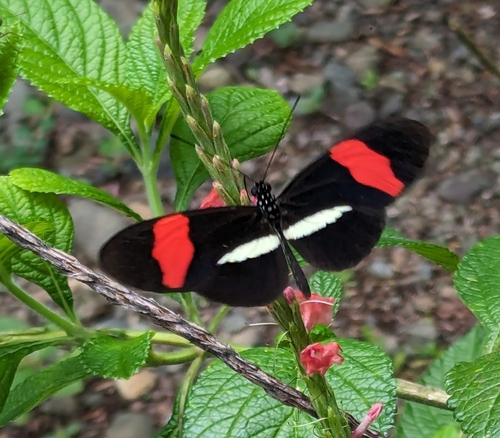
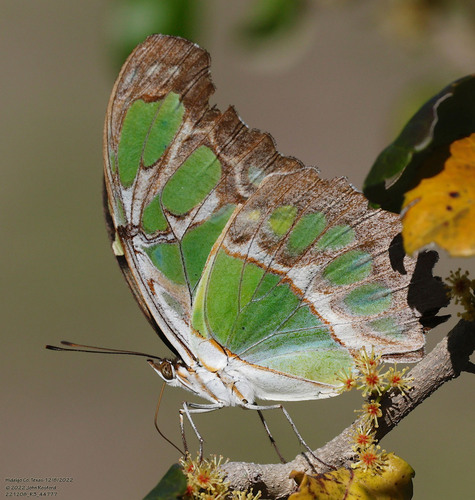
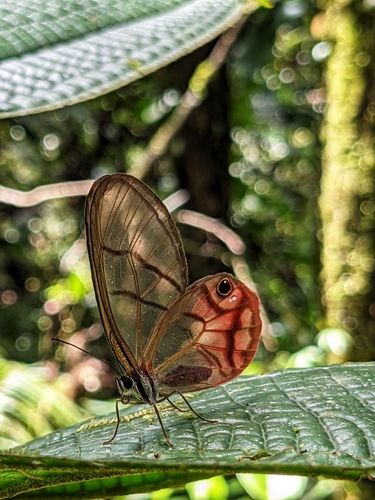
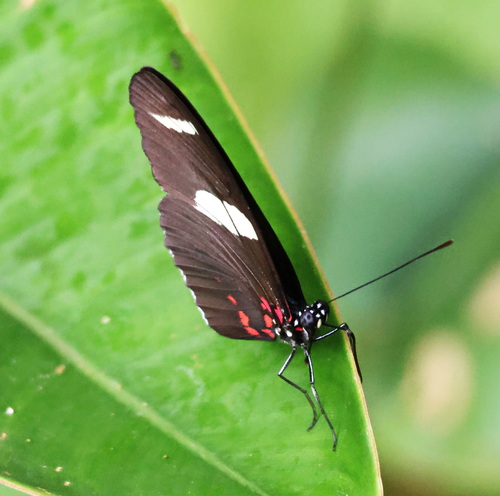
Closest Relatives at Tortuguero National Park



Before you go
What are the chances of seeing a Banded Owl-Butterfly in Tortuguero National Park?
Possible
About 30% of wildlife watchers report a Banded Owl-Butterfly sighting in Tortuguero National Park on a given day, based on 42 verified sightings from GBIF citizen-science data from 2019 to 2026. It is the 5th most-seen of the 80 insects we can rate there. Over three days the chance rises to about 60%, and over a week to about 90%, if each day is a fresh chance.
When is the best time to see a Banded Owl-Butterfly in Tortuguero National Park?
December
In that month about 40% of wildlife watchers report a Banded Owl-Butterfly in Tortuguero National Park on a given day, against about 20% in January–February, June, August and October, the lowest months.
What time of day is best to see a Banded Owl-Butterfly?
Between 9 am and noon
Across all the parks we cover, that three-hour window holds the most Banded Owl-Butterfly sightings with a recorded time, and about 7 in 10 of them come between 6 am and 6 pm: it is seen both by day and at night.
Is Tortuguero National Park the best place to see a Banded Owl-Butterfly?
Among the best
Of the 16 parks where we can rate Banded Owl-Butterfly sightings, Tortuguero National Park ranks 3rd at about 30%, level with the leaders once rounded. The best odds are in Braulio Carrillo National Park (Costa Rica, about 30%) and Tenorio Volcano National Park (Costa Rica, about 30%).
Where does the Banded Owl-Butterfly sighting chance come from?
GBIF citizen-science records
It is estimated from how often the Banded Owl-Butterfly is recorded against all the insects logged in Tortuguero National Park (42 verified sightings from 2019 to 2026), calibrated against known sighting rates. Figures are rounded to the nearest 10% because citizen-science data supports honest approximations, not decimals, and months with records from fewer than five people show "—". How it works.
