About the Mossy Rose Gall Wasp
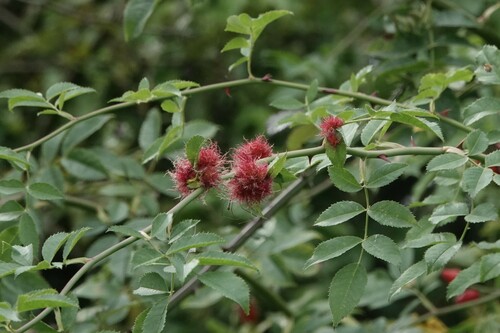
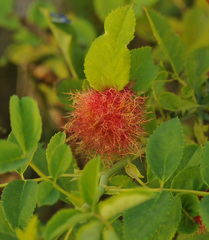
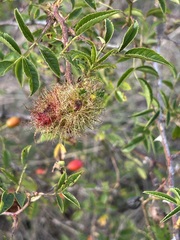
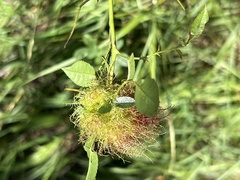
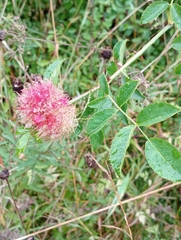
Diplolepis rosae is a gall wasp which causes a gall known as the rose bedeguar gall, robin's pincushion, mossy rose gall, or simply moss gall. The gall develops as a chemically induced distortion of an unopened leaf axillary or terminal bud, mostly on field rose (Rosa arvensis) or dog rose (Rosa canina) shrubs. The female wasp lays up to 60 eggs within each leaf bud using her ovipositor. The grubs develop within the gall, and the wasps emerge in spring; the wasp is parthenogenetic with fewer than one percent being males.
A similar gall is caused by Diplolepis mayri, but this is much less common. Being so prominent and interesting in appearance, this gall has more folklore attached to it than most. The term 'Bedeguar, Bedegar or Bedequar' comes from a French word, bédégar, and is ultimately from the Persian, bād-āwar, meaning 'wind-brought'. Robin in Robin's pincushion refers to the woodland sprite of English folklore, Robin Goodfellow.
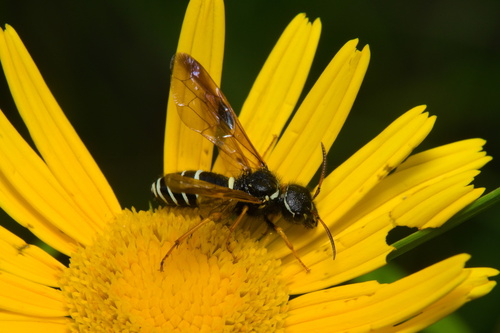
The female is about 4 mm (0.16 in) long. Parts of the abdomen and legs are yellow-red, while the rest of the body is black. The male is black and lacks the hypopygium structure which clearly identifies the species... Wikipedia →