The Clay

The Clay

Mythimna ferrago

Daily sighting probability ~10% · With luck
at Wadden Sea National Park

In 3 days ~20% in a week ~40%

52 Verified sightings at Wadden Sea National Park From 2019 to 2026
162 In all 8 parks
July Best month
🌙 Nocturnal When it's spotted

About the The Clay

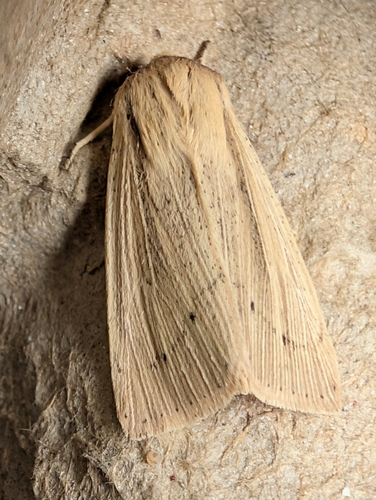
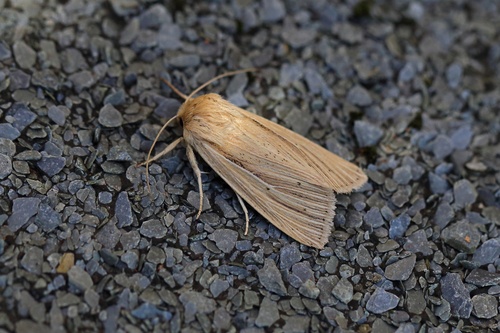
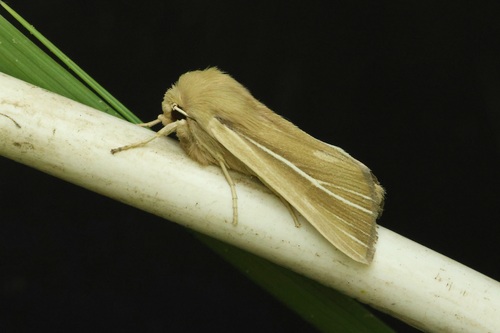
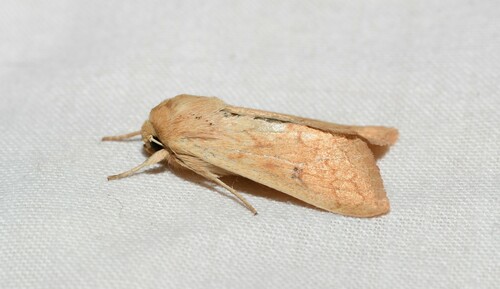
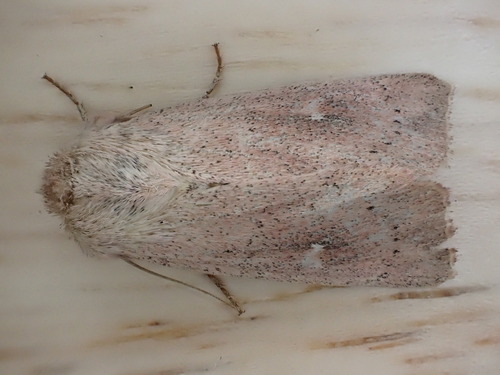
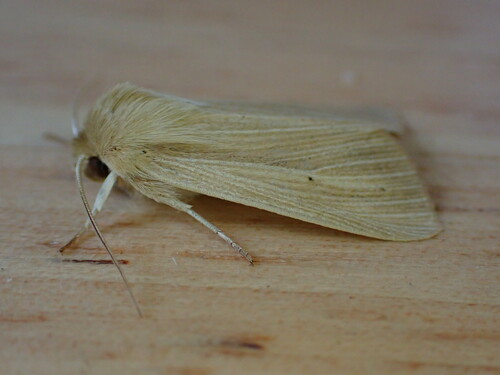
Mythimna ferrago, the clay, is a moth of the family Noctuidae. The species was first described by Johan Christian Fabricius in 1787. It is distributed throughout Europe and is also found in Morocco, Algeria, Turkey, Asia Minor, Armenia, Syria, Turkestan, Israel, Lebanon, Iraq, Iran, Central Asia and the western parts of temperate North Asia, and Tibet.

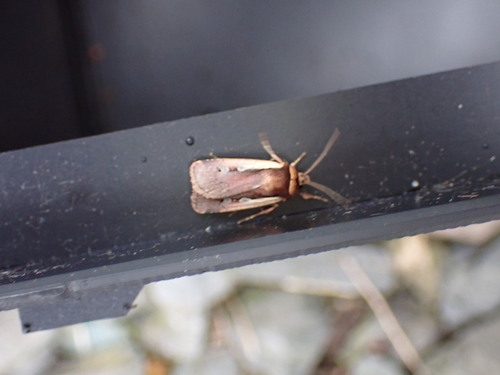
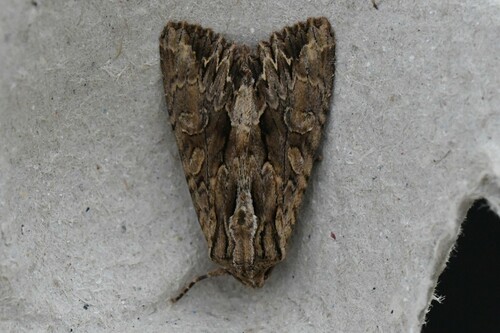
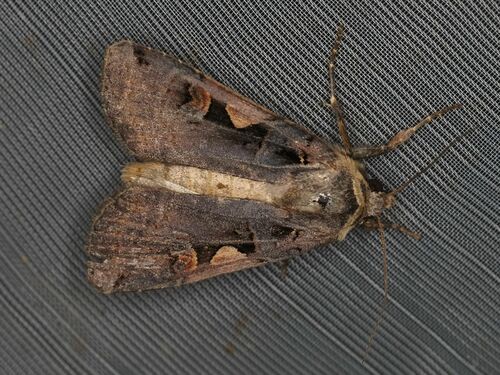
The forewings of this species vary from buffish to orangey brown, usually with a darker central line running lengthways down the wing, interrupted by a pale stigma. There are usually a few small dark spots in the basal area. The hindwings are dark grey with paler margins. The male is easily recognizable by a triangular area of black hair on the underside of the abdomen. The wingspan is 36–44 mm. This moth flies at night in July and August[1] and is attracted to light and sugar.

The wingspan is 36–44 mm. Forewing pale greyish rufous, speckled with dark; Lines indistinct, dark grey; the outer regularly lunulate-dentate, the teeth marked by black dashes on veins; reniform stigma obscure, ending in a cloudy pale spot at lower end of cell; hindwing greyish ochreous; ventral tufts black. The species... Wikipedia →
Global Distribution

Parks Where Found

# Park Country Daily sighting probability
1 Sierra Nevada National Park 🇪🇸 Spain
~10%
2 Mercantour National Park 🇫🇷 France
~10%
3 Snowdonia National Park 🇬🇧 United Kingdom
~10%
4 Wadden Sea National Park 🇩🇪 Germany
~10%
5 Cévennes National Park 🇫🇷 France
~10%
6 Pyrénées National Park 🇫🇷 France
~10%
7 Bavarian Forest National Park 🇩🇪 Germany
<5%
8 Sierra de Guadarrama National Park 🇪🇸 Spain
<5%

Cities Where Found

# City Country Daily sighting probability
1 Liverpool 🇬🇧 United Kingdom
~10%
2 Kharkiv 🇺🇦 Ukraine
~10%
3 London 🇬🇧 United Kingdom
~10%
4 Manchester 🇬🇧 United Kingdom
~10%
5 Birmingham 🇬🇧 United Kingdom
<5%
6 Kyiv 🇺🇦 Ukraine
<5%
7 Copenhagen 🇩🇰 Denmark
<5%
8 Moscow 🇷🇺 Russia
<5%

Before you go

What are the chances of seeing a The Clay in Wadden Sea National Park?

With luck

About 10% of wildlife watchers report a The Clay sighting in Wadden Sea National Park on a given day, based on 52 verified sightings from GBIF citizen-science data from 2019 to 2026. It is the 171st most-seen of the 818 insects we can rate there. Over three days the chance rises to about 20%, and over a week to about 40%, if each day is a fresh chance.

When is the best time to see a The Clay in Wadden Sea National Park?

July

In that month about 20% of wildlife watchers report a The Clay in Wadden Sea National Park on a given day, against under 5% in September to June, the lowest months.

What time of day is best to see a The Clay?

Between 10 pm and 1 am

Across all the parks we cover, that three-hour window holds the most The Clay sightings with a recorded time, and about 8 in 10 of them come between 6 pm and 6 am: it is mostly seen at night.

Is Wadden Sea National Park the best place to see a The Clay?

Among the best

Of the 8 parks where we can rate The Clay sightings, Wadden Sea National Park ranks 4th at about 10%, level with the leaders once rounded. The best odds are in Sierra Nevada National Park (Spain, about 10%), Mercantour National Park (France, about 10%) and Snowdonia National Park (United Kingdom, about 10%).

Which relatives of the The Clay live in Wadden Sea National Park?

Same genus: Mythimna

The closest relatives of the The Clay that you can see in Wadden Sea National Park (genus Mythimna) are Common Wainscot (about 10%), Southern Wainscot (about 10%) and Smoky Wainscot (about 10%), with each one's daily chance of a sighting.

Where does the The Clay sighting chance come from?

GBIF citizen-science records

It is estimated from how often the The Clay is recorded against all the insects logged in Wadden Sea National Park (52 verified sightings from 2019 to 2026), calibrated against known sighting rates. Figures are rounded to the nearest 10% because citizen-science data supports honest approximations, not decimals, and months with records from fewer than five people show "—". How it works.

← Back to Wadden Sea National Park