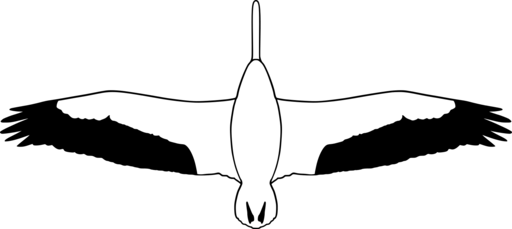
About the American White Pelican
The American white pelican (Pelecanus erythrorhynchos) is a large aquatic soaring bird from the order Pelecaniformes. It breeds in interior North America, moving south and to the coasts, as far as Costa Rica, in winter. The American white pelican was formally described in 1789 by the German naturalist Johann Friedrich Gmelin in his revised and expanded edition of Carl Linnaeus's Systema Naturae. He placed it with the other pelicans in the genus Pelecanus. He coined the binomial name Pelecanus erythrorhynchos. Gmelin based his description on the "rough-billed pelican" that had been described in 1785 by the English ornithologist John Latham. Latham had access to three specimens that had been brought to London from New York and the Hudson Bay area of North America. The scientific name means "red-billed pelican", from the Latin term for a pelican, Pelecanus, and erythrorhynchos, derived from the Ancient Greek words erythros (ἐρυθρός) 'red' + rhynchos (ῥύγχος) 'bill'. The species is monotypic: no subspecies are recognised.
The American white pelican rivals the trumpeter swan, with a similar overall length, as one of the longest birds native to North America... Wikipedia →