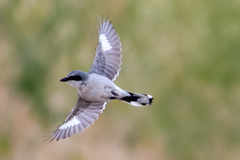
Loggerhead Shrike

Loggerhead Shrike

Lanius ludovicianus

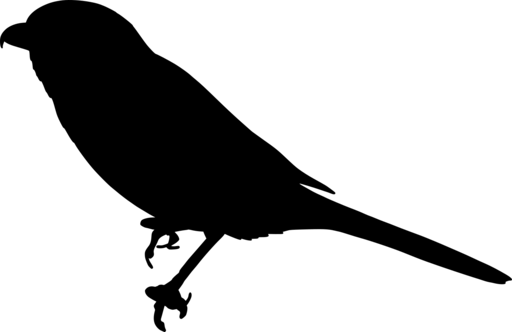
Silhouette: Andy Wilson · PhyloPic

LCNTNear ThreatenedVUENCR Endemic
Daily sighting probability ~30% · Possible
at Badlands National Park

In 3 days ~60% in a week ~90%

237 Verified sightings at Badlands National Park From 2019 to 2026
8,916 In all 21 parks
August Best month
☀️ Diurnal When it's spotted

About the Loggerhead Shrike

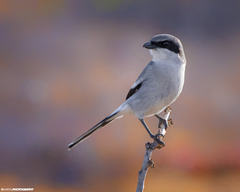
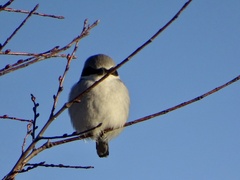
The loggerhead shrike (Lanius ludovicianus) is a passerine bird in the family Laniidae. It is the only member of the shrike family endemic to North America; the related northern shrike (L. borealis) occurs north of its range; however, it is also found in Siberia. It is nicknamed the butcherbird after its carnivorous tendencies, as it consumes prey such as insects, amphibians, lizards, small mammals and small birds, and some prey end up displayed and stored at a site, for example in a tree. Due to its small size and weak talons, this predatory bird relies on impaling its prey upon thorns or barbed wire for facilitated consumption. The numbers of loggerhead shrike have significantly decreased in recent years, especially in Midwestern, New England and Mid-Atlantic areas.

In 1760 the French zoologist Mathurin Jacques Brisson included a description of the loggerhead shrike in his Ornithologie based on a specimen collected in Louisiana in the United States. He used the French name La pie-griesche de la Louisiane and the Latin Lanius ludovicianus. Although Brisson coined Latin names, these do not usually conform to the binomial system and are not recognised by the International... Wikipedia →

Sounds

Song0:35

United States · 2025

© David Tattersley · XC1000430 · CC BY-NC-SA 4.0

Call0:59

United States · 2020

© Brad Banner · XC614736 · CC BY-NC-SA 4.0

Alarm call0:23

United States · 2018

© Bobby Wilcox · XC418584 · CC BY-NC-SA 4.0

Global Distribution

Parks Where Found

# Park Country Daily sighting probability
1 Joshua Tree National Park 🇺🇸 United States
~40%
2 Everglades National Park 🇺🇸 United States
~30%
3 Badlands National Park 🇺🇸 United States
~30%
4 El Vizcaíno Biosphere Reserve 🇲🇽 Mexico
~20%
5 Death Valley National Park 🇺🇸 United States
~20%
6 Cabo Pulmo National Park 🇲🇽 Mexico
~20%
7 Big Bend National Park 🇺🇸 United States
~10%
8 Merritt Island National Wildlife Refuge 🇺🇸 United States
~10%
9 Big Cypress National Preserve 🇺🇸 United States
~10%
10 Channel Islands National Park 🇺🇸 United States
~10%
11 Bahía de Loreto National Park 🇲🇽 Mexico
~10%
12 Guadalupe Mountains National Park 🇺🇸 United States
~10%
13 Padre Island National Seashore 🇺🇸 United States
<5%
14 Saguaro National Park 🇺🇸 United States
<5%
15 Zion National Park 🇺🇸 United States
<5%
16 Congaree National Park 🇺🇸 United States
<5%
17 Grand Canyon National Park 🇺🇸 United States
<5%
18 Point Pelee National Park 🇨🇦 Canada
<5%
19 Rocky Mountain National Park 🇺🇸 United States
<5%
20 Grand Teton National Park 🇺🇸 United States
<5%
21 Yellowstone National Park 🇺🇸 United States
<5%

Cities Where Found

# City Country Daily sighting probability
1 Toluca 🇲🇽 México
~20%
2 Mexico City 🇲🇽 México
~10%
3 Miami 🇺🇸 United States
~10%
4 Orlando 🇺🇸 United States
~10%
5 León 🇲🇽 México
~10%
6 Guadalajara 🇲🇽 México
~10%
7 San Antonio 🇺🇸 United States
~10%
8 Houston 🇺🇸 United States
<5%
9 Mesa 🇺🇸 United States
<5%
10 Puebla 🇲🇽 México
<5%

Zoos & Centres Where Found

# Zoo / Centre Country
1 San Diego Zoo Safari Park 🇺🇸 United States In captivity
2 Toronto Zoo 🇨🇦 Canada In captivity
3 Nashville Zoo at Grassmere 🇺🇸 United States In captivity
4 Ralph Perkins II Wildlife Center and Woods Garden 🇺🇸 United States In captivity

Before you go

What are the chances of seeing a Loggerhead Shrike in Badlands National Park?

Possible

About 30% of wildlife watchers report a Loggerhead Shrike sighting in Badlands National Park on a given day, based on 237 verified sightings from GBIF citizen-science data from 2019 to 2026. It is the 24th most-seen of the 120 birds we can rate there. Over three days the chance rises to about 60%, and over a week to about 90%, if each day is a fresh chance.

When is the best time to see a Loggerhead Shrike in Badlands National Park?

April–June and August

In those months about 30% of wildlife watchers report a Loggerhead Shrike in Badlands National Park on a given day, against under 5% in September, the lowest month. Those are among Badlands National Park's wettest months, with about 60 mm of rain a month against 15 mm in January.

What time of day is best to see a Loggerhead Shrike?

Between 7 and 10 am

Across all the parks we cover, that three-hour window holds the most Loggerhead Shrike sightings with a recorded time, and about 8 in 10 of them come between 6 am and 6 pm: it is a daytime animal.

Is Badlands National Park the best place to see a Loggerhead Shrike?

3rd of 21

Of the 21 parks where we can rate Loggerhead Shrike sightings, Badlands National Park ranks 3rd at about 30%. The best odds are in Joshua Tree National Park (United States, about 40%) and Everglades National Park (United States, about 30%).

Which relatives of the Loggerhead Shrike live in Badlands National Park?

Same order: Passeriformes

The closest relatives of the Loggerhead Shrike that you can see in Badlands National Park (order Passeriformes, Perching Birds) are Western Meadowlark (about 90%), Rock Wren (about 70%) and Cliff Swallow (about 60%), with each one's daily chance of a sighting.

Where does the Loggerhead Shrike sighting chance come from?

GBIF citizen-science records

It is estimated from how often the Loggerhead Shrike is recorded against all the birds logged in Badlands National Park (237 verified sightings from 2019 to 2026), calibrated against known sighting rates. Figures are rounded to the nearest 10% because citizen-science data supports honest approximations, not decimals, and months with records from fewer than five people show "—". How it works.

← Back to Badlands National Park