Border Anole

Border Anole

Anolis limifrons

Silhouette: Beth Reinke · PhyloPic

LCLeast ConcernNTVUENCR
Daily sighting probability ~30% · Possible
at Bastimentos Island National Marine Park

In 3 days ~70% in a week ~90%

35 Verified sightings at Bastimentos Island National Marine Park From 2019 to 2026
1,717 In all 16 parks
June Best month
☀️🌙 Day & Night When it's spotted

About the Border Anole

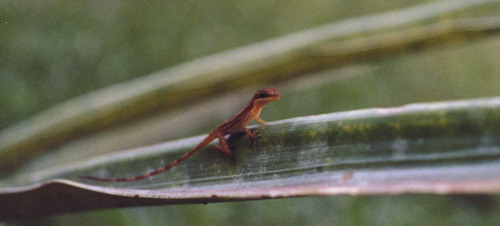
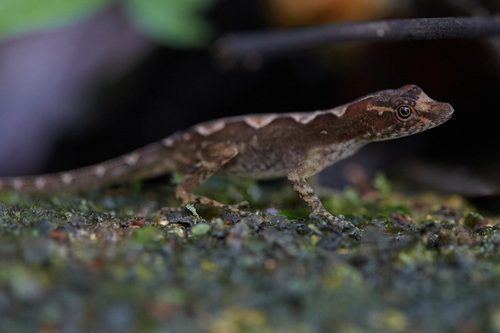
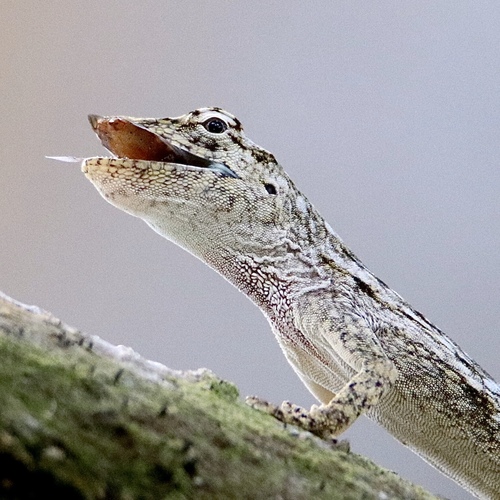
Anolis limifrons, also known commonly as the slender anole or the border anole, is a species of lizard in the family Dactyloidae. The species is native to Central America. It grows to around 12 cm (4.7 in) (TL). A. limifrons is found in Guatemala, Belize, Honduras, Nicaragua, Costa Rica, and Panama.

A. limifrons is oviparous. Cope ED (1862). "Contributions to Neotropical Saurology". Proceedings of the Academy of Natural Sciences of Philadelphia. 14: 176–188. ("Anolis (Dracontura) limifrons ", new species, pp. 178–179)

Savage JM (2002). The Amphibians and Reptiles of Costa Rica: A Herpetofauna between Two Continents, between Two Seas. Chicago and London: University of Chicago Press. ISBN 0-226-73537-0. (Norops limifrons, pp. 470–474 + Plate 270) Wikipedia →

Global Distribution

Parks Where Found

# Park Country Daily sighting probability
1 Braulio Carrillo National Park 🇨🇷 Costa Rica
~60%
2 Tortuguero National Park 🇨🇷 Costa Rica
~60%
3 Gandoca-Manzanillo Wildlife Refuge 🇨🇷 Costa Rica
~60%
4 Tenorio Volcano National Park 🇨🇷 Costa Rica
~40%
5 Arenal Volcano National Park 🇨🇷 Costa Rica
~40%
6 Marino Ballena National Park 🇨🇷 Costa Rica
~40%
7 Piedras Blancas National Park 🇨🇷 Costa Rica
~40%
8 Cahuita National Park 🇨🇷 Costa Rica
~40%
9 Bastimentos Island National Marine Park 🇵🇦 Panama
~30%
10 Manuel Antonio National Park 🇨🇷 Costa Rica
~30%
11 Corcovado National Park 🇨🇷 Costa Rica
~20%
12 Carara National Park 🇨🇷 Costa Rica
~20%
13 La Amistad International Park (Panama) 🇵🇦 Panama
~20%
14 Monteverde Cloud Forest Reserve 🇨🇷 Costa Rica
~10%
15 Tapantí-Macizo de la Muerte National Park 🇨🇷 Costa Rica
~10%
16 Soberanía National Park 🇵🇦 Panama
~10%

Cities Where Found

# City Country Daily sighting probability
1 San José 🇨🇷 Costa Rica
<5%

Zoos & Centres Where Found

# Zoo / Centre Country
1 The Blue Planet 🇩🇰 Denmark In captivity
2 Centro de Vida Silvestre Snake Garden 🇨🇷 Costa Rica In captivity

Before you go

What are the chances of seeing a Border Anole in Bastimentos Island National Marine Park?

Possible

About 30% of wildlife watchers report a Border Anole sighting in Bastimentos Island National Marine Park on a given day, based on 35 verified sightings from GBIF citizen-science data from 2019 to 2026. It is the 8th most-seen of the 31 reptiles we can rate there. Over three days the chance rises to about 70%, and over a week to about 90%, if each day is a fresh chance.

When is the best time to see a Border Anole in Bastimentos Island National Marine Park?

June

In that month about 50% of wildlife watchers report a Border Anole in Bastimentos Island National Marine Park on a given day, against under 5% in April and July, the lowest months.

What time of day is best to see a Border Anole?

Between 6 and 9 pm

Across all the parks we cover, that three-hour window holds the most Border Anole sightings with a recorded time, and about 6 in 10 of them come between 6 am and 6 pm: it is seen both by day and at night.

Which relatives of the Border Anole live in Bastimentos Island National Marine Park?

Same genus: Anolis

The closest relatives of the Border Anole that you can see in Bastimentos Island National Marine Park (genus Anolis, Anoles) are Ghost Anole (about 30%), Cerro Brujo Anole (about 20%) and Neotropical Green Anole (about 20%), with each one's daily chance of a sighting.

Where does the Border Anole sighting chance come from?

GBIF citizen-science records

It is estimated from how often the Border Anole is recorded against all the reptiles logged in Bastimentos Island National Marine Park (35 verified sightings from 2019 to 2026), calibrated against known sighting rates. Figures are rounded to the nearest 10% because citizen-science data supports honest approximations, not decimals, and months with records from fewer than five people show "—". How it works.

← Back to Bastimentos Island National Marine Park