Bath White

Bath White

Pontia daplidice

Daily sighting probability ~10% · With luck
at Cévennes National Park

In 3 days ~20% in a week ~30%

9 Verified sightings at Cévennes National Park From 2019 to 2026
302 In all 9 parks
October Best month
☀️ Diurnal When it's spotted

About the Bath White

Pontia daplidice, the Bath white, is a small butterfly of the family Pieridae, the yellows and whites, which occurs in the Palearctic region. It is common in central and southern Europe, migrating northwards every summer, often reaching southern Scandinavia and sometimes southern England.

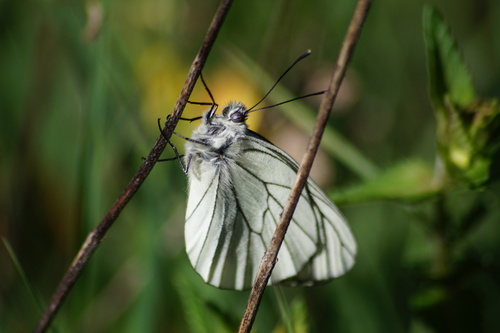
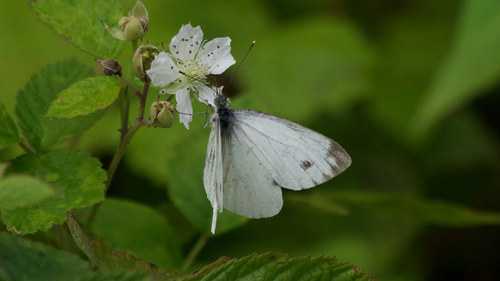
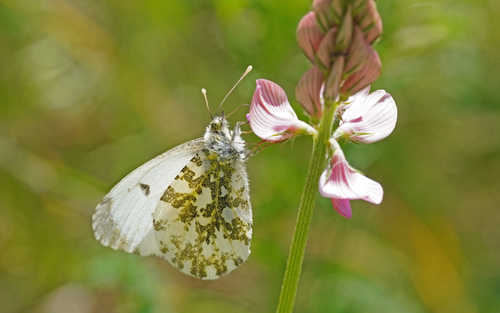
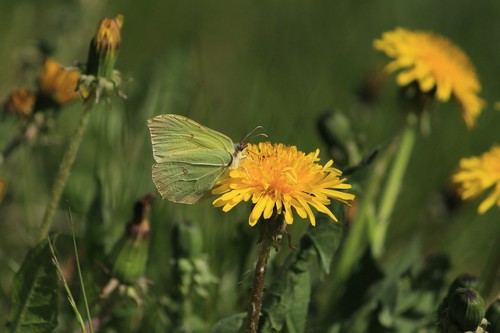
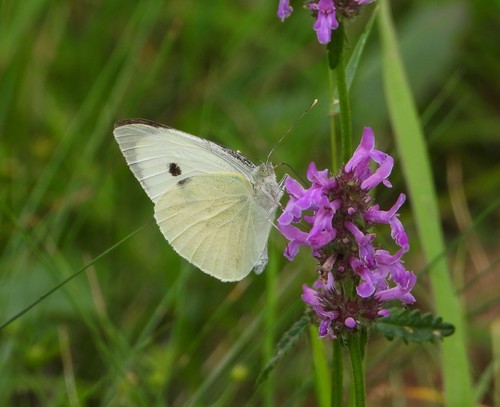
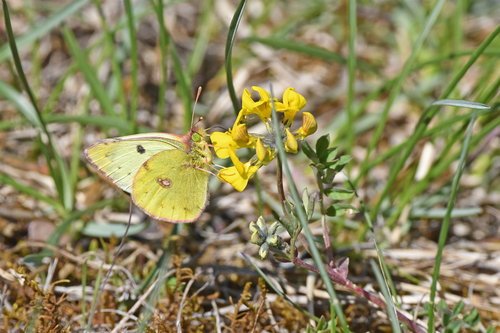
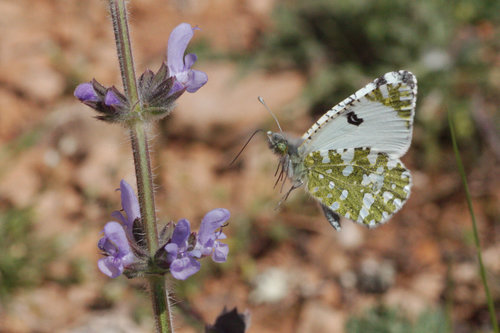
The Bath white is a small white butterfly with a wingspan of 45 to 50 mm. The underside of the hindwing has a pattern of greenish blotches, which is characteristic of the Bath whites and easily identifies it from other pierids.

Sexes can be differentiated by markings on the forewing. The male is differentiated from the female by the markings on the upperside of the forewing. The apex of the forewing is black with white spots and lines. There is a black spot at the end of the cell. In the case of the female, there is an additional discal spot in 1b. The female also has an obscure row of terminal and marginal spots on the upper hindwing.

Description from C. T. Bingham in The Fauna of British India, Including Ceylon and Burma, "Butterflies Volume 2" (1907). Male: Upperside: white. Forewing: basal half of costa narrowly irrorated with black scales, a broad irregular quadrate black spot... Wikipedia →

Global Distribution

Parks Where Found

# Park Country Daily sighting probability
1 Sierra Nevada National Park 🇪🇸 Spain
~30%
2 Sierra de Guadarrama National Park 🇪🇸 Spain
~20%
3 Monfragüe National Park 🇪🇸 Spain
~10%
4 Aigüestortes National Park 🇪🇸 Spain
~10%
5 Doñana National Park 🇪🇸 Spain
~10%
6 Mercantour National Park 🇫🇷 France
~10%
7 Camargue 🇫🇷 France
~10%
8 Pyrénées National Park 🇫🇷 France
~10%
9 Cévennes National Park 🇫🇷 France
~10%

Cities Where Found

# City Country Daily sighting probability
1 Jerusalem 🇮🇱 Israel
~30%
2 Ramallah 🇵🇸 Palestine
~20%
3 Barcelona 🇪🇸 Spain
~10%
4 Tel Aviv 🇮🇱 Israel
~10%
5 Madrid 🇪🇸 Spain
~10%
6 Valencia 🇪🇸 Spain
~10%
7 Porto 🇵🇹 Portugal
~10%
8 Lisbon 🇵🇹 Portugal
<5%

Before you go

What are the chances of seeing a Bath White in Cévennes National Park?

With luck

About 10% of wildlife watchers report a Bath White sighting in Cévennes National Park on a given day, based on 9 verified sightings from GBIF citizen-science data from 2019 to 2026. It is the 619th most-seen of the 996 insects we can rate there. Over three days the chance rises to about 20%, and over a week to about 30%, if each day is a fresh chance.

When is the best time to see a Bath White in Cévennes National Park?

October

In that month about 20% of wildlife watchers report a Bath White in Cévennes National Park on a given day, against under 5% in May–September and November–February, the lowest months. That is one of Cévennes National Park's wettest months, with about 260 mm of rain against 35 mm in July.

What time of day is best to see a Bath White?

Between 11 am and 2 pm

Across all the parks we cover, that three-hour window holds the most Bath White sightings with a recorded time, and about 9 in 10 of them come between 6 am and 6 pm: it is a daytime animal.

Which relatives of the Bath White live in Cévennes National Park?

Same family: Pieridae

The closest relatives of the Bath White that you can see in Cévennes National Park (family Pieridae, Whites, Yellows, and Sulphurs) are Cleopatra Butterfly (about 30%), Black-Veined White (about 30%) and Green-Veined White (about 20%), with each one's daily chance of a sighting.

Where does the Bath White sighting chance come from?

GBIF citizen-science records

It is estimated from how often the Bath White is recorded against all the insects logged in Cévennes National Park (9 verified sightings from 2019 to 2026), calibrated against known sighting rates. Figures are rounded to the nearest 10% because citizen-science data supports honest approximations, not decimals, and months with records from fewer than five people show "—". How it works.

← Back to Cévennes National Park