Rush Veneer

Rush Veneer

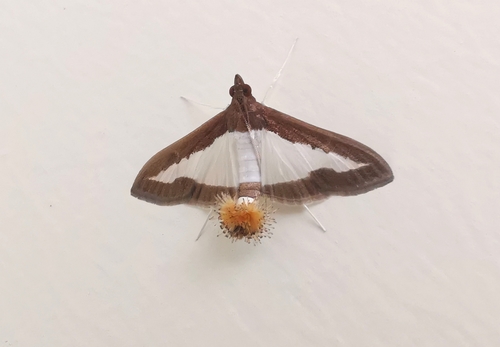
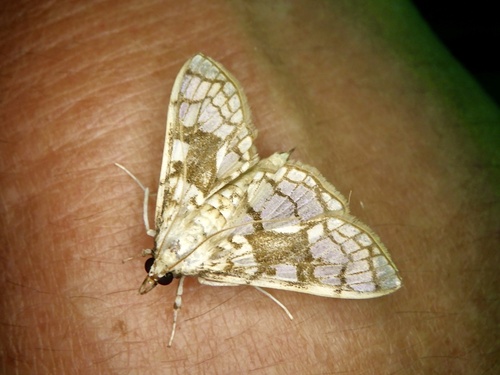
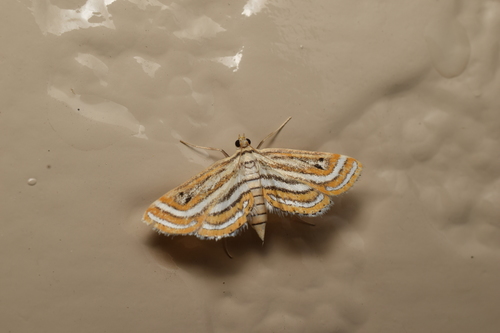
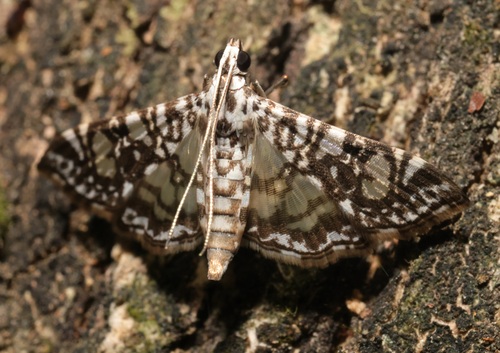
Nomophila noctuella

Daily sighting probability ~10% · With luck
at Beijing

In 3 days ~20% in a week ~40%

37 Verified sightings at Beijing
253 In all 14 parks From 2019 to 2026
September Best month
☀️🌙 Day & Night When it's spotted

About the Rush Veneer

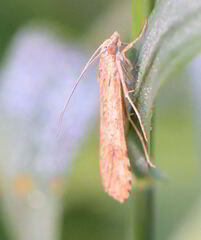
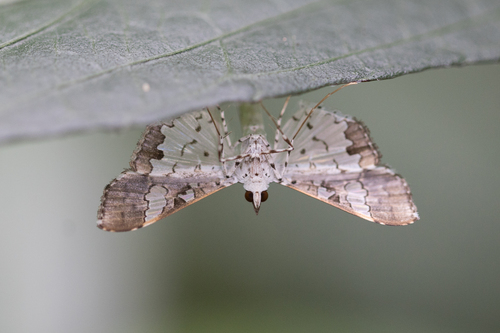
Nomophila noctuella, the rush veneer, is a species of moth of the family Crambidae. This species has a nearly cosmopolitan distribution (Europe, North Africa, Central Asia, Pakistan, North America). In Europe, it is a migratory species, travelling from southern Europe and North Africa to Northern Europe.

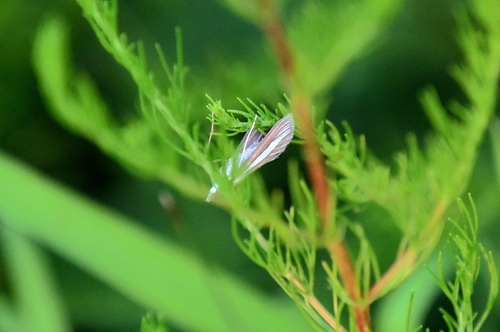
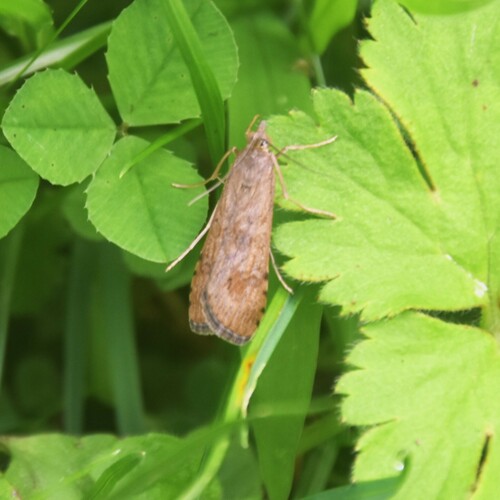
The wingspan is 26–32 mm. Forewings are very elongated and narrow. The basic color of the forewings is usually brown, with darker wide eight-shaped and reniform markings in the discal and postdiscal areas. Some dark brown spots are present close to the outer edge and to the apex. The hindwings are whitish with brown veins.

The mature larvae are gray green and spotted. They can reach a length of 15–20 millimetres (0.59–0.79 in). These moths fly from May to September depending on the location. They are attracted to light, and in Europe they are migratory. There are two to four generations per year.

The larvae feed on Trifolium, clover, Medicago, Polygonum aviculare, wheat, Vaccinium and various other grasses. They pupate in a cocoon amongst the leaves of the host plants or on a stone. The pupa hibernates. Wikipedia →
Global Distribution

Parks Where Found

# Park Country Daily sighting probability
1 Sierra Nevada National Park 🇪🇸 Spain
~10%
2 Doñana National Park 🇪🇸 Spain
~10%
3 Pyrénées National Park 🇫🇷 France
~10%
4 Mercantour National Park 🇫🇷 France
~10%
5 Triglav National Park 🇸🇮 Slovenia
~10%
6 Sierra de Guadarrama National Park 🇪🇸 Spain
~10%
7 Snowdonia National Park 🇬🇧 United Kingdom
~10%
8 Cévennes National Park 🇫🇷 France
~10%
9 Fertő-Hanság National Park 🇭🇺 Hungary
~10%
10 Addo Elephant National Park 🇿🇦 South Africa
~10%
11 Wadden Sea National Park 🇩🇪 Germany
<5%
12 Bavarian Forest National Park 🇩🇪 Germany
<5%
13 Garden Route National Park 🇿🇦 South Africa
<5%
14 Table Mountain National Park 🇿🇦 South Africa
<5%

Cities Where Found

# City Country Daily sighting probability
1 Kharkiv 🇺🇦 Ukraine
~30%
2 Madrid 🇪🇸 Spain
~20%
3 Valencia 🇪🇸 Spain
~20%
4 Kuwait City 🇰🇼 Kuwait
~20%
5 Porto 🇵🇹 Portugal
~10%
6 Turin 🇮🇹 Italy
~10%
7 Istanbul 🇹🇷 Turkey
~10%
8 Barcelona 🇪🇸 Spain
~10%
9 Athens 🇬🇷 Greece
~10%
10 Bucharest 🇷🇴 Romania
~10%

Before you go

What are the chances of seeing a Rush Veneer in Beijing?

With luck

About 10% of wildlife watchers report a Rush Veneer sighting in Beijing on a given day, based on 37 verified sightings from GBIF citizen-science data. It is the 84th most-seen of the 401 insects we can rate there. Over three days the chance rises to about 20%, and over a week to about 40%, if each day is a fresh chance.

When is the best time to see a Rush Veneer in Beijing?

May to November

In those months about 10% of wildlife watchers report a Rush Veneer in Beijing on a given day, against under 5% in December to April, the lowest months.

What time of day is best to see a Rush Veneer?

Between 9 pm and midnight

Across all the parks we cover, that three-hour window holds the most Rush Veneer sightings with a recorded time, and about 6 in 10 of them come between 6 am and 6 pm: it is seen both by day and at night.

Is Beijing the best place to see a Rush Veneer?

23rd of 37

Of the 37 cities where we can rate Rush Veneer sightings, Beijing ranks 23rd at about 10%. The best odds are in Kharkiv (Ukraine, about 30%), Madrid (Spain, about 20%) and Valencia (Spain, about 20%).

Which relatives of the Rush Veneer live in Beijing?

Same family: Crambidae

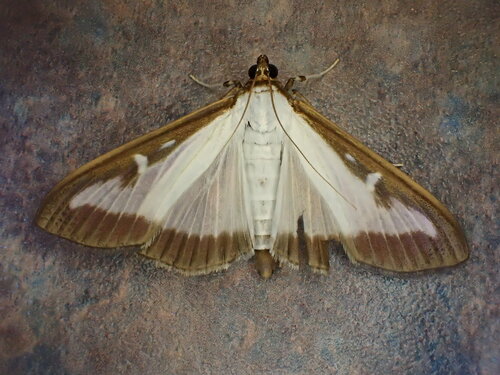
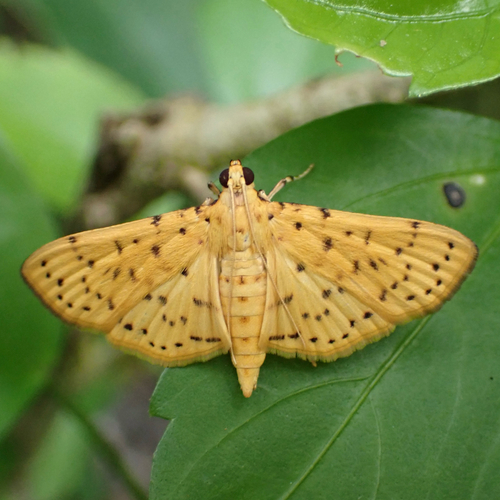
The closest relatives of the Rush Veneer that you can see in Beijing (family Crambidae, Crambid Snout Moths) are Hawaiian Beet Webworm Moth (about 10%) and Box Tree Moth (about 10%), with each one's daily chance of a sighting.

Where does the Rush Veneer sighting chance come from?

GBIF citizen-science records

It is estimated from how often the Rush Veneer is recorded against all the insects logged in Beijing (37 verified sightings), calibrated against known sighting rates. Figures are rounded to the nearest 10% because citizen-science data supports honest approximations, not decimals, and months with records from fewer than five people show "—". How it works.

← Back to Beijing