About the Convergent Lady Beetle
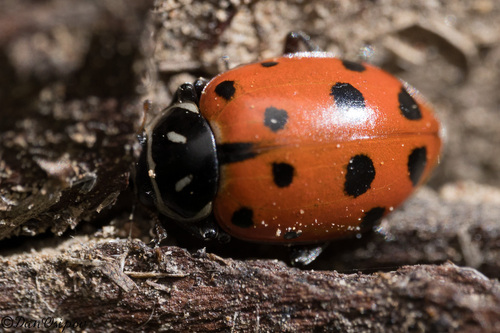
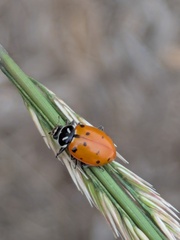
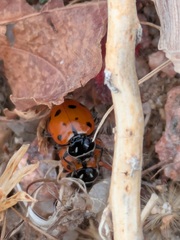
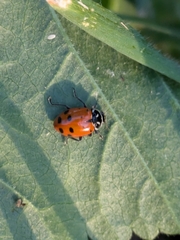
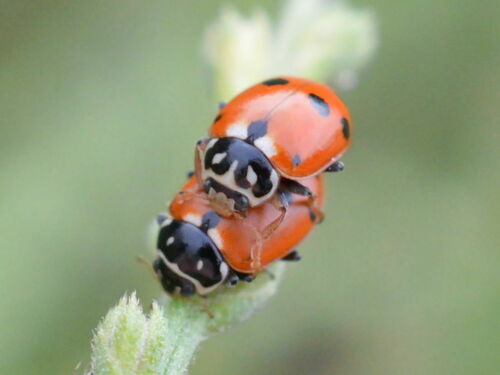
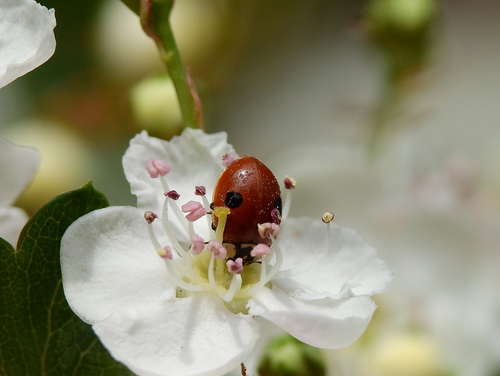
Hippodamia convergens, commonly known as the convergent lady beetle, is one of the most common lady beetles in North America and is found throughout the continent. They tend to live a variety of habitats, including grasslands and forests.
Female H. convergens can lay over 1000 eggs over the span of a few months during the spring or early summer. In some populations, the beetles may undergo diapause if there are limited food resources to delay reproduction.
H. convergens eat soft-bodied insects, with aphids being the primary food resource. Aphids are a known pest, so the H. convergens has been used as a method to control aphids by releasing the beetles to act as a predator for the aphids.
Convergent lady beetles are native to North America, but have also been found in South America after they were imported from California. H. convergens tend to be more successful and more likely to survive to adulthood in warmer temperatures.
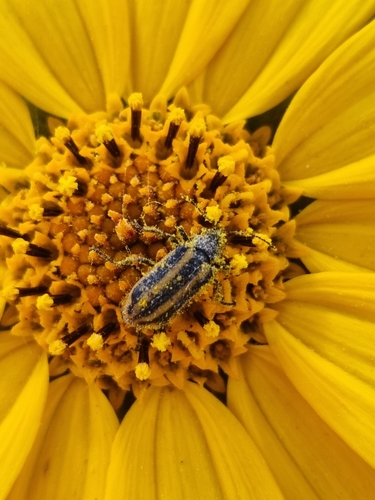
In some areas, they gather on sunflower patches, having moved from wheat fields. They use the petioles of the sunflowers to hydrate, particularly in arid summer months. They populate grasslands, forests, agricultural fields, gardens... Wikipedia →