


Completed


Blue-footed Booby
Sula nebouxii
Silhouette: Jon Hill (Photo by Benjamint444: http://en.wikipedia.org/wiki/File:Blue-footed-booby.jpg) · PhyloPic
- KingdomAnimalia (Animals)
- PhylumChordata (Chordates)
- ClassAves (Birds)
- OrderSuliformes (Gannets, Cormorants, and Allies)
- FamilySulidae (Boobies and Gannets)
- GenusSula (Typical Boobies)
- SpeciesSula nebouxii (Blue-footed Booby)
In 3 days <5%
29 Verified sightings at Lima
16,100 In all 10 parks From 2019 to 2026
April Best month
☀️ Diurnal When it's spotted

Completed
About the Blue-footed Booby
The blue-footed booby (Sula nebouxii) is a species of marine bird in the family Sulidae. The species is native to subtropical and tropical regions of the eastern Pacific Ocean. It is one of six species of the genus Sula, commonly known as boobies. It is easily recognizable by its distinctive bright blue feet, which is a sexually selected trait and a product of its diet. The male displays its feet in an elaborate mating ritual by lifting them up and down while strutting before the female. Females are slightly larger than males and can measure up to 90 cm (35 in) long with a wingspan up to 1.5 m (5 ft).
The natural breeding habitats of the blue-footed booby are the tropical and subtropical islands of the Pacific Ocean. It can be found from the Gulf of California south along the western coasts of Central and South America to Peru. About half of all breeding pairs nest on the Galápagos Islands. Its diet mainly consists of fish, which it obtains by diving and sometimes swimming underwater in search of its prey. It sometimes hunts alone, but usually hunts in groups.
The blue-footed booby usually lays one to three eggs at a time. The species practices asynchronous hatching, in contrast to many other species in which incubation begins when the last egg is laid and all chicks hatch together. This results in a growth inequality and size disparity between siblings, leading to facultative siblicide in times of food scarcity. This makes the blue-footed booby an important model for studying parent–offspring conflict and sibling rivalry. Wikipedia →
Recent sightings of Blue-footed Booby in Lima
LIVEiNaturalistGlobal Distribution
Parks Where Found
| # | Park | Country | Daily sighting probability |
|---|---|---|---|
| 1 | Galápagos Islands | 🇪🇨 Ecuador | |
| 2 | Machalilla National Park | 🇪🇨 Ecuador | |
| 3 | Bahía de Loreto National Park | 🇲🇽 Mexico | |
| 4 | Utría National Natural Park | 🇨🇴 Colombia | |
| 5 | Coiba National Park | 🇵🇦 Panama | |
| 6 | El Vizcaíno Biosphere Reserve | 🇲🇽 Mexico | |
| 7 | Channel Islands National Park | 🇺🇸 United States | |
| 8 | Manuel Antonio National Park | 🇨🇷 Costa Rica | |
| 9 | Corcovado National Park | 🇨🇷 Costa Rica | |
| 10 | Piedras Blancas National Park | 🇨🇷 Costa Rica |
Cities Where Found
| # | City | Country | Daily sighting probability |
|---|---|---|---|
| 1 | Panama City | 🇵🇦 Panama | |
| 2 | Lima | 🇵🇪 Peru |
Zoos & Centres Where Found
| # | Zoo / Centre | Country | |
|---|---|---|---|
| 1 | Amaru | 🇪🇨 Ecuador | |
| 2 | Zoo El Pantanal | 🇪🇨 Ecuador |
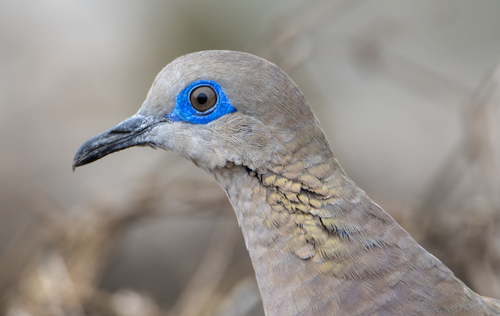
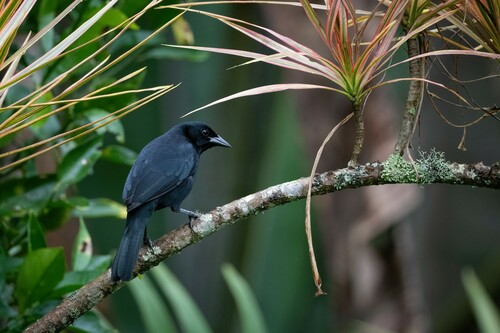
Closest Relatives at Lima





Before you go
What are the chances of seeing a Blue-footed Booby in Lima?
Rare
Under 5% of wildlife watchers report a Blue-footed Booby sighting in Lima on a given day, based on 29 verified sightings from GBIF citizen-science data. It is the 138th most-seen of the 171 birds we can rate there. Over three days the chance rises to under 5%, if each day is a fresh chance.
When is the best time to see a Blue-footed Booby in Lima?
Any time of year
In every month with enough records, under 5% of wildlife watchers report a Blue-footed Booby in Lima on a given day, so our monthly data shows no clear season.
What time of day is best to see a Blue-footed Booby?
Between 8 and 11 am
Across all the parks we cover, that three-hour window holds the most Blue-footed Booby sightings with a recorded time, and about 9 in 10 of them come between 6 am and 6 pm: it is a daytime animal.
Is Lima the best place to see a Blue-footed Booby?
Among the best
Of the 2 cities where we can rate Blue-footed Booby sightings, Lima ranks 2nd at under 5%, level with the leaders once rounded. The best odds are in Panama City (Panama, under 5%).
Where does the Blue-footed Booby sighting chance come from?
GBIF citizen-science records
It is estimated from how often the Blue-footed Booby is recorded against all the birds logged in Lima (29 verified sightings), calibrated against known sighting rates. Figures are rounded to the nearest 10% because citizen-science data supports honest approximations, not decimals, and months with records from fewer than five people show "—". How it works.
