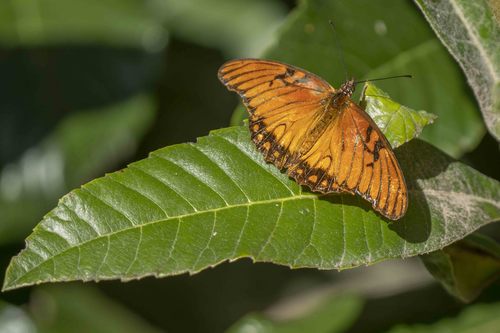
Pipevine Swallowtail

Pipevine Swallowtail

Battus philenor

Daily sighting probability <5% · Rare
at Mexico City

In 3 days ~10% in a week ~20%

34 Verified sightings at Mexico City
2,474 In all 10 parks From 2019 to 2026
August Best month
☀️ Diurnal When it's spotted

About the Pipevine Swallowtail

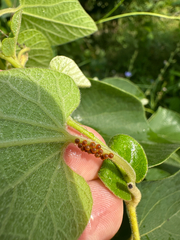
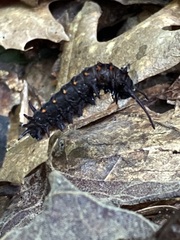
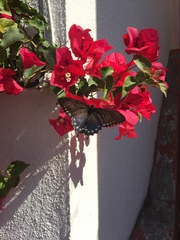
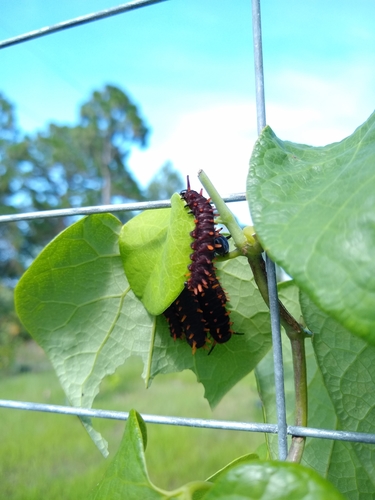
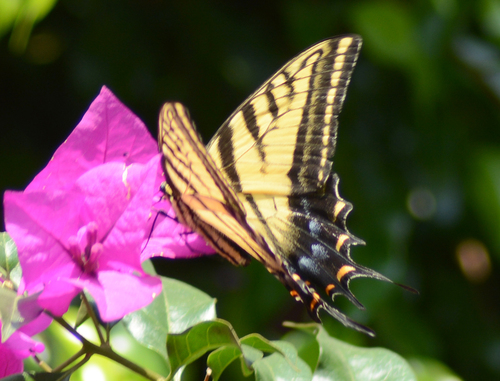
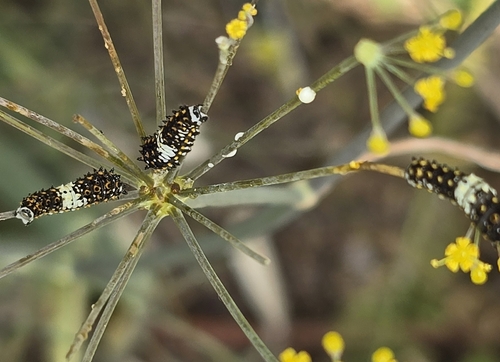
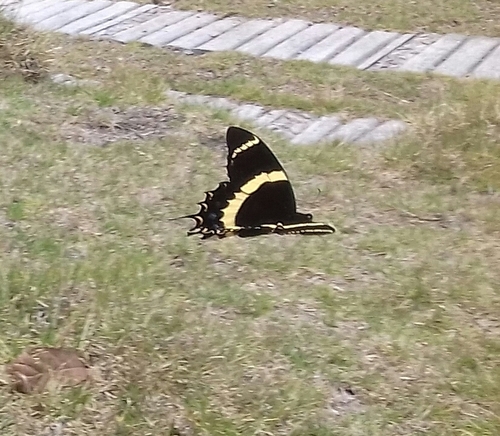
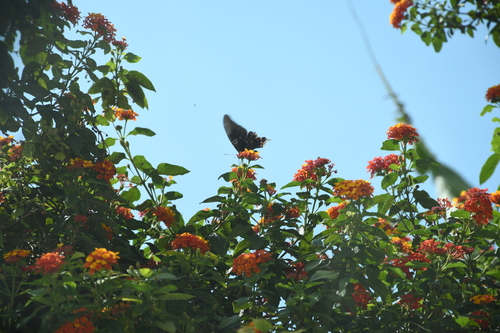
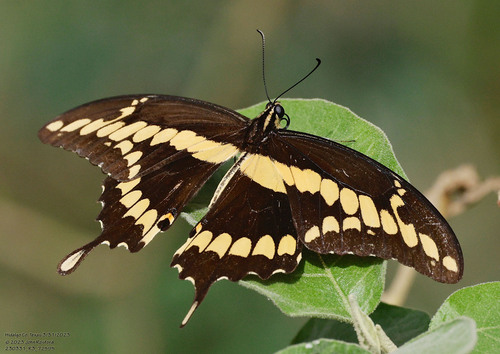
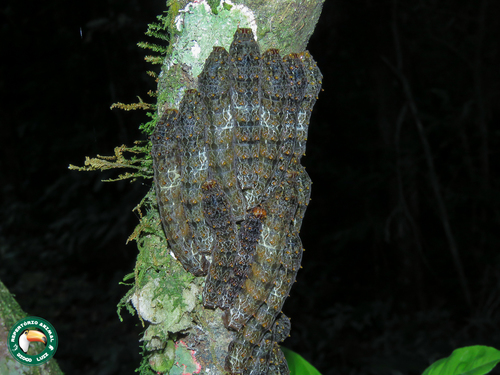
Battus philenor, the pipevine swallowtail or blue swallowtail, is a swallowtail butterfly found in North America and Central America. This butterfly is black with iridescent-blue hindwings. They are found in many different habitats, but are most commonly found in forests. Caterpillars are often black or red, and feed on compatible plants of the genus Aristolochia. They are known for sequestering acids from the plants they feed on in order to defend themselves from predators by being poisonous when consumed. The adults feed on the nectar of a variety of flowers. Some species of Aristolochia are toxic to the larvae, typically tropical varieties. While enthusiasts have led citizen efforts to conserve pipevine swallowtails in their neighborhoods on the West coast, the butterfly has not been the subject of a formal program in conservation or protected in legislation. The butterfly is however of "Special Concern" in Michigan, which is on the Northern limit of its range.

The pipevine swallowtail was first identified in 1771 by Linnaeus and originally was placed in the genus Papilo, as was typical for butterflies. In 1777, it was moved to the genus Battus by Scopoli. The... Wikipedia →

Global Distribution

Parks Where Found

# Park Country Daily sighting probability
1 Great Smoky Mountains National Park 🇺🇸 United States
~70%
2 Arrecifes de Cozumel National Park 🇲🇽 Mexico
~30%
3 Saguaro National Park 🇺🇸 United States
~30%
4 Cumbres de Monterrey National Park 🇲🇽 Mexico
~20%
5 Cabo Pulmo National Park 🇲🇽 Mexico
~20%
6 Big Bend National Park 🇺🇸 United States
~20%
7 Shenandoah National Park 🇺🇸 United States
~10%
8 Grand Canyon National Park 🇺🇸 United States
~10%
9 Congaree National Park 🇺🇸 United States
~10%
10 Padre Island National Seashore 🇺🇸 United States
~10%

Cities Where Found

# City Country Daily sighting probability
1 Sacramento 🇺🇸 United States
~30%
2 San Antonio 🇺🇸 United States
~30%
3 Austin 🇺🇸 United States
~20%
4 Monterrey 🇲🇽 México
~20%
5 Dallas 🇺🇸 United States
~20%
6 San Luis Potosí 🇲🇽 México
~10%
7 Houston 🇺🇸 United States
~10%
8 Torreón 🇲🇽 México
~10%
9 San Francisco 🇺🇸 United States
~10%
10 Puebla 🇲🇽 México
~10%

Before you go

What are the chances of seeing a Pipevine Swallowtail in Mexico City?

Rare

Under 5% of wildlife watchers report a Pipevine Swallowtail sighting in Mexico City on a given day, based on 34 verified sightings from GBIF citizen-science data. It is the 183rd most-seen of the 557 insects we can rate there. Over three days the chance rises to about 10%, and over a week to about 20%, if each day is a fresh chance.

When is the best time to see a Pipevine Swallowtail in Mexico City?

April, June and August

In those months about 10% of wildlife watchers report a Pipevine Swallowtail in Mexico City on a given day, against under 5% in May, July and September–March, the lowest months. Those are among Mexico City's wettest months, with about 100 mm of rain a month against 5 mm in December.

What time of day is best to see a Pipevine Swallowtail?

Between 11 am and 2 pm

Across all the parks we cover, that three-hour window holds the most Pipevine Swallowtail sightings with a recorded time, and about 9 in 10 of them come between 6 am and 6 pm: it is a daytime animal.

Is Mexico City the best place to see a Pipevine Swallowtail?

19th of 24

Of the 24 cities where we can rate Pipevine Swallowtail sightings, Mexico City ranks 19th at under 5%. The best odds are in Sacramento (United States, about 30%), San Antonio (United States, about 30%) and Austin (United States, about 20%).

Where does the Pipevine Swallowtail sighting chance come from?

GBIF citizen-science records

It is estimated from how often the Pipevine Swallowtail is recorded against all the insects logged in Mexico City (34 verified sightings), calibrated against known sighting rates. Figures are rounded to the nearest 10% because citizen-science data supports honest approximations, not decimals, and months with records from fewer than five people show "—". How it works.

← Back to Mexico City