Common Darter

Common Darter

Sympetrum striolatum

Daily sighting probability ~20% · Possible
at Milan

In 3 days ~50% in a week ~80%

142 Verified sightings at Milan
427 In all 14 parks From 2019 to 2026
November Best month
☀️ Diurnal When it's spotted

About the Common Darter

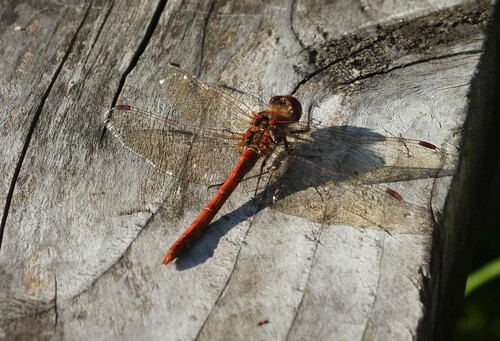
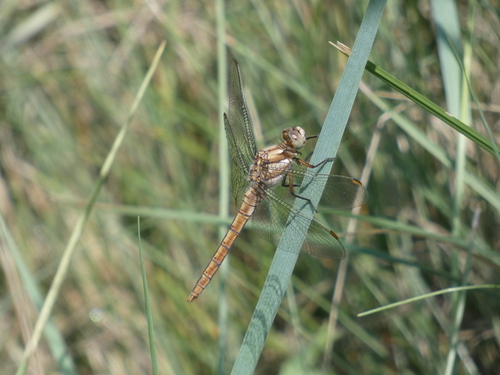
The common darter (Sympetrum striolatum) is a dragonfly of the family Libellulidae native to Eurasia. It is one of the most common dragonflies in Europe, occurring in a wide variety of water bodies, though with a preference for breeding in still water such as ponds and lakes. In the south of its range adults are on the wing all year round.

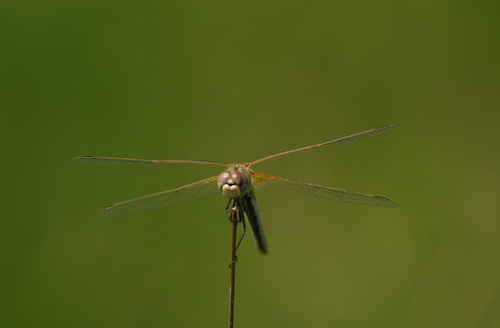
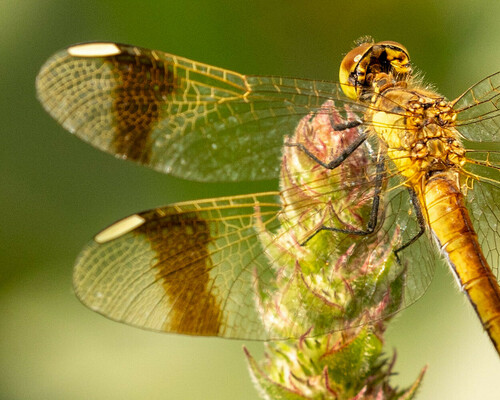
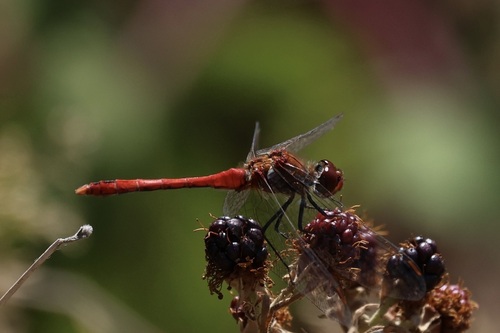
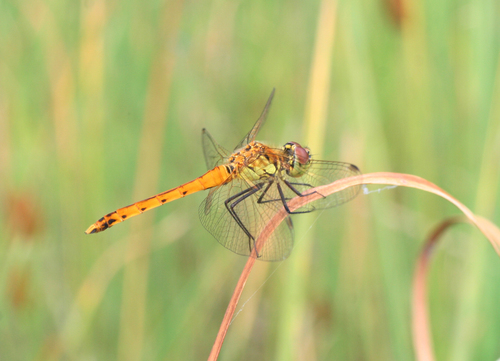
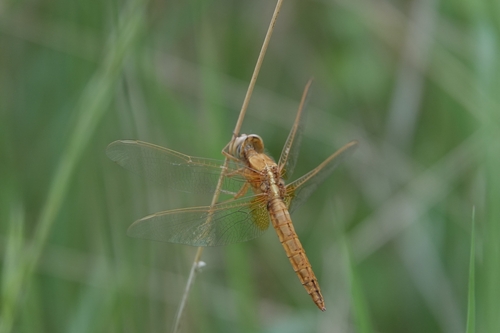
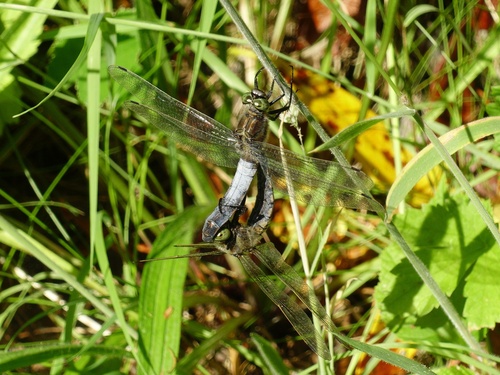
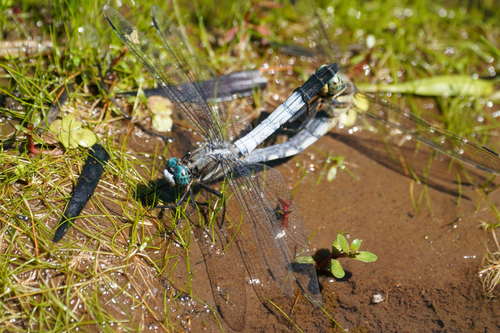
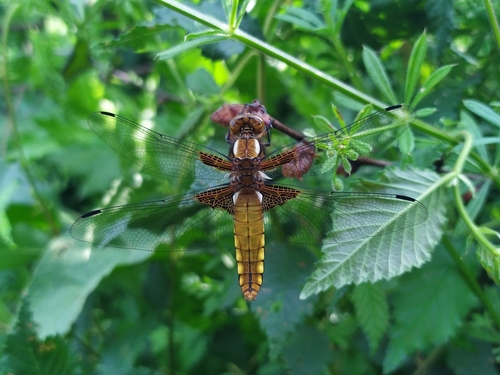
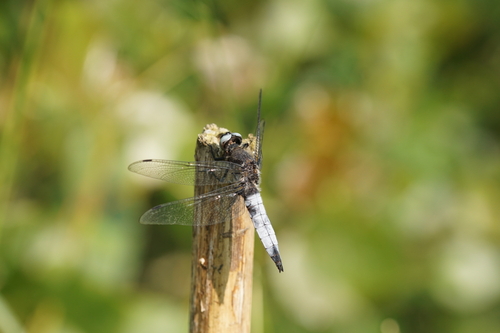
Sympetrum species are not easy to tell apart and in most areas more than one Sympetrum species will occur. Females and teneral individuals have light yellow thorax and abdomen. Males turn red as they mature. Females darken with age, becoming a dark chocolate brown, and sometimes develop a blue colouration to the bottom of the abdomen. The wings also develop a brown tinge with age. In all cases the legs have a cream or yellow stripe on a black background - this is a diagnostic feature of this species. The pterostigma of the females can be red, blue, pale blue or brown.

Adults can be seen on the wing all year round in southern Europe but in northern regions they occur from June to November. This small dragonfly is seen in a wide variety of habitats, including lakes, ponds, canals and slow-flowing rivers. They are ambush... Wikipedia →

Global Distribution

Parks Where Found

# Park Country Daily sighting probability
1 Snowdonia National Park 🇬🇧 United Kingdom
~30%
2 Kiskunság National Park 🇭🇺 Hungary
~20%
3 Cairngorms National Park 🇬🇧 United Kingdom
~20%
4 Mercantour National Park 🇫🇷 France
~10%
5 Cévennes National Park 🇫🇷 France
~10%
6 Wadden Sea National Park 🇩🇪 Germany
~10%
7 Fertő-Hanság National Park 🇭🇺 Hungary
~10%
8 Sierra de Guadarrama National Park 🇪🇸 Spain
~10%
9 Bavarian Forest National Park 🇩🇪 Germany
~10%
10 Sierra Nevada National Park 🇪🇸 Spain
~10%
11 Triglav National Park 🇸🇮 Slovenia
~10%
12 Doñana National Park 🇪🇸 Spain
~10%
13 Camargue 🇫🇷 France
~10%
14 Pyrénées National Park 🇫🇷 France
<5%

Cities Where Found

# City Country Daily sighting probability
1 London 🇬🇧 United Kingdom
~20%
2 Brussels 🇧🇪 Belgium
~20%
3 Munich 🇩🇪 Germany
~20%
4 Yerevan 🇦🇲 Armenia
~20%
5 Manchester 🇬🇧 United Kingdom
~20%
6 Milan 🇮🇹 Italy
~20%
7 Liverpool 🇬🇧 United Kingdom
~20%
8 Paris 🇫🇷 France
~20%
9 Birmingham 🇬🇧 United Kingdom
~20%
10 Rostov-on-Don 🇷🇺 Russia
~20%

Before you go

What are the chances of seeing a Common Darter in Milan?

Possible

About 20% of wildlife watchers report a Common Darter sighting in Milan on a given day, based on 142 verified sightings from GBIF citizen-science data. It is the 26th most-seen of the 351 insects we can rate there. Over three days the chance rises to about 50%, and over a week to about 80%, if each day is a fresh chance.

When is the best time to see a Common Darter in Milan?

October and November

In those months about 40% of wildlife watchers report a Common Darter in Milan on a given day, against under 5% in January to May, the lowest months. Those are among Milan's wettest months, with about 120 mm of rain a month against 45 mm in January.

What time of day is best to see a Common Darter?

Between 11 am and 2 pm

Across all the parks we cover, that three-hour window holds the most Common Darter sightings with a recorded time, and about 9 in 10 of them come between 6 am and 6 pm: it is a daytime animal.

Is Milan the best place to see a Common Darter?

Among the best

Of the 38 cities where we can rate Common Darter sightings, Milan ranks 6th at about 20%, level with the leaders once rounded. The best odds are in London (United Kingdom, about 20%), Brussels (Belgium, about 20%) and Munich (Germany, about 20%).

Which relatives of the Common Darter live in Milan?

Same genus: Sympetrum

The closest relatives of the Common Darter that you can see in Milan (genus Sympetrum, Meadowhawks) are Nomad (about 20%) and Banded Darter (about 10%), with each one's daily chance of a sighting.

Where does the Common Darter sighting chance come from?

GBIF citizen-science records

It is estimated from how often the Common Darter is recorded against all the insects logged in Milan (142 verified sightings), calibrated against known sighting rates. Figures are rounded to the nearest 10% because citizen-science data supports honest approximations, not decimals, and months with records from fewer than five people show "—". How it works.

← Back to Milan