Clay-colored Sparrow

Clay-colored Sparrow

Spizella pallida

Silhouette: Andy Wilson · PhyloPic

LCLeast ConcernNTVUENCR
Daily sighting probability ~10% · With luck
at Monterrey

In 3 days ~10% in a week ~30%

77 Verified sightings at Monterrey
2,805 In all 24 parks From 2019 to 2026
April Best month
☀️ Diurnal When it's spotted

About the Clay-colored Sparrow

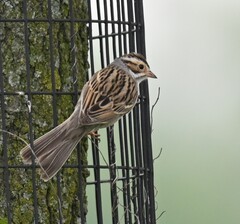
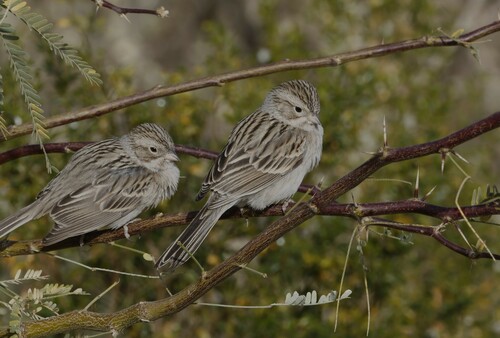
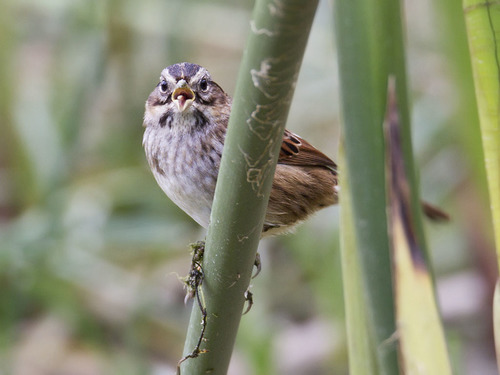
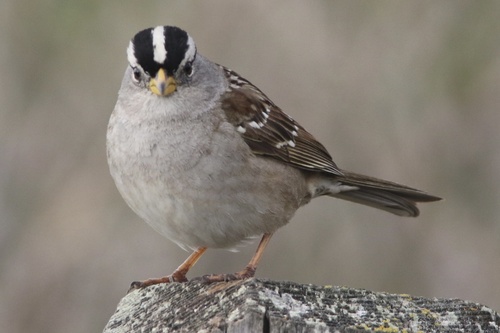
The clay-colored sparrow or clay-coloured sparrow (Spizella pallida) is a small New World sparrow of North America. Adults have light brown upperparts and pale underparts, with darker streaks on the back. They have a pale crown stripe on a dark brown crown, a white line over the eyes, a dark line through the eyes, a light brown cheek patch and brown wings with wing bars. The short bill is pale with a dark tip and the back of the neck is grey; they have a long tail. Non-breeding adults and immature resemble chipping sparrows and Brewer's sparrows; they often form flocks with these birds outside the nesting season.

Their breeding habitat is shrubby open areas and jack pine woods across central Canada and central northern United States east to the Great Lakes, and is expanding further eastward. The nest is an open cup on the ground or low in a shrub.

These birds migrate in flocks to southern Texas and Mexico. They forage on the ground, mainly eating seeds and insects. Outside the nesting season, they often feed in small flocks. While nesting, these birds may feed far from the nest; feeding areas are not defended.

The male sings from an open perch to indicate his ownership of the nesting territory. The song is a Bzzzz bzzzz za za. This bird's nests are made of grasses and lined with fine materials or hair. Three to five splotched blue-green eggs are laid and incubated for 11 days. They are often parasitized by the brown-headed cowbird; the nest may be abandoned when this happens. Wikipedia →

Sounds

Call0:35

United States · 2025

© Greg Irving · XC1039181 · CC BY-NC-SA 4.0

Song1:04

United States · 2024

© Sue Riffe · XC940063 · CC BY-NC-SA 4.0

Flight call0:35

United States · 2015

© Ted Floyd · XC244657 · CC BY-NC-SA 4.0

Global Distribution

Parks Where Found

# Park Country Daily sighting probability
1 Elk Island National Park 🇨🇦 Canada
~40%
2 Riding Mountain National Park 🇨🇦 Canada
~20%
3 Big Bend National Park 🇺🇸 United States
~10%
4 Cabo Pulmo National Park 🇲🇽 Mexico
~10%
5 Guadalupe Mountains National Park 🇺🇸 United States
~10%
6 Point Pelee National Park 🇨🇦 Canada
~10%
7 Cumbres de Monterrey National Park 🇲🇽 Mexico
<5%
8 Bahía de Loreto National Park 🇲🇽 Mexico
<5%
9 El Vizcaíno Biosphere Reserve 🇲🇽 Mexico
<5%
10 Glacier National Park 🇺🇸 United States
<5%
11 Badlands National Park 🇺🇸 United States
<5%
12 Jasper National Park 🇨🇦 Canada
<5%
13 Banff National Park 🇨🇦 Canada
<5%
14 Voyageurs National Park 🇺🇸 United States
<5%
15 Death Valley National Park 🇺🇸 United States
<5%
16 Celestún Biosphere Reserve 🇲🇽 Mexico
<5%
17 Channel Islands National Park 🇺🇸 United States
<5%
18 Big Cypress National Preserve 🇺🇸 United States
<5%
19 Joshua Tree National Park 🇺🇸 United States
<5%
20 Everglades National Park 🇺🇸 United States
<5%
21 Rocky Mountain National Park 🇺🇸 United States
<5%
22 Yellowstone National Park 🇺🇸 United States
<5%
23 Merritt Island National Wildlife Refuge 🇺🇸 United States
<5%
24 Acadia National Park 🇺🇸 United States
<5%

Cities Where Found

# City Country Daily sighting probability
1 Calgary 🇨🇦 Canada
~20%
2 León 🇲🇽 México
~20%
3 Edmonton 🇨🇦 Canada
~10%
4 Puebla 🇲🇽 México
~10%
5 Toluca 🇲🇽 México
~10%
6 Torreón 🇲🇽 México
~10%
7 Mexico City 🇲🇽 México
~10%
8 Monterrey 🇲🇽 México
~10%
9 Portland 🇺🇸 United States
<5%
10 San Antonio 🇺🇸 United States
<5%

Before you go

What are the chances of seeing a Clay-colored Sparrow in Monterrey?

With luck

About 10% of wildlife watchers report a Clay-colored Sparrow sighting in Monterrey on a given day, based on 77 verified sightings from GBIF citizen-science data. It is the 85th most-seen of the 207 birds we can rate there. Over three days the chance rises to about 10%, and over a week to about 30%, if each day is a fresh chance.

When is the best time to see a Clay-colored Sparrow in Monterrey?

January, March–April and October

In those months about 10% of wildlife watchers report a Clay-colored Sparrow in Monterrey on a given day, against under 5% in February, May–September and November–December, the lowest months.

What time of day is best to see a Clay-colored Sparrow?

Between 8 and 11 am

Across all the parks we cover, that three-hour window holds the most Clay-colored Sparrow sightings with a recorded time, and nearly all of them come between 6 am and 6 pm: it is a daytime animal.

Is Monterrey the best place to see a Clay-colored Sparrow?

8th of 34

Of the 34 cities where we can rate Clay-colored Sparrow sightings, Monterrey ranks 8th at about 10%. The best odds are in Calgary (Canada, about 20%), León (México, about 20%) and Edmonton (Canada, about 10%).

Where does the Clay-colored Sparrow sighting chance come from?

GBIF citizen-science records

It is estimated from how often the Clay-colored Sparrow is recorded against all the birds logged in Monterrey (77 verified sightings), calibrated against known sighting rates. Figures are rounded to the nearest 10% because citizen-science data supports honest approximations, not decimals, and months with records from fewer than five people show "—". How it works.

← Back to Monterrey