
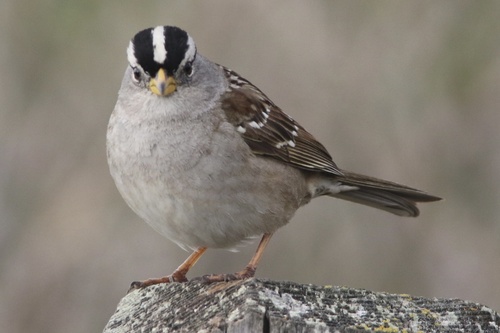
Olive Sparrow

Olive Sparrow

Arremonops rufivirgatus

Silhouette: L. Shyamal · PhyloPic

LCLeast ConcernNTVUENCR
Daily sighting probability ~10% · With luck
at Monterrey

In 3 days ~20% in a week ~40%

86 Verified sightings at Monterrey
1,784 In all 15 parks From 2019 to 2026
July Best month
☀️ Diurnal When it's spotted

About the Olive Sparrow

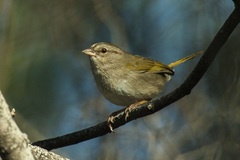
The olive sparrow (Arremonops rufivirgatus) is a species of bird in the family Passerellidae, the New World sparrows. It is found from Texas to Costa Rica. The olive sparrow was formally described in 1851 with the binomial Embernagra rufivigata and the English name "brown striped olive finch". In 1896 Robert Ridgway erected the genus Arremonops and reassigned the olive sparrow to it as the type species.

The olive sparrow's further taxonomy is unsettled. The IOC and AviList assign it these eight subspecies: The other systems include it within the nominate A. r. rufivirgatus. This article follows the eight-subspecies model.

The olive sparrow is about 12 to 14 cm (4.7 to 5.5 in) long and weighs 15 to 30 g... Wikipedia →

Sounds

Song0:35

Mexico · 2026

© Richard E. Webster · XC1183486 · CC BY-NC-SA 4.0

Call0:14

Mexico · 2024

© Étienne Leroy · XC956294 · CC BY-NC-SA 4.0

Song0:36

United States · 2024

© David Tattersley · XC901092 · CC BY-NC-SA 4.0

Global Distribution

Parks Where Found

# Park Country Daily sighting probability
1 Cañón del Sumidero National Park 🇲🇽 Mexico
~40%
2 Cumbres de Monterrey National Park 🇲🇽 Mexico
~40%
3 Santa Rosa National Park 🇨🇷 Costa Rica
~20%
4 Rincón de la Vieja National Park 🇨🇷 Costa Rica
~10%
5 Cabo Blanco Absolute Nature Reserve 🇨🇷 Costa Rica
~10%
6 Palo Verde National Park 🇨🇷 Costa Rica
<5%
7 Calakmul Biosphere Reserve 🇲🇽 Mexico
<5%
8 Ostional Wildlife Refuge 🇨🇷 Costa Rica
<5%
9 Carara National Park 🇨🇷 Costa Rica
<5%
10 Sian Ka'an Biosphere Reserve 🇲🇽 Mexico
<5%
11 Masaya Volcano National Park 🇳🇮 Nicaragua
<5%
12 Ría Lagartos Biosphere Reserve 🇲🇽 Mexico
<5%
13 Monteverde Cloud Forest Reserve 🇨🇷 Costa Rica
<5%
14 Tikal National Park 🇬🇹 Guatemala
<5%
15 Tenorio Volcano National Park 🇨🇷 Costa Rica
<5%

Cities Where Found

# City Country Daily sighting probability
1 Monterrey 🇲🇽 México
~10%
2 San José 🇨🇷 Costa Rica
<5%
3 San Antonio 🇺🇸 United States
<5%

Before you go

What are the chances of seeing an Olive Sparrow in Monterrey?

With luck

About 10% of wildlife watchers report an Olive Sparrow sighting in Monterrey on a given day, based on 86 verified sightings from GBIF citizen-science data. It is the 77th most-seen of the 207 birds we can rate there. Over three days the chance rises to about 20%, and over a week to about 40%, if each day is a fresh chance.

When is the best time to see an Olive Sparrow in Monterrey?

July

In that month about 20% of wildlife watchers report an Olive Sparrow in Monterrey on a given day, against under 5% in January, March–April and October–November, the lowest months. That is one of Monterrey's wettest months, with about 95 mm of rain against 20 mm in February.

What time of day is best to see an Olive Sparrow?

Between 9 am and noon

Across all the parks we cover, that three-hour window holds the most Olive Sparrow sightings with a recorded time, and about 9 in 10 of them come between 6 am and 6 pm: it is a daytime animal.

Is Monterrey the best place to see an Olive Sparrow?

Yes

Of the 3 cities where we can rate Olive Sparrow sightings, Monterrey has the highest daily chance: about 10%. Next come San José (Costa Rica, under 5%) and San Antonio (United States, under 5%).

Which relatives of the Olive Sparrow live in Monterrey?

Same family: Passerellidae

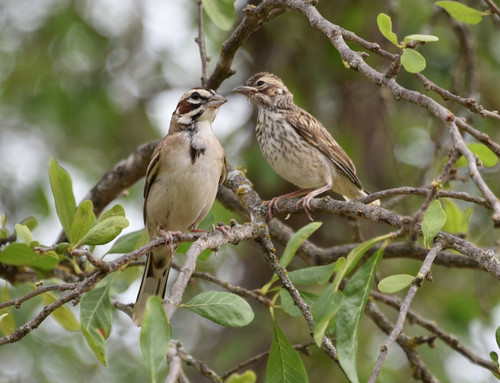
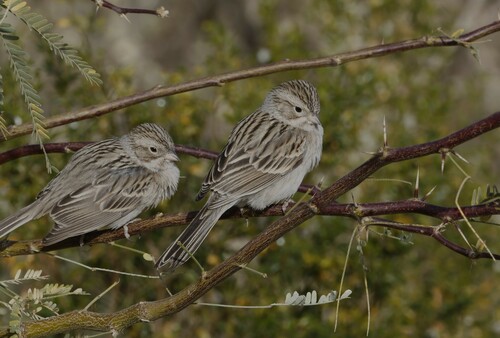
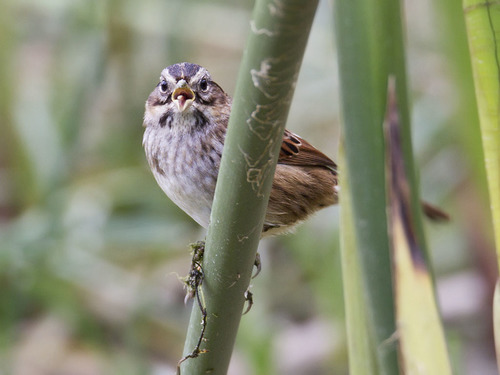
The closest relatives of the Olive Sparrow that you can see in Monterrey (family Passerellidae, New World Sparrows) are Lincoln's Sparrow (about 10%), Chipping Sparrow (about 10%) and Clay-colored Sparrow (about 10%), with each one's daily chance of a sighting.

Where does the Olive Sparrow sighting chance come from?

GBIF citizen-science records

It is estimated from how often the Olive Sparrow is recorded against all the birds logged in Monterrey (86 verified sightings), calibrated against known sighting rates. Figures are rounded to the nearest 10% because citizen-science data supports honest approximations, not decimals, and months with records from fewer than five people show "—". How it works.

← Back to Monterrey