


Completed


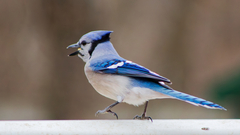


Blue Jay
Cyanocitta cristata
Silhouette: T. Michael Keesey (photo by Darren Swim) · PhyloPic
- KingdomAnimalia (Animals)
- PhylumChordata (Chordates)
- ClassAves (Birds)
- OrderPasseriformes (Perching Birds)
- FamilyCorvidae (Crows, Jays, and Magpies)
- GenusCyanocitta (Blue and Steller's Jays)
- SpeciesCyanocitta cristata (Blue Jay)
In 3 days ~70% in a week ~90%
15,066 Verified sightings at Montreal
37,678 In all 19 parks From 2019 to 2026
September Best month
☀️ Diurnal When it's spotted
About the Blue Jay
The blue jay (Cyanocitta cristata) is a passerine bird in the family Corvidae, native to eastern North America. It lives in most of the eastern and central United States; some eastern populations may be migratory. Resident populations are also in Newfoundland, Canada; breeding populations are found across southern Canada. It breeds in both deciduous and coniferous forests, and is common in residential areas. Its coloration is predominantly blue, with a white chest and underparts, and a blue crest; it has a black, U-shaped collar around its neck and a black border behind the crest. Males and females are similar in size and plumage, which does not vary throughout the year. Four subspecies have been recognized.
The blue jay feeds mainly on seeds and nuts, such as acorns, which it may hide to eat later; soft fruits; arthropods; and occasionally small vertebrates. It typically gleans food from trees, shrubs, and the ground, and sometimes hawks insects from the air. Blue jays can be very aggressive to other birds; they sometimes raid nests and have even been found to have decapitated other birds.
It builds an open cup nest in the branches of a tree; both sexes participate. The clutch may be two to seven eggs, which are bluish or light brown with darker brown spots. Young are altricial, and are brooded by the female for 8–12 days after hatching. They may stay with their parents for one to two months.
The name jay derives from the bird's noisy, garrulous nature and has been applied to many other birds of the same family, which are also mostly gregarious. Jays are also called jaybirds. Wikipedia →
Recent sightings of Blue Jay in Montreal
LIVEiNaturalistGlobal Distribution
Parks Where Found
| # | Park | Country | Daily sighting probability |
|---|---|---|---|
| 1 | Point Pelee National Park | 🇨🇦 Canada | |
| 2 | Voyageurs National Park | 🇺🇸 United States | |
| 3 | Riding Mountain National Park | 🇨🇦 Canada | |
| 4 | Isle Royale National Park | 🇺🇸 United States | |
| 5 | Shenandoah National Park | 🇺🇸 United States | |
| 6 | Great Smoky Mountains National Park | 🇺🇸 United States | |
| 7 | Acadia National Park | 🇺🇸 United States | |
| 8 | Elk Island National Park | 🇨🇦 Canada | |
| 9 | Congaree National Park | 🇺🇸 United States | |
| 10 | Cape Breton Highlands National Park | 🇨🇦 Canada | |
| 11 | Merritt Island National Wildlife Refuge | 🇺🇸 United States | |
| 12 | Everglades National Park | 🇺🇸 United States | |
| 13 | Big Cypress National Preserve | 🇺🇸 United States | |
| 14 | Gros Morne National Park | 🇨🇦 Canada | |
| 15 | Badlands National Park | 🇺🇸 United States | |
| 16 | Banff National Park | 🇨🇦 Canada | |
| 17 | Rocky Mountain National Park | 🇺🇸 United States | |
| 18 | Glacier National Park | 🇺🇸 United States | |
| 19 | Jasper National Park | 🇨🇦 Canada |
Cities Where Found
| # | City | Country | Daily sighting probability |
|---|---|---|---|
| 1 | Houston | 🇺🇸 United States | |
| 2 | Dallas | 🇺🇸 United States | |
| 3 | Detroit | 🇺🇸 United States | |
| 4 | Boston | 🇺🇸 United States | |
| 5 | Miami | 🇺🇸 United States | |
| 6 | Austin | 🇺🇸 United States | |
| 7 | Orlando | 🇺🇸 United States | |
| 8 | Washington | 🇺🇸 United States | |
| 9 | Minneapolis [Saint Paul] | 🇺🇸 United States | |
| 10 | New York City | 🇺🇸 United States |
Zoos & Centres Where Found
| # | Zoo / Centre | Country | |
|---|---|---|---|
| 1 | Ecomuseum Zoo | 🇨🇦 Canada | |
| 2 | Cosley Zoo | 🇺🇸 United States | |
| 3 | Ralph Perkins II Wildlife Center and Woods Garden | 🇺🇸 United States | |
| 4 | Mote Marine Laboratory | 🇺🇸 United States | |
| 5 | Bird Kingdom | 🇨🇦 Canada | |
| 6 | Visitors Center and Aquarium | 🇺🇸 United States | |
| 7 | Seaside Seabird Sanctuary | 🇺🇸 United States | |
| 8 | Wild Bird Fund | 🇺🇸 United States |
Closest Relatives at Montreal









Before you go
What are the chances of seeing a Blue Jay in Montreal?
Possible
About 30% of wildlife watchers report a Blue Jay sighting in Montreal on a given day, based on 15,066 verified sightings from GBIF citizen-science data. It is the 23rd most-seen of the 256 birds we can rate there. Over three days the chance rises to about 70%, and over a week to about 90%, if each day is a fresh chance.
When is the best time to see a Blue Jay in Montreal?
September and October
In those months about 60% of wildlife watchers report a Blue Jay in Montreal on a given day, against about 20% in June–July and December–April, the lowest months.
What time of day is best to see a Blue Jay?
Between 8 and 11 am
Across all the parks we cover, that three-hour window holds the most Blue Jay sightings with a recorded time, and about 8 in 10 of them come between 6 am and 6 pm: it is a daytime animal.
Is Montreal the best place to see a Blue Jay?
18th of 19
Of the 19 cities where we can rate Blue Jay sightings, Montreal ranks 18th at about 30%. The best odds are in Houston (United States, about 90%), Dallas (United States, about 80%) and Detroit (United States, about 80%).
Which relatives of the Blue Jay live in Montreal?
Same family: Corvidae
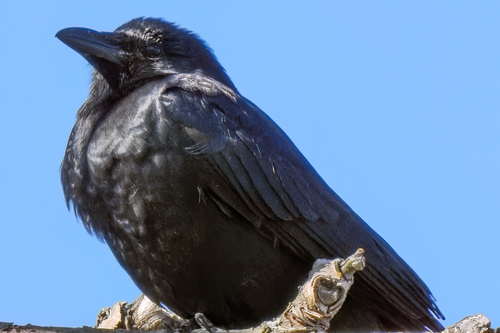
The closest relatives of the Blue Jay that you can see in Montreal (family Corvidae, Crows, Jays, and Magpies) are American Crow (about 80%) and Common Raven (about 30%), with each one's daily chance of a sighting.
Where does the Blue Jay sighting chance come from?
GBIF citizen-science records
It is estimated from how often the Blue Jay is recorded against all the birds logged in Montreal (15,066 verified sightings), calibrated against known sighting rates. Figures are rounded to the nearest 10% because citizen-science data supports honest approximations, not decimals, and months with records from fewer than five people show "—". How it works.
