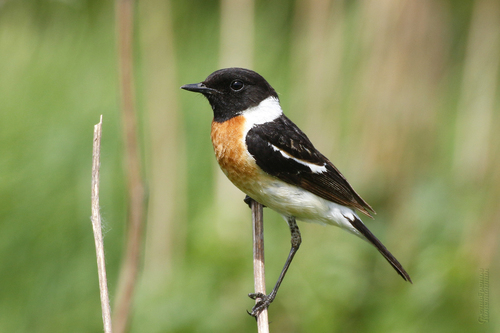
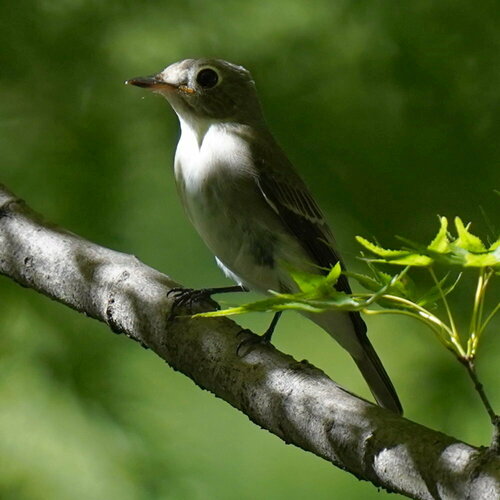
Indian Blue Robin

Indian Blue Robin

Luscinia brunnea

Silhouette: Stephan Sprinz · PhyloPic

Daily sighting probability <5% · Rare
at Mumbai

In 3 days <5% in a week ~10%

62 Verified sightings at Mumbai
502 In all 11 parks From 2019 to 2026
February Best month
🌅 Crepuscular When it's spotted

About the Indian Blue Robin

The Indian blue robin (Larvivora brunnea) is a small bird found in the Indian subcontinent. Formerly considered a thrush, it is now considered one of the Old World flycatchers in the family Muscicapidae. It was earlier also called the Indian blue chat. It is migratory, breeding in the forests along the Himalayas of Nepal, India, Myanmar and Bangladesh. They winter in the hill forests of the Western Ghats of India and in Sri Lanka.

The Indian blue robin was described by Hodgson who placed it in a new genus Larvivora but it was later placed in the genus Luscinia. A large-sample molecular phylogenetic study published in 2010 found that Luscinia was not monophyletic. The genus was therefore split and several species including Indian blue robin were moved to the reinstated genus Larvivora. Larvivora is a sister of the species Brachypteryx cruralis, Brachypteryx leucophrys and Brachypteryx hyperythra.

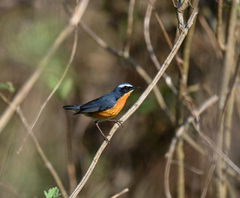
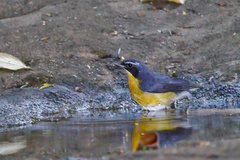
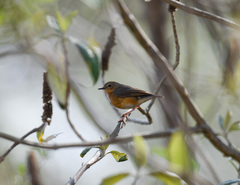
The Indian blue robin is similar in size to the related bluethroat at 15 cm long. The adult male has blue upperparts and rufous underparts. A bright white supercilium contrasts with a black mask that continues down the neck. The lower belly and undertail are... Wikipedia →

Sounds

Recording0:11

India · 2014

S.MORE · iNaturalist · CC0

Recording0:33

China · 2023

© Sid Francis · iNaturalist · CC BY-NC 4.0

Recording0:44

India · 2023

© dbeadle · iNaturalist · CC BY-NC 4.0

Global Distribution

Parks Where Found

# Park Country Daily sighting probability
1 Horton Plains National Park 🇱🇰 Sri Lanka
~30%
2 Jiuzhaigou National Park 🇨🇳 China
~10%
3 Eravikulam National Park 🇮🇳 India
~10%
4 Langtang National Park 🇳🇵 Nepal
~10%
5 Sinharaja Forest Reserve 🇱🇰 Sri Lanka
~10%
6 Mudumalai National Park 🇮🇳 India
<5%
7 Periyar National Park 🇮🇳 India
<5%
8 Wilpattu National Park 🇱🇰 Sri Lanka
<5%
9 Minneriya National Park 🇱🇰 Sri Lanka
<5%
10 Bandipur National Park 🇮🇳 India
<5%
11 Yala National Park 🇱🇰 Sri Lanka
<5%

Cities Where Found

# City Country Daily sighting probability
1 Kolkata 🇮🇳 India
<5%
2 Bengaluru 🇮🇳 India
<5%
3 Mumbai 🇮🇳 India
<5%
4 Kathmandu 🇳🇵 Nepal
<5%
5 Pune 🇮🇳 India
<5%

Before you go

What are the chances of seeing an Indian Blue Robin in Mumbai?

Rare

Under 5% of wildlife watchers report an Indian Blue Robin sighting in Mumbai on a given day, based on 62 verified sightings from GBIF citizen-science data. It is the 192nd most-seen of the 283 birds we can rate there. Over three days the chance rises to under 5%, and over a week to about 10%, if each day is a fresh chance.

When is the best time to see an Indian Blue Robin in Mumbai?

Any time of year

In every month with enough records, under 5% of wildlife watchers report an Indian Blue Robin in Mumbai on a given day, so our monthly data shows no clear season.

What time of day is best to see an Indian Blue Robin?

Between 3 and 6 am

Across all the parks we cover, that three-hour window holds the most Indian Blue Robin sightings with a recorded time, and about 6 in 10 of them come between 6 am and 6 pm: it is most active around dawn and dusk.

Is Mumbai the best place to see an Indian Blue Robin?

Among the best

Of the 5 cities where we can rate Indian Blue Robin sightings, Mumbai ranks 3rd at under 5%, level with the leaders once rounded. The best odds are in Kolkata (India, under 5%) and Bengaluru (India, under 5%).

Where does the Indian Blue Robin sighting chance come from?

GBIF citizen-science records

It is estimated from how often the Indian Blue Robin is recorded against all the birds logged in Mumbai (62 verified sightings), calibrated against known sighting rates. Figures are rounded to the nearest 10% because citizen-science data supports honest approximations, not decimals, and months with records from fewer than five people show "—". How it works.

← Back to Mumbai