Ruddy-breasted Crake

Ruddy-breasted Crake

Porzana fusca

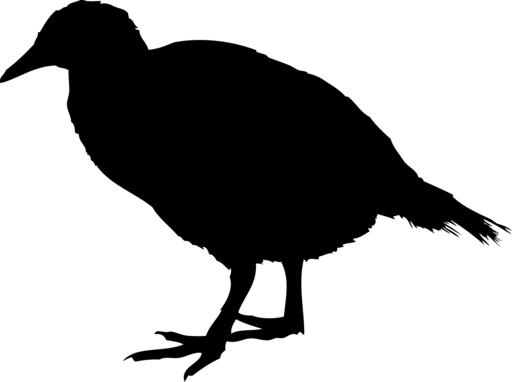
Silhouette: T. Michael Keesey (vectorization) and HuttyMcphoo (photography) · PhyloPic

Daily sighting probability ~10% · With luck
at Naha

In 3 days ~10% in a week ~30%

18 Verified sightings at Naha
397 In all 12 parks From 2019 to 2026
February Best month
☀️ Diurnal When it's spotted

About the Ruddy-breasted Crake

The ruddy-breasted crake (Zapornia fusca), or ruddy crake, is a waterbird in the rail and crake family Rallidae, formerly included in the genus Porzana. Its breeding habitat is swamps and similar wet areas across South Asia from the Indian subcontinent east to south China, Japan and Indonesia. It has been recorded as a vagrant from the Australian territory of Christmas Island. It is mainly a permanent resident throughout its range, but some northern populations migrate further south in winter.

This crake nests in a dry location on the ground in marsh vegetation, laying 6-9 eggs. The ruddy-breasted crake is about 22–23 cm long. The body is flattened laterally to allow easier passage through the reeds or undergrowth. It has long toes and a short tail. The back is pale brown, the head and underparts chestnut, and with white barring on the flanks and undertail. The bill is yellowish, and the eyes, legs, and feet are red.

The sexes are similar, but juveniles are dark brown with some white spotting. These birds probe in mud or shallow water and also pick up food by sight. They forage for shoots, berries and insects, as well as large snails, which they eat by using their bills to peck through the hard shell.

Ruddy-breasted crakes are territorial, but are quite secretive, hiding amongst grassy shrubs and bushes when disturbed. Wikipedia →

Sounds

Recording0:12

Japan · 2026

© m_sato · iNaturalist · CC BY-NC 4.0

Recording0:09

Thailand · 2023

© Sam Hambly · iNaturalist · CC BY 4.0

Recording0:21

Japan · 2024

© takuyatamura · iNaturalist · CC BY-NC 4.0

Global Distribution

Parks Where Found

# Park Country Daily sighting probability
1 Keoladeo National Park 🇮🇳 India
~10%
2 Chitwan National Park 🇳🇵 Nepal
<5%
3 Kaeng Krachan National Park 🇹🇭 Thailand
<5%
4 Manas National Park 🇮🇳 India
<5%
5 Royal Bardia National Park 🇳🇵 Nepal
<5%
6 Jim Corbett National Park 🇮🇳 India
<5%
7 Yala National Park 🇱🇰 Sri Lanka
<5%
8 Sinharaja Forest Reserve 🇱🇰 Sri Lanka
<5%
9 Khao Yai National Park 🇹🇭 Thailand
<5%
10 Cat Tien National Park 🇻🇳 Vietnam
<5%
11 Kaziranga National Park 🇮🇳 India
<5%
12 Doi Inthanon National Park 🇹🇭 Thailand
<5%

Cities Where Found

# City Country Daily sighting probability
1 Vasai-Virar 🇮🇳 India
~10%
2 Chattogram 🇧🇩 Bangladesh
~10%
3 Nagoya 🇯🇵 Japan
~10%
4 Coimbatore 🇮🇳 India
~10%
5 Naha 🇯🇵 Japan
~10%
6 Ponnani 🇮🇳 India
<5%
7 Hong Kong 🇨🇳 China
<5%
8 Vijayawada 🇮🇳 India
<5%
9 Kozhikode 🇮🇳 India
<5%
10 Singapore 🇸🇬 Singapore
<5%

Zoos & Centres Where Found

# Zoo / Centre Country
1 Shenzhen Safari Park 🇨🇳 China In captivity

Before you go

What are the chances of seeing a Ruddy-breasted Crake in Naha?

With luck

About 10% of wildlife watchers report a Ruddy-breasted Crake sighting in Naha on a given day, based on 18 verified sightings from GBIF citizen-science data. It is the 58th most-seen of the 81 birds we can rate there. Over three days the chance rises to about 10%, and over a week to about 30%, if each day is a fresh chance.

When is the best time to see a Ruddy-breasted Crake in Naha?

February

In that month about 20% of wildlife watchers report a Ruddy-breasted Crake in Naha on a given day, against under 5% in March to January, the lowest months. That is one of Naha's driest months, with about 60 mm of rain against 310 mm in June.

What time of day is best to see a Ruddy-breasted Crake?

Between 7 and 10 am

Across all the parks we cover, that three-hour window holds the most Ruddy-breasted Crake sightings with a recorded time, and about 9 in 10 of them come between 6 am and 6 pm: it is a daytime animal.

Is Naha the best place to see a Ruddy-breasted Crake?

Among the best

Of the 33 cities where we can rate Ruddy-breasted Crake sightings, Naha ranks 5th at about 10%, level with the leaders once rounded. The best odds are in Vasai-Virar (India, about 10%), Chattogram (Bangladesh, about 10%) and Nagoya (Japan, about 10%).

Which relatives of the Ruddy-breasted Crake live in Naha?

Same family: Rallidae

The closest relatives of the Ruddy-breasted Crake that you can see in Naha (family Rallidae, Rails, Gallinules, and Coots) are Common Moorhen (about 50%) and Eurasian Coot (about 40%), with each one's daily chance of a sighting.

Where does the Ruddy-breasted Crake sighting chance come from?

GBIF citizen-science records

It is estimated from how often the Ruddy-breasted Crake is recorded against all the birds logged in Naha (18 verified sightings), calibrated against known sighting rates. Figures are rounded to the nearest 10% because citizen-science data supports honest approximations, not decimals, and months with records from fewer than five people show "—". How it works.

← Back to Naha