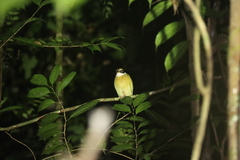
Indian Pitta

Indian Pitta

Pitta brachyura

Silhouette: Rachael Joakim · PhyloPic

LCLeast ConcernNTVUENCR
Daily sighting probability <5% · Rare
at New Delhi

In 3 days <5%

5 Verified sightings at New Delhi
3,401 In all 17 parks From 2019 to 2026
September Best month
🌅 Crepuscular When it's spotted

About the Indian Pitta

The Indian pitta (Pitta brachyura) also known as Navrang, is a passerine bird native to the Indian subcontinent. It inhabits scrub jungle, deciduous and dense evergreen forest. It breeds in the forests of the Himalayas, hills of central and western India, and migrates to other parts of the peninsula in winter. Although very colourful, it is usually shy and hidden in the undergrowth where it picks insects on the forest floor. It has a distinctive two note whistling call which is heard at dawn and dusk. It is listed as least concern on the IUCN Red List as the population is considered large.

The Indian pitta was first known in England after an illustration by an Indian artist was sent by Edward Bulkley to James Petiver and given the name of "Ponnunky pitta". This illustration was included by William Derham at the end of John Ray's posthumous Synopsis methodica avium which was published in 1713. The bird was again described and illustrated by Mathurin Jacques Brisson in 1760 and George Edwards in 1764. The Latin names coined by Brisson do not conform to the binomial nomenclature and are not recognised by the International Commission on Zoological Nomenclature. When in 1766... Wikipedia →

Sounds

Call0:35

India · 2026

© Dipendra Maharshi · XC1166792 · CC BY-NC-SA 4.0

Song0:30

India · 2023

© Suniti Bhushan Datta · XC882041 · CC BY-NC-SA 4.0

Recording0:44

India · 2022

© Viral Patel &amp; Pankaj Maheria · XC743067 · CC BY-NC-SA 4.0

Global Distribution

Parks Where Found

# Park Country Daily sighting probability
1 Yala National Park 🇱🇰 Sri Lanka
~30%
2 Udawalawe National Park 🇱🇰 Sri Lanka
~20%
3 Bandhavgarh National Park 🇮🇳 India
~20%
4 Wilpattu National Park 🇱🇰 Sri Lanka
~20%
5 Minneriya National Park 🇱🇰 Sri Lanka
~20%
6 Mudumalai National Park 🇮🇳 India
~20%
7 Kanha National Park 🇮🇳 India
~10%
8 Royal Bardia National Park 🇳🇵 Nepal
~10%
9 Periyar National Park 🇮🇳 India
~10%
10 Jim Corbett National Park 🇮🇳 India
~10%
11 Gir National Park 🇮🇳 India
~10%
12 Ranthambore National Park 🇮🇳 India
~10%
13 Satpura National Park 🇮🇳 India
~10%
14 Sinharaja Forest Reserve 🇱🇰 Sri Lanka
~10%
15 Nagarhole National Park 🇮🇳 India
<5%
16 Bandipur National Park 🇮🇳 India
<5%
17 Chitwan National Park 🇳🇵 Nepal
<5%

Cities Where Found

# City Country Daily sighting probability
1 Thrissur 🇮🇳 India
~10%
2 Chennai 🇮🇳 India
<5%
3 Bengaluru 🇮🇳 India
<5%
4 Mysuru 🇮🇳 India
<5%
5 Jabalpur 🇮🇳 India
<5%
6 Kozhikode 🇮🇳 India
<5%
7 Kolkata 🇮🇳 India
<5%
8 Thiruvananthapuram 🇮🇳 India
<5%
9 Jaipur 🇮🇳 India
<5%
10 Tamluk 🇮🇳 India
<5%

Before you go

What are the chances of seeing an Indian Pitta in New Delhi?

Rare

Under 5% of wildlife watchers report an Indian Pitta sighting in New Delhi on a given day, based on 5 verified sightings from GBIF citizen-science data. It is the 243rd most-seen of the 248 birds we can rate there. Over three days the chance rises to under 5%, if each day is a fresh chance.

When is the best time to see an Indian Pitta in New Delhi?

Any time of year

In every month with enough records, under 5% of wildlife watchers report an Indian Pitta in New Delhi on a given day, so our monthly data shows no clear season.

What time of day is best to see an Indian Pitta?

Between 4 and 7 am

Across all the parks we cover, that three-hour window holds the most Indian Pitta sightings with a recorded time, and about 6 in 10 of them come between 6 am and 6 pm: it is most active around dawn and dusk.

Is New Delhi the best place to see an Indian Pitta?

21st of 21

Of the 21 cities where we can rate Indian Pitta sightings, New Delhi ranks 21st at under 5%. The best odds are in Thrissur (India, about 10%), Chennai (India, under 5%) and Bengaluru (India, under 5%).

Which relatives of the Indian Pitta live in New Delhi?

Same order: Passeriformes

The closest relatives of the Indian Pitta that you can see in New Delhi (order Passeriformes, Perching Birds) are House Crow (about 80%), Jungle Babbler (about 70%) and Purple Sunbird (about 60%), with each one's daily chance of a sighting.

Where does the Indian Pitta sighting chance come from?

GBIF citizen-science records

It is estimated from how often the Indian Pitta is recorded against all the birds logged in New Delhi (5 verified sightings), calibrated against known sighting rates. Figures are rounded to the nearest 10% because citizen-science data supports honest approximations, not decimals, and months with records from fewer than five people show "—". How it works.

← Back to New Delhi