Gray Hairstreak

Gray Hairstreak

Strymon melinus

Daily sighting probability ~10% · With luck
at Orlando

In 3 days ~20% in a week ~30%

22 Verified sightings at Orlando
857 In all 24 parks From 2019 to 2026
August Best month
☀️ Diurnal When it's spotted

About the Gray Hairstreak

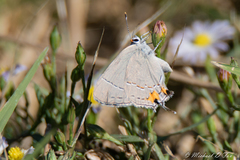
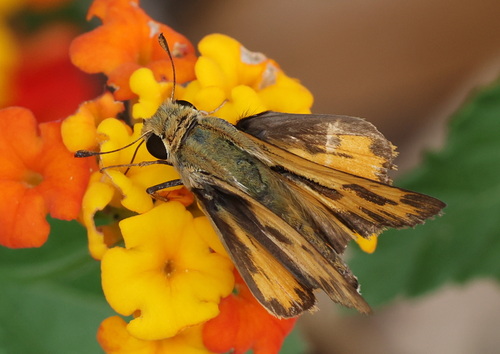
The gray hairstreak (Strymon melinus) is also called the bean lycaenid or cotton square borer. It is a member of the Lycaenidae family, known as the gossamer-winged butterflies and the second-largest family of butterflies. It is one of the most common hairstreaks in North America, ranging over nearly the entire continent. It also occurs throughout Central America and in northern South America.

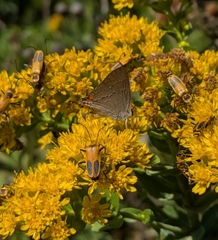
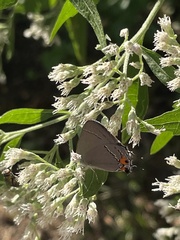
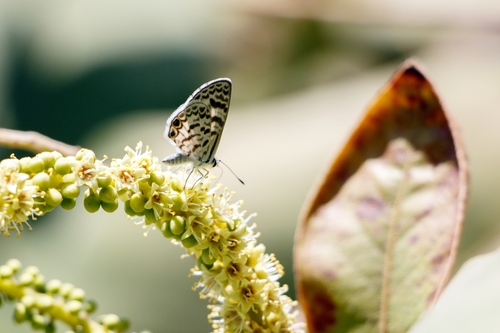
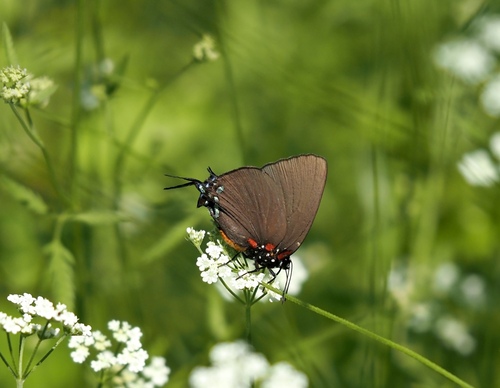
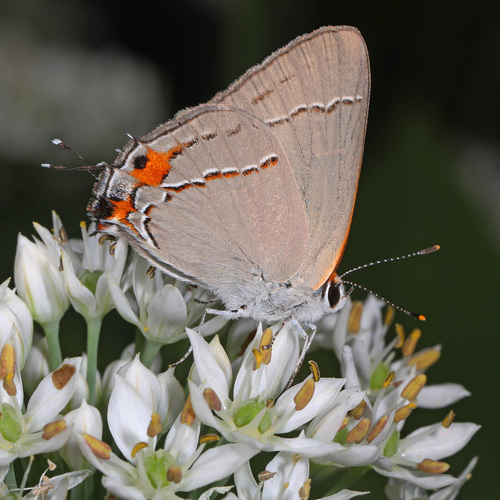
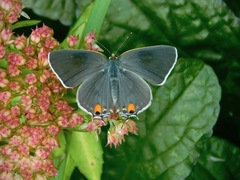
The adult gray hairstreak has a wingspan of 20–32 millimetres (0.79–1.26 in). The upper sides of the wings are gray with an orange spot on the hind margin. The underside of the wings are a lighter gray with white and black lines and orange and blue marginal spots near the hind-wings' tail-like extensions. These extensions twitch while at rest, and may imitate a separate head to encourage predators to go for the wings, potentially allowing the insect to survive.

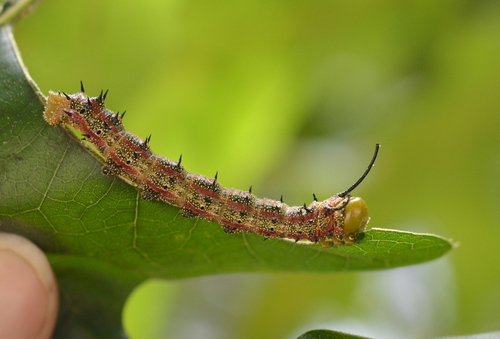
Caterpillars are green with markings on the sides, covered in short yellow hairs. Like other caterpillars in the Lycaenidae family, S. melinus are attended by ants in a behavior known as myrmecophily. The gray hairstreak lives in a wide range of habitats ranging from tropical forests and mountains... Wikipedia →

Global Distribution

Parks Where Found

# Park Country Daily sighting probability
1 Big Bend National Park 🇺🇸 United States
~30%
2 Channel Islands National Park 🇺🇸 United States
~20%
3 Congaree National Park 🇺🇸 United States
~20%
4 Saguaro National Park 🇺🇸 United States
~20%
5 Padre Island National Seashore 🇺🇸 United States
~20%
6 Cabo Pulmo National Park 🇲🇽 Mexico
~20%
7 Grand Canyon National Park 🇺🇸 United States
~20%
8 Joshua Tree National Park 🇺🇸 United States
~20%
9 Guadalupe Mountains National Park 🇺🇸 United States
~10%
10 El Vizcaíno Biosphere Reserve 🇲🇽 Mexico
~10%
11 Bahía de Loreto National Park 🇲🇽 Mexico
~10%
12 Shenandoah National Park 🇺🇸 United States
~10%
13 Big Cypress National Preserve 🇺🇸 United States
~10%
14 Great Smoky Mountains National Park 🇺🇸 United States
~10%
15 Point Pelee National Park 🇨🇦 Canada
~10%
16 Zion National Park 🇺🇸 United States
~10%
17 Merritt Island National Wildlife Refuge 🇺🇸 United States
~10%
18 Yosemite National Park 🇺🇸 United States
~10%
19 Sequoia and Kings Canyon National Parks 🇺🇸 United States
~10%
20 Acadia National Park 🇺🇸 United States
~10%
21 Great Bear Rainforest 🇨🇦 Canada
~10%
22 Cumbres de Monterrey National Park 🇲🇽 Mexico
~10%
23 Rocky Mountain National Park 🇺🇸 United States
~10%
24 Olympic National Park 🇺🇸 United States
<5%

Cities Where Found

# City Country Daily sighting probability
1 Austin 🇺🇸 United States
~30%
2 Dallas 🇺🇸 United States
~30%
3 Valencia 🇻🇪 Venezuela
~20%
4 San Antonio 🇺🇸 United States
~20%
5 Sacramento 🇺🇸 United States
~20%
6 Portland 🇺🇸 United States
~20%
7 Tijuana 🇲🇽 México
~20%
8 Mesa 🇺🇸 United States
~10%
9 San Francisco 🇺🇸 United States
~10%
10 San Diego 🇺🇸 United States
~10%

Before you go

What are the chances of seeing a Gray Hairstreak in Orlando?

With luck

About 10% of wildlife watchers report a Gray Hairstreak sighting in Orlando on a given day, based on 22 verified sightings from GBIF citizen-science data. It is the 91st most-seen of the 294 insects we can rate there. Over three days the chance rises to about 20%, and over a week to about 30%, if each day is a fresh chance.

When is the best time to see a Gray Hairstreak in Orlando?

May–September and December

In those months about 10% of wildlife watchers report a Gray Hairstreak in Orlando on a given day, against under 5% in January–April and October–November, the lowest months. Those are among Orlando's wettest months, with about 150 mm of rain a month against 50 mm in November.

What time of day is best to see a Gray Hairstreak?

Between 11 am and 2 pm

Across all the parks we cover, that three-hour window holds the most Gray Hairstreak sightings with a recorded time, and nearly all of them come between 6 am and 6 pm: it is a daytime animal.

Is Orlando the best place to see a Gray Hairstreak?

26th of 32

Of the 32 cities where we can rate Gray Hairstreak sightings, Orlando ranks 26th at about 10%. The best odds are in Austin (United States, about 30%), Dallas (United States, about 30%) and Valencia (Venezuela, about 20%).

Which relatives of the Gray Hairstreak live in Orlando?

Same family: Lycaenidae

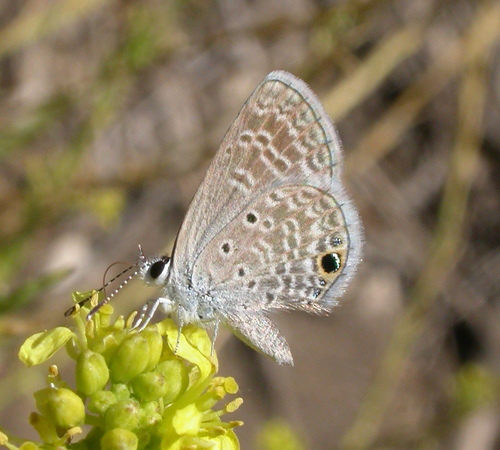
The closest relatives of the Gray Hairstreak that you can see in Orlando (family Lycaenidae, Gossamer-winged Butterflies) are Ceraunus Blue (about 10%) and Cassius Blue (about 10%), with each one's daily chance of a sighting.

Where does the Gray Hairstreak sighting chance come from?

GBIF citizen-science records

It is estimated from how often the Gray Hairstreak is recorded against all the insects logged in Orlando (22 verified sightings), calibrated against known sighting rates. Figures are rounded to the nearest 10% because citizen-science data supports honest approximations, not decimals, and months with records from fewer than five people show "—". How it works.
← Back to Orlando