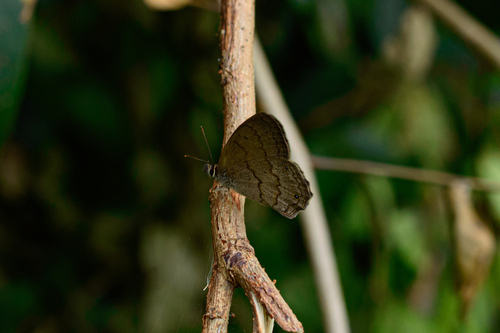
Sara Longwing
Daily sighting probability ~10% · With luck
at Rio de Janeiro

In 3 days ~20% in a week ~30%

13 Verified sightings at Rio de Janeiro
224 In all 13 parks From 2019 to 2026
April Best month
☀️ Diurnal When it's spotted

About the Sara Longwing

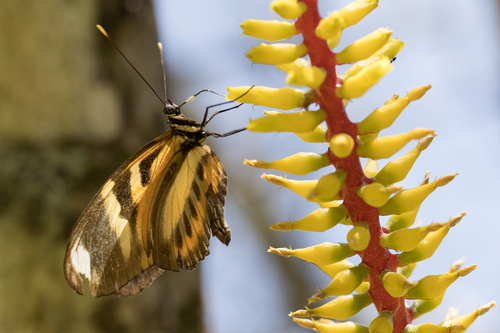
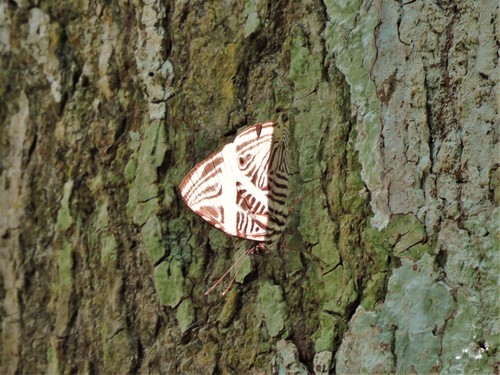
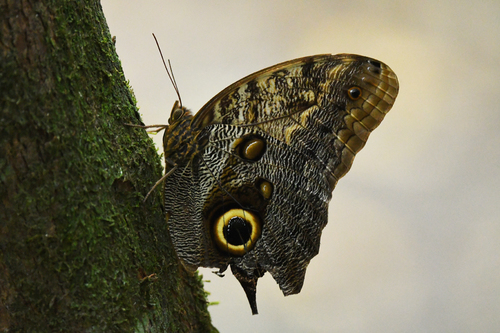
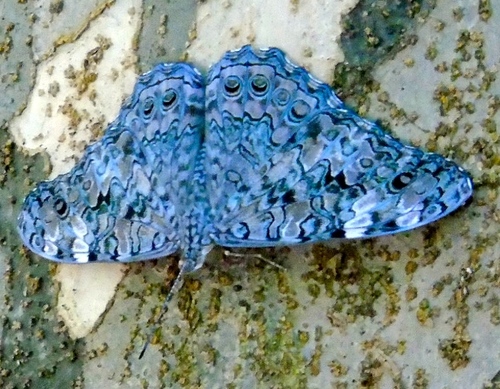
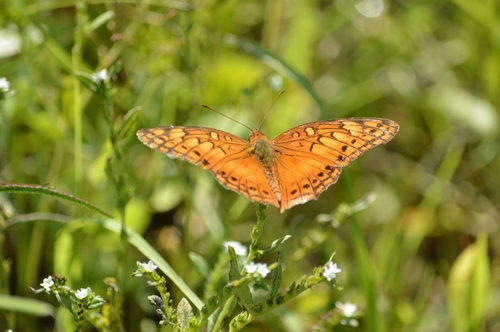
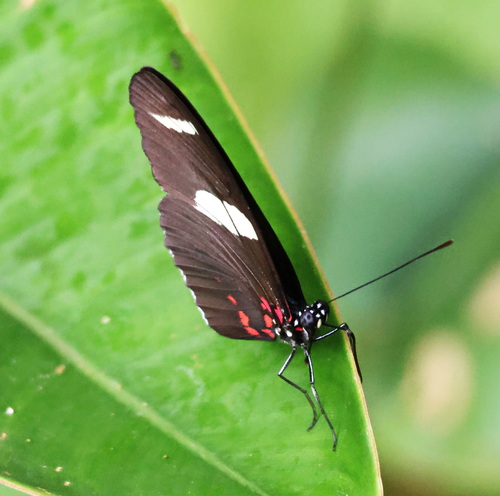
The Sara longwing (Heliconius sara) is a species of neotropical heliconiid butterfly found from Mexico to the Amazon Basin and southern Brazil. It is a colourful species: the dorsal wing surface is black with a large medial patch of metallic blue that is framed by two bands of white on the forewings. (This coloration is similar to that of Wallace's longwing, H. wallacei, whose range overlaps Sara's, but does not extend as far north.) The ventral wing surface is a dull brown to black with muted bands and small red spots on the proximal margin; total wingspan is 55–60 mm.

Inhabiting rainforests, adults are commonly found among sparser secondary growth and along forest margins. They feed on the nectar of Hamelia, Lantana, Palicourea, and Psiguria plants. They reproduce continuously, with several generations produced every year. Sara longwings are one of several heliconiids exhibiting the unusual practice of pupal mating, in which adult males are attracted to female pupae via the latter's pheromones. The males compete for prime perch space close to the females' chrysalids, and successful suitors forcibly mate with the females immediately following their emergence. Alternatively, males may also patrol a territory in which they search for females that have already emerged. The adult stage has a lifespan of 2–3 months.

Like other heliconiids, females seek the new growth of passion flower vines to lay their small yellow eggs, in clusters of 10–50. The vines contain toxic compounds that the caterpillars are immune to; as they feed upon the vines, the caterpillars concentrate the toxins within their tissues. After pupating (with the chrysalis also found on the host vine and camouflaged like a leaf), the adult retains the toxins and is thus protected from predation. Wikipedia →
Global Distribution

Parks Where Found

# Park Country Daily sighting probability
1 Braulio Carrillo National Park 🇨🇷 Costa Rica
~30%
2 Chagres National Park 🇵🇦 Panama
~20%
3 Serra dos Órgãos National Park 🇧🇷 Brazil
~20%
4 Farallones de Cali National Natural Park 🇨🇴 Colombia
~20%
5 Tortuguero National Park 🇨🇷 Costa Rica
~10%
6 Manu National Park 🇵🇪 Peru
~10%
7 Soberanía National Park 🇵🇦 Panama
~10%
8 Marino Ballena National Park 🇨🇷 Costa Rica
~10%
9 Tambopata National Reserve 🇵🇪 Peru
~10%
10 Tijuca National Park 🇧🇷 Brazil
~10%
11 Arenal Volcano National Park 🇨🇷 Costa Rica
~10%
12 Monteverde Cloud Forest Reserve 🇨🇷 Costa Rica
<5%
13 La Amistad International Park (Panama) 🇵🇦 Panama
<5%

Cities Where Found

# City Country Daily sighting probability
1 Manaus 🇧🇷 Brazil
~10%
2 Vitória 🇧🇷 Brazil
~10%
3 São Paulo 🇧🇷 Brazil
~10%
4 Rio de Janeiro 🇧🇷 Brazil
~10%
5 Belo Horizonte 🇧🇷 Brazil
<5%

Before you go

What are the chances of seeing a Sara Longwing in Rio de Janeiro?

With luck

About 10% of wildlife watchers report a Sara Longwing sighting in Rio de Janeiro on a given day, based on 13 verified sightings from GBIF citizen-science data. It is the 66th most-seen of the 169 insects we can rate there. Over three days the chance rises to about 20%, and over a week to about 30%, if each day is a fresh chance.

When is the best time to see a Sara Longwing in Rio de Janeiro?

March to July

In those months about 10% of wildlife watchers report a Sara Longwing in Rio de Janeiro on a given day, against under 5% in August to February, the lowest months.

What time of day is best to see a Sara Longwing?

Between 9 am and noon

Across all the parks we cover, that three-hour window holds the most Sara Longwing sightings with a recorded time, and about 9 in 10 of them come between 6 am and 6 pm: it is a daytime animal.

Is Rio de Janeiro the best place to see a Sara Longwing?

Among the best

Of the 5 cities where we can rate Sara Longwing sightings, Rio de Janeiro ranks 4th at about 10%, level with the leaders once rounded. The best odds are in Manaus (Brazil, about 10%), Vitória (Brazil, about 10%) and São Paulo (Brazil, about 10%).

Which relatives of the Sara Longwing live in Rio de Janeiro?

Same genus: Heliconius

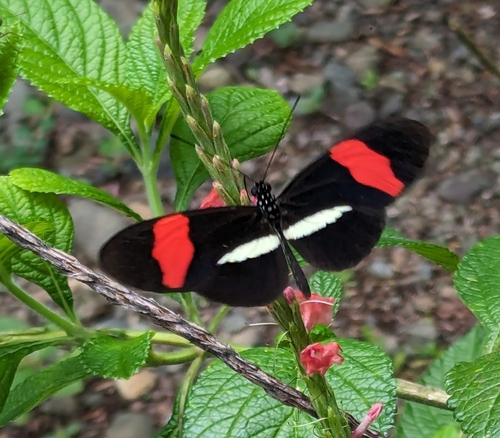
The closest relatives of the Sara Longwing that you can see in Rio de Janeiro (genus Heliconius, Longwings and Heliconians) are Ethilia Longwing (about 10%) and Red Postman (about 10%), with each one's daily chance of a sighting.

Where does the Sara Longwing sighting chance come from?

GBIF citizen-science records

It is estimated from how often the Sara Longwing is recorded against all the insects logged in Rio de Janeiro (13 verified sightings), calibrated against known sighting rates. Figures are rounded to the nearest 10% because citizen-science data supports honest approximations, not decimals, and months with records from fewer than five people show "—". How it works.

← Back to Rio de Janeiro