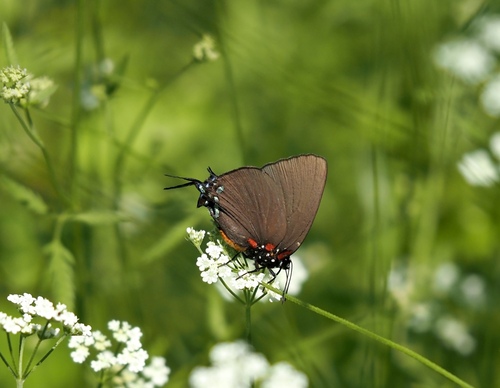
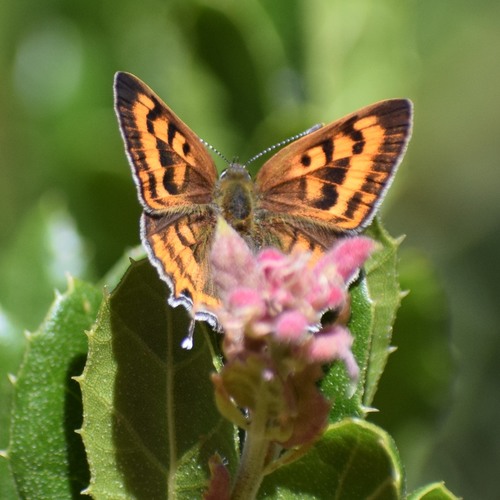
Spring Azure
Daily sighting probability ~10% · With luck
at San Francisco

In 3 days ~20% in a week ~30%

267 Verified sightings at San Francisco
603 In all 18 parks From 2019 to 2026
June Best month
☀️ Diurnal When it's spotted

About the Spring Azure

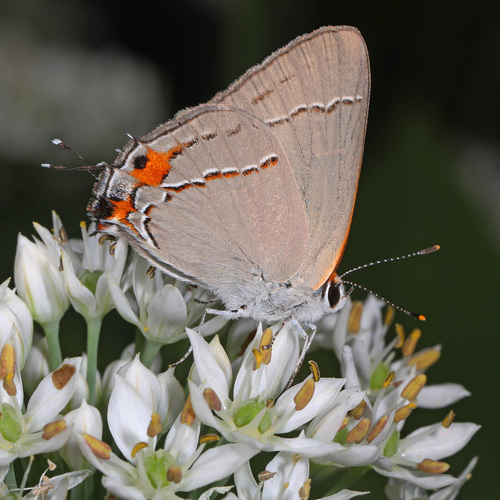
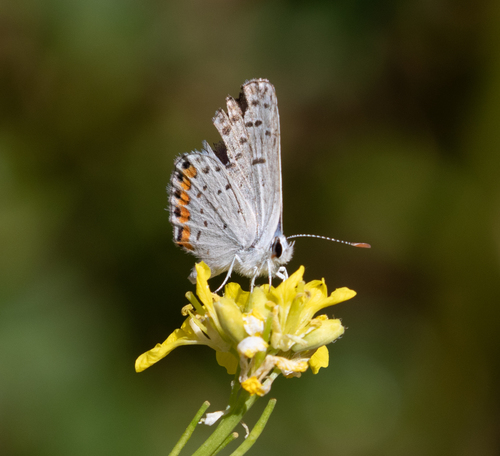
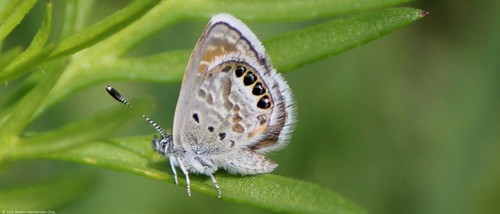
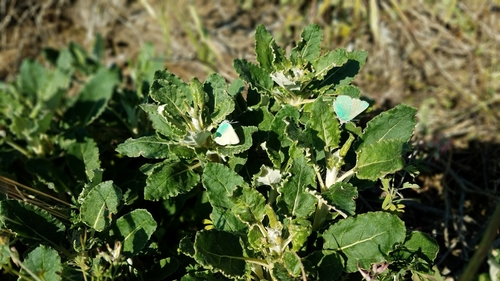
Celastrina ladon, the spring azure or echo blue, is a butterfly of the family Lycaenidae. It is found in North America from Alaska and Canada south of the tundra, through most of the United States except the Texas coast, southern plain and peninsula Florida; south in the mountains to Colombia, also on Molokai island, Hawaii.

Since the publication of a monograph on the Lycaenopsis group of lycaenid genera in 1983 by Eliot & Kawazoe, C. ladon has been considered by some taxonomic authorities to be a subspecies of C. argiolus (Linnaeus, 1758). Other authorities still consider C. ladon and related species C. neglecta and C. serotina to be "full" species.

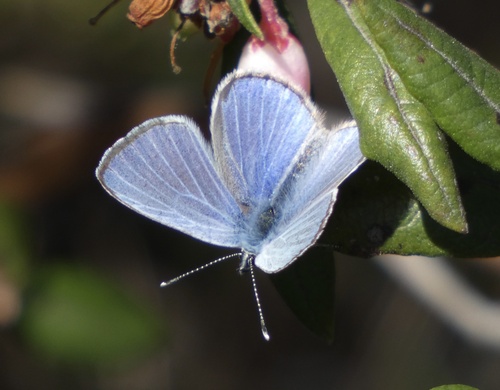
Its wingspan is 22–35 millimetres (0.87–1.38 in). The metallic blue wings have a black margin in females. The undersides of the wings are white with speckles. Wikipedia →

Global Distribution

Parks Where Found

# Park Country Daily sighting probability
1 Sequoia and Kings Canyon National Parks 🇺🇸 United States
~30%
2 Yosemite National Park 🇺🇸 United States
~20%
3 Channel Islands National Park 🇺🇸 United States
~20%
4 Redwood National Park 🇺🇸 United States
~20%
5 Guadalupe Mountains National Park 🇺🇸 United States
~10%
6 Los Quetzales National Park 🇨🇷 Costa Rica
~10%
7 Grand Canyon National Park 🇺🇸 United States
~10%
8 Olympic National Park 🇺🇸 United States
~10%
9 Saguaro National Park 🇺🇸 United States
~10%
10 Great Smoky Mountains National Park 🇺🇸 United States
~10%
11 Great Bear Rainforest 🇨🇦 Canada
~10%
12 Grand Teton National Park 🇺🇸 United States
~10%
13 Rocky Mountain National Park 🇺🇸 United States
~10%
14 Cumbres de Monterrey National Park 🇲🇽 Mexico
~10%
15 Zion National Park 🇺🇸 United States
~10%
16 Pacific Rim National Park Reserve 🇨🇦 Canada
~10%
17 Glacier National Park 🇺🇸 United States
~10%
18 Big Bend National Park 🇺🇸 United States
<5%

Cities Where Found

# City Country Daily sighting probability
1 Toluca 🇲🇽 México
~10%
2 Seattle 🇺🇸 United States
~10%
3 Mexico City 🇲🇽 México
~10%
4 San Francisco 🇺🇸 United States
~10%
5 Vancouver 🇨🇦 Canada
<5%
6 Philadelphia 🇺🇸 United States
<5%
7 Portland 🇺🇸 United States
<5%
8 Chicago 🇺🇸 United States
<5%
9 Boston 🇺🇸 United States
<5%
10 Washington 🇺🇸 United States
<5%

Before you go

What are the chances of seeing a Spring Azure in San Francisco?

With luck

About 10% of wildlife watchers report a Spring Azure sighting in San Francisco on a given day, based on 267 verified sightings from GBIF citizen-science data. It is the 75th most-seen of the 737 insects we can rate there. Over three days the chance rises to about 20%, and over a week to about 30%, if each day is a fresh chance.

When is the best time to see a Spring Azure in San Francisco?

March to July

In those months about 10% of wildlife watchers report a Spring Azure in San Francisco on a given day, against under 5% in August to February, the lowest months.

What time of day is best to see a Spring Azure?

Between 11 am and 2 pm

Across all the parks we cover, that three-hour window holds the most Spring Azure sightings with a recorded time, and about 9 in 10 of them come between 6 am and 6 pm: it is a daytime animal.

Is San Francisco the best place to see a Spring Azure?

Among the best

Of the 12 cities where we can rate Spring Azure sightings, San Francisco ranks 4th at about 10%, level with the leaders once rounded. The best odds are in Toluca (México, about 10%), Seattle (United States, about 10%) and Mexico City (México, about 10%).

Which relatives of the Spring Azure live in San Francisco?

Same family: Lycaenidae

The closest relatives of the Spring Azure that you can see in San Francisco (family Lycaenidae, Gossamer-winged Butterflies) are Gray Hairstreak (about 10%), Acmon Blue (about 10%) and Western Pygmy-Blue (about 10%), with each one's daily chance of a sighting.

Where does the Spring Azure sighting chance come from?

GBIF citizen-science records

It is estimated from how often the Spring Azure is recorded against all the insects logged in San Francisco (267 verified sightings), calibrated against known sighting rates. Figures are rounded to the nearest 10% because citizen-science data supports honest approximations, not decimals, and months with records from fewer than five people show "—". How it works.

← Back to San Francisco