Rambur's Forktail

Rambur's Forktail

Ischnura ramburii

Daily sighting probability ~20% · Possible
at Santo Domingo

In 3 days ~50% in a week ~80%

18 Verified sightings at Santo Domingo
776 In all 12 parks From 2019 to 2026
December Best month
☀️ Diurnal When it's spotted

About the Rambur's Forktail

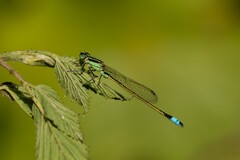
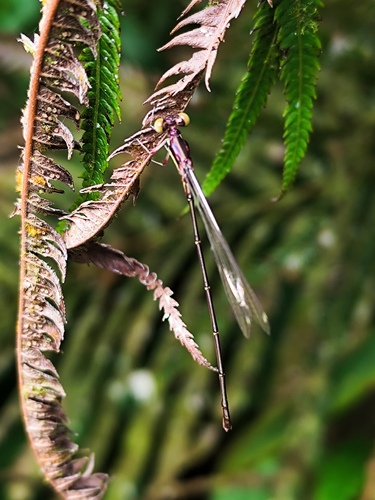
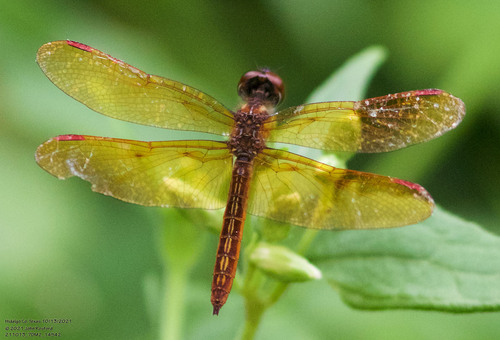
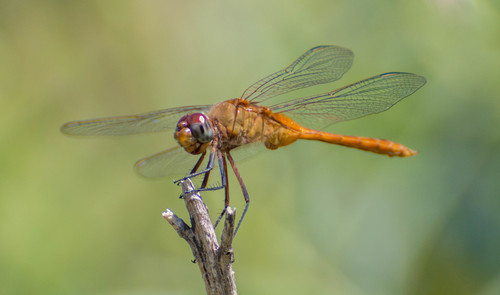
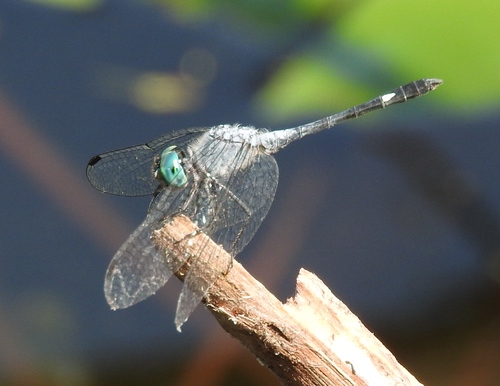
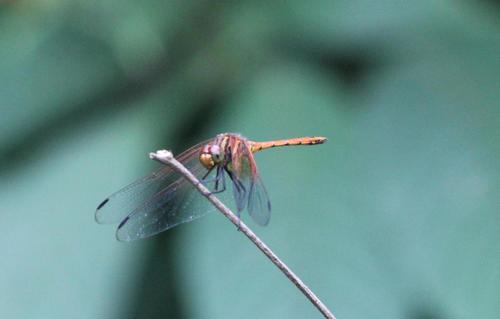
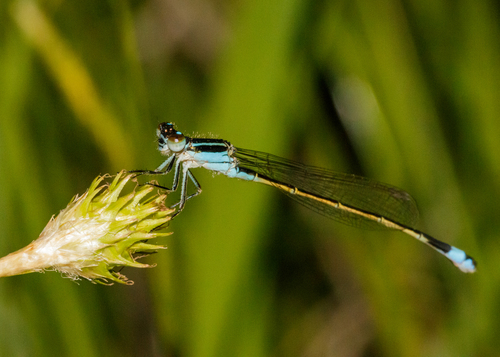
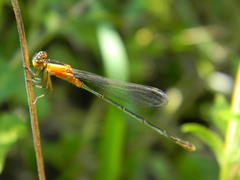
Rambur's forktail (Ischnura ramburii) is a member of the damselfly family Coenagrionidae. Males are green with blue on abdominal segments 8 and 9. Females are orange-red, olive green, or similar to males in coloration. This is the most widespread New World Ischnura, occurring throughout the Americas from the United States to Chile, as well as Hawaii and the Antilles. The damselfly is a beneficial insect which is a predator of mosquitos and other insects and is not harmful to humans.

Ponds, lakes, marshes, and slow streams with vegetation and sunlight are its main habitat. Damselfly nymphs never live in salt water, but I. ramburii nymphs have been observed in brackish and even sulphurous waters. John Edward Lloyd qualified the mating of this species as "enigmatic": the male grasps the female's head with the terminal appendages of its abdomen while the female seeks and absorbs the sperm with its gonopore. He hypothesised that this "wheel" could have evolved in order to prevent females from escaping during the copulation.

Edmond de Sélys Longchamps named this damselfly in honor of Jules Pierre Rambur, an entomologist 12 years his senior. Rambur... Wikipedia →
Global Distribution

Parks Where Found

# Park Country Daily sighting probability
1 Everglades National Park 🇺🇸 United States
~30%
2 Big Cypress National Preserve 🇺🇸 United States
~30%
3 Merritt Island National Wildlife Refuge 🇺🇸 United States
~30%
4 Ría Lagartos Biosphere Reserve 🇲🇽 Mexico
~20%
5 Biotopo Cerro Cahuí 🇬🇹 Guatemala
~20%
6 Lago de Yojoa 🇭🇳 Honduras
~10%
7 Cerro Azul Meámbar National Park 🇭🇳 Honduras
~10%
8 Padre Island National Seashore 🇺🇸 United States
~10%
9 Big Bend National Park 🇺🇸 United States
~10%
10 Saguaro National Park 🇺🇸 United States
~10%
11 Soberanía National Park 🇵🇦 Panama
~10%
12 Monteverde Cloud Forest Reserve 🇨🇷 Costa Rica
<5%

Cities Where Found

# City Country Daily sighting probability
1 Santo Domingo 🇩🇴 Dominican Republic
~20%
2 Miami 🇺🇸 United States
~20%
3 Orlando 🇺🇸 United States
~10%
4 Houston 🇺🇸 United States
~10%
5 Austin 🇺🇸 United States
~10%
6 Lima 🇵🇪 Peru
~10%
7 Dallas 🇺🇸 United States
~10%
8 Phoenix 🇺🇸 United States
~10%
9 Mesa 🇺🇸 United States
~10%
10 San Antonio 🇺🇸 United States
<5%

Before you go

What are the chances of seeing a Rambur's Forktail in Santo Domingo?

Possible

About 20% of wildlife watchers report a Rambur's Forktail sighting in Santo Domingo on a given day, based on 18 verified sightings from GBIF citizen-science data. It is the 16th most-seen of the 74 insects we can rate there. Over three days the chance rises to about 50%, and over a week to about 80%, if each day is a fresh chance.

When is the best time to see a Rambur's Forktail in Santo Domingo?

December

In that month about 40% of wildlife watchers report a Rambur's Forktail in Santo Domingo on a given day, against under 5% in May and August–September, the lowest months.

What time of day is best to see a Rambur's Forktail?

Between noon and 3 pm

Across all the parks we cover, that three-hour window holds the most Rambur's Forktail sightings with a recorded time, and about 9 in 10 of them come between 6 am and 6 pm: it is a daytime animal.

Is Santo Domingo the best place to see a Rambur's Forktail?

Yes

Of the 15 cities where we can rate Rambur's Forktail sightings, Santo Domingo has the highest daily chance: about 20%. Next come Miami (United States, about 20%) and Orlando (United States, about 10%).

Where does the Rambur's Forktail sighting chance come from?

GBIF citizen-science records

It is estimated from how often the Rambur's Forktail is recorded against all the insects logged in Santo Domingo (18 verified sightings), calibrated against known sighting rates. Figures are rounded to the nearest 10% because citizen-science data supports honest approximations, not decimals, and months with records from fewer than five people show "—". How it works.

← Back to Santo Domingo