Bordered Patch

Bordered Patch

Chlosyne lacinia

Daily sighting probability ~10% · With luck
at Tegucigalpa

In 3 days ~40% in a week ~60%

6 Verified sightings at Tegucigalpa
339 In all 10 parks From 2019 to 2026
January Best month
☀️ Diurnal When it's spotted

About the Bordered Patch

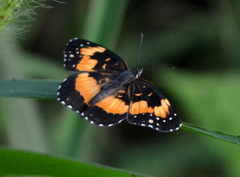
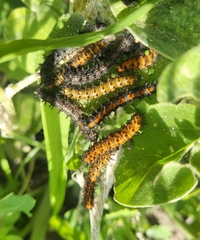
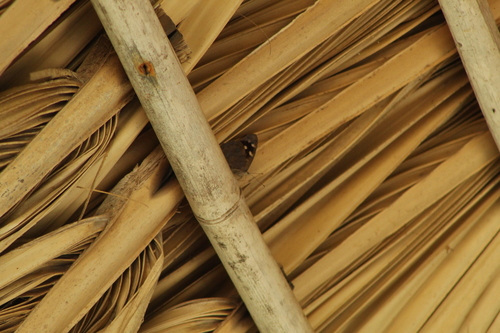
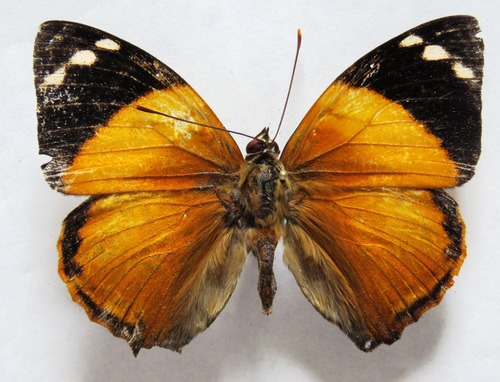
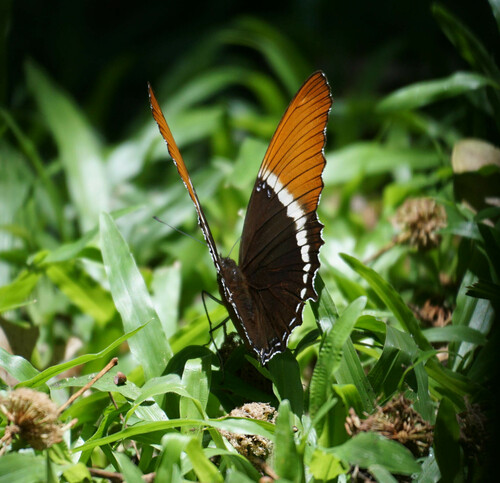
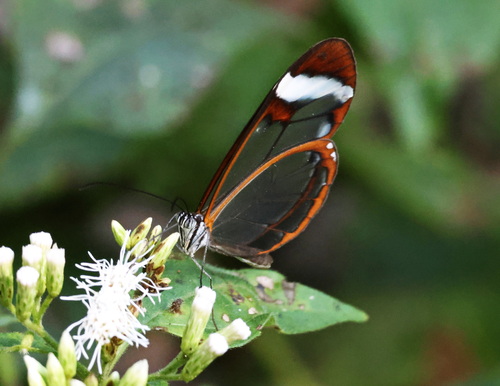
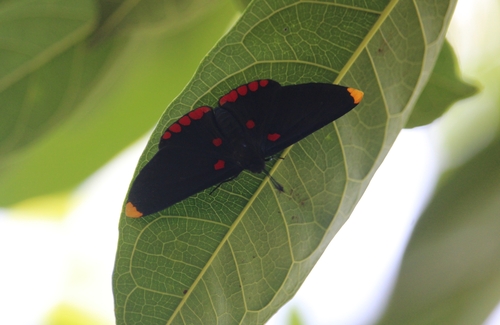
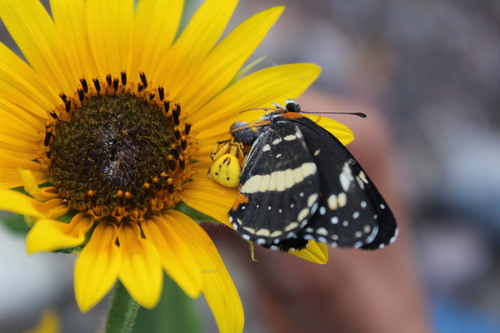
Chlosyne lacinia, the bordered patch or sunflower patch, is a North and South American butterfly in the family Nymphalidae. The bordered patch is an extremely variable butterfly. The upperside of the wings is mainly black with the forewing having rows of white and/or yellow-orange spots of varying sizes. There is usually one whitish spot in the forewing cell. The hindwing has many color variations. Those variations can be: almost completely black to having some red postmedian spots to having a few rows of white postmedian spots to having an all red-orange discal area to having a yellow-orange postmedian band of varying width. The underside of the wings is just as variable as the upperside. It varies from having a few rows of white and red spots to having a yellow-white hindwing median band of varying width to the underside being mostly golden yellow with large yellow-orange spots and a thick golden-yellow median band. All of these variations have a red spot near the hindwing tornus. Its wingspan ranges from 1+1⁄4 to 1+7⁄8 inches (32 to 48 mm).

Similar species in the bordered patch's range include the crimson patch (Chlosyne janais), the rosita... Wikipedia →

Global Distribution

Parks Where Found

# Park Country Daily sighting probability
1 Ría Lagartos Biosphere Reserve 🇲🇽 Mexico
~30%
2 Cumbres de Monterrey National Park 🇲🇽 Mexico
~20%
3 Iguazú National Park 🇦🇷 Argentina
~20%
4 Big Bend National Park 🇺🇸 United States
~20%
5 Lago de Yojoa 🇭🇳 Honduras
~10%
6 Iguaçu National Park 🇧🇷 Brazil
~10%
7 Cerro Azul Meámbar National Park 🇭🇳 Honduras
~10%
8 Sian Ka'an Biosphere Reserve 🇲🇽 Mexico
~10%
9 Saguaro National Park 🇺🇸 United States
~10%
10 Tijuca National Park 🇧🇷 Brazil
<5%

Cities Where Found

# City Country Daily sighting probability
1 Valencia 🇻🇪 Venezuela
~40%
2 Santa Cruz de la Sierra 🇧🇴 Bolivia
~30%
3 San Antonio 🇺🇸 United States
~20%
4 Austin 🇺🇸 United States
~20%
5 Monterrey 🇲🇽 México
~20%
6 Torreón 🇲🇽 México
~20%
7 Campo Grande 🇧🇷 Brazil
~20%
8 San Pedro Sula 🇭🇳 Honduras
~20%
9 Tegucigalpa 🇭🇳 Honduras
~10%
10 Goiânia 🇧🇷 Brazil
~10%

Before you go

What are the chances of seeing a Bordered Patch in Tegucigalpa?

With luck

About 10% of wildlife watchers report a Bordered Patch sighting in Tegucigalpa on a given day, based on 6 verified sightings from GBIF citizen-science data. It is the 19th most-seen of the 30 insects we can rate there. Over three days the chance rises to about 40%, and over a week to about 60%, if each day is a fresh chance.

When is the best time to see a Bordered Patch in Tegucigalpa?

January, May and July

In those months about 30% of wildlife watchers report a Bordered Patch in Tegucigalpa on a given day, against under 5% in February–April, June, August–September and November–December, the lowest months.

What time of day is best to see a Bordered Patch?

Between 10 am and 1 pm

Across all the parks we cover, that three-hour window holds the most Bordered Patch sightings with a recorded time, and about 9 in 10 of them come between 6 am and 6 pm: it is a daytime animal.

Is Tegucigalpa the best place to see a Bordered Patch?

9th of 24

Of the 24 cities where we can rate Bordered Patch sightings, Tegucigalpa ranks 9th at about 10%. The best odds are in Valencia (Venezuela, about 40%), Santa Cruz de la Sierra (Bolivia, about 30%) and San Antonio (United States, about 20%).

Which relatives of the Bordered Patch live in Tegucigalpa?

Same family: Nymphalidae

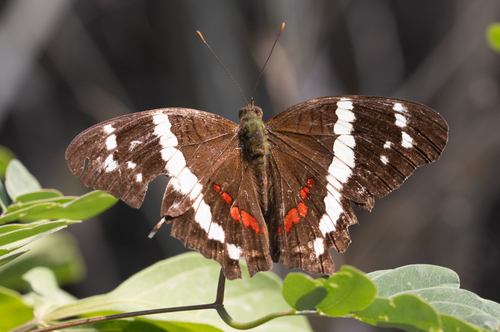
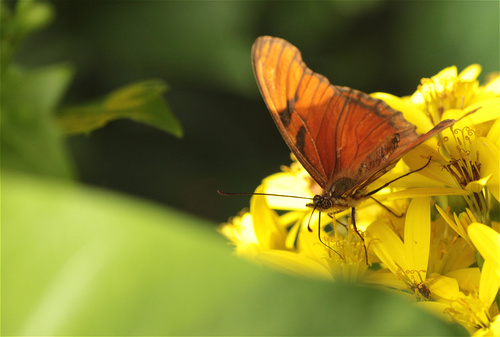
The closest relatives of the Bordered Patch that you can see in Tegucigalpa (family Nymphalidae, Brush-footed Butterflies) are Banded Peacock (about 20%), Juno Silverspot (about 20%) and Dingy Purplewing (about 20%), with each one's daily chance of a sighting.

Where does the Bordered Patch sighting chance come from?

GBIF citizen-science records

It is estimated from how often the Bordered Patch is recorded against all the insects logged in Tegucigalpa (6 verified sightings), calibrated against known sighting rates. Figures are rounded to the nearest 10% because citizen-science data supports honest approximations, not decimals, and months with records from fewer than five people show "—". How it works.
← Back to Tegucigalpa