Yellow Admiral
Daily sighting probability ~10% · With luck
at Cradle Mountain-Lake St Clair National Park

In 3 days ~40% in a week ~70%

7 Verified sightings at Cradle Mountain-Lake St Clair National Park From 2019 to 2026
283 In all 10 parks
November Best month
☀️ Diurnal When it's spotted

About the Yellow Admiral

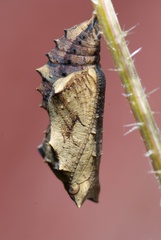
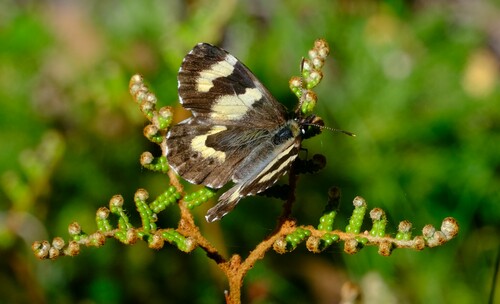
The yellow admiral or Australian admiral (Vanessa itea) is a butterfly native to Australia, New Zealand, Lord Howe Island, and Norfolk Islands. The Māori name is kahukōwhai, which means "yellow cloak". The yellow admiral is a member of the family Nymphalidae, the subfamily Nymphalinae and the tribe Nymphalini.

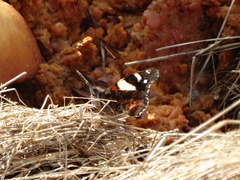
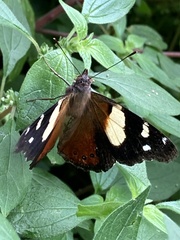
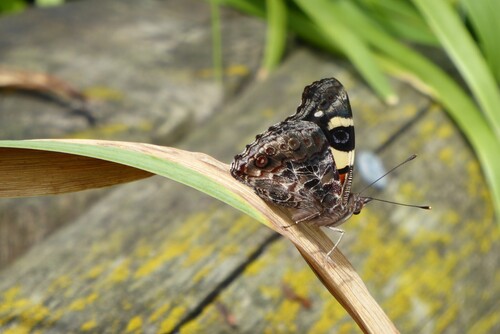
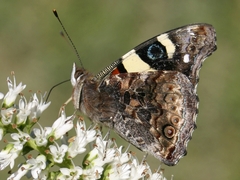
The yellow admiral is a medium-sized butterfly, with a variable wingspan of 48 to 50 mm in Tasmania, and 48 to 55 mm in New Zealand. The upperside of the forewings are dark brown to black toward the outer edges, with three small white patches and a wide, bright yellow bar, and dull red nearer the body. The rear wings are dull red with a black border, and a row of black circles with light blue centres near the edge.

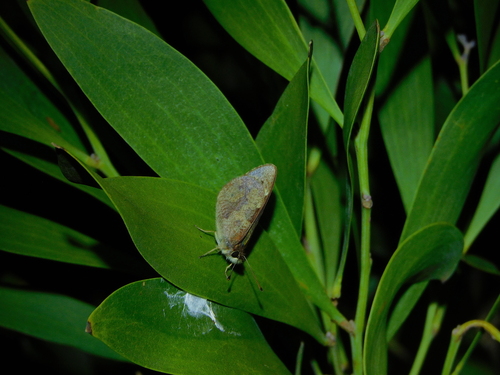
The underwings are very different – the rear wing is various shades of brown with cryptic, irregular markings; the underside of the forewing has a blue eyespot on a black background that is highlighted by a yellow area above and below.

Yellow admirals are relatively common throughout their range wherever their food plants occur. They prefer open country, wastelands and gardens where the stinging nettles Urtica incisa... Wikipedia →
Global Distribution

Parks Where Found

# Park Country Daily sighting probability
1 Wilsons Promontory National Park 🇦🇺 Australia
~30%
2 Great Otway National Park 🇦🇺 Australia
~20%
3 Kosciuszko National Park 🇦🇺 Australia
~20%
4 Lamington National Park 🇦🇺 Australia
~20%
5 Grampians National Park 🇦🇺 Australia
~20%
6 Blue Mountains National Park 🇦🇺 Australia
~20%
7 Rottnest Island 🇦🇺 Australia
~10%
8 Cradle Mountain-Lake St Clair National Park 🇦🇺 Australia
~10%
9 Abel Tasman National Park 🇳🇿 New Zealand
~10%
10 Royal National Park 🇦🇺 Australia
~10%

Cities Where Found

# City Country Daily sighting probability
1 Melbourne 🇦🇺 Australia
~20%
2 Auckland 🇳🇿 New Zealand
~10%
3 Sydney 🇦🇺 Australia
~10%
4 Perth 🇦🇺 Australia
~10%
5 Hobart 🇦🇺 Australia
~10%
6 Brisbane 🇦🇺 Australia
<5%

Before you go

What are the chances of seeing a Yellow Admiral in Cradle Mountain-Lake St Clair National Park?

With luck

About 10% of wildlife watchers report a Yellow Admiral sighting in Cradle Mountain-Lake St Clair National Park on a given day, based on 7 verified sightings from GBIF citizen-science data from 2019 to 2026. It is the 16th most-seen of the 20 insects we can rate there. Over three days the chance rises to about 40%, and over a week to about 70%, if each day is a fresh chance.

When is the best time to see a Yellow Admiral in Cradle Mountain-Lake St Clair National Park?

March and November

In those months about 30% of wildlife watchers report a Yellow Admiral in Cradle Mountain-Lake St Clair National Park on a given day, against under 5% in February, April–October and December, the lowest months.

What time of day is best to see a Yellow Admiral?

Between noon and 3 pm

Across all the parks we cover, that three-hour window holds the most Yellow Admiral sightings with a recorded time, and about 9 in 10 of them come between 6 am and 6 pm: it is a daytime animal.

Which relatives of the Yellow Admiral live in Cradle Mountain-Lake St Clair National Park?

Same family: Nymphalidae

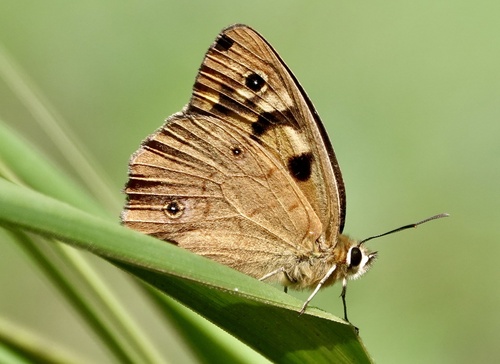
The closest relatives of the Yellow Admiral that you can see in Cradle Mountain-Lake St Clair National Park (family Nymphalidae, Brush-footed Butterflies) are Hobart Brown (about 30%), Delicate Xenica (about 20%) and Shouldered Brown (about 20%), with each one's daily chance of a sighting.

Where does the Yellow Admiral sighting chance come from?

GBIF citizen-science records

It is estimated from how often the Yellow Admiral is recorded against all the insects logged in Cradle Mountain-Lake St Clair National Park (7 verified sightings from 2019 to 2026), calibrated against known sighting rates. Figures are rounded to the nearest 10% because citizen-science data supports honest approximations, not decimals, and months with records from fewer than five people show "—". How it works.

← Back to Cradle Mountain-Lake St Clair National Park