Completed
Bullet Ant
Paraponera clavata
- KingdomAnimalia (Animals)
- PhylumArthropoda (Arthropods)
- ClassInsecta (Insects)
- OrderHymenoptera (Ants, Bees, Wasps, and Sawflies)
- FamilyFormicidae (Ants)
- GenusParaponera
- SpeciesParaponera clavata (Bullet Ant)
In 3 days ~50% in a week ~80%
7 Verified sightings at Darién National Park From 2019 to 2026
1,371 In all 14 parks
April Best month
☀️🌙 Day & Night When it's spotted

Completed
About the Bullet Ant
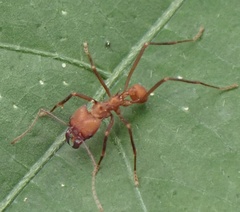
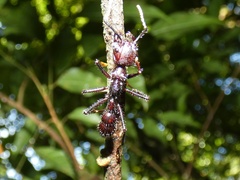
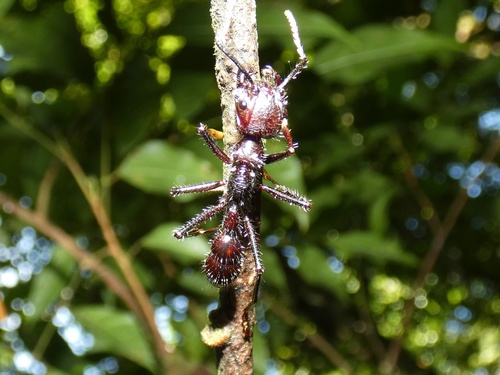
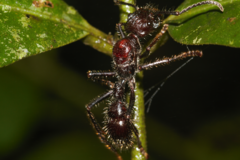
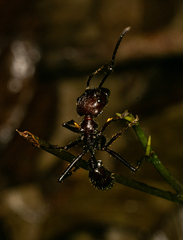
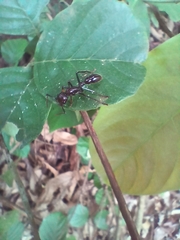
Paraponera clavata, commonly known as the bullet ant, is a species of ant known for its extremely painful sting. It inhabits humid lowland rainforests in Central and South America. The specific epithet of the ant, clavata, means "club-shaped". The generic name, Paraponera, translates to "near-Ponera". Because of its fearsome reputation, the ant has several Native American, Spanish, and Portuguese local names in different geographical areas; perhaps the best-known of these is the Venezuelan nickname hormiga veinticuatro (the "24 ant" or "24-hour ant"), referring to the full day of pain that follows being stung; it can also refer to the time it takes to kill a human. In Brazil, the Portuguese names given by locals include formiga cabo verde, formigão, or formigão-preto (big black ant); Native American–derived names include tocandira, and tocanquibira, from the Tupi–Guarani tuca-ndy, which translates to "the one wounding deeply". Other names by which it is called include chacha, cumanagata, munuri, siámña, and yolosa. In Costa Rica, P. clavata is known as bala, meaning "bullet". P. clavata also has several common names in English; it is most commonly known as the bullet... Wikipedia →
Recent sightings of Bullet Ant in Darién National Park
LIVEiNaturalistGlobal Distribution
Parks Where Found
| # | Park | Country | Daily sighting probability |
|---|---|---|---|
| 1 | Braulio Carrillo National Park | 🇨🇷 Costa Rica | |
| 2 | Yasuní National Park | 🇪🇨 Ecuador | |
| 3 | Manu National Park | 🇵🇪 Peru | |
| 4 | Cuyabeno Wildlife Reserve | 🇪🇨 Ecuador | |
| 5 | Tambopata National Reserve | 🇵🇪 Peru | |
| 6 | Brownsberg Nature Park | 🇸🇷 Suriname | |
| 7 | Gandoca-Manzanillo Wildlife Refuge | 🇨🇷 Costa Rica | |
| 8 | Darién National Park | 🇵🇦 Panama | |
| 9 | Soberanía National Park | 🇵🇦 Panama | |
| 10 | Chagres National Park | 🇵🇦 Panama | |
| 11 | Tortuguero National Park | 🇨🇷 Costa Rica | |
| 12 | Arenal Volcano National Park | 🇨🇷 Costa Rica | |
| 13 | Cahuita National Park | 🇨🇷 Costa Rica | |
| 14 | La Amistad International Park (Panama) | 🇵🇦 Panama |
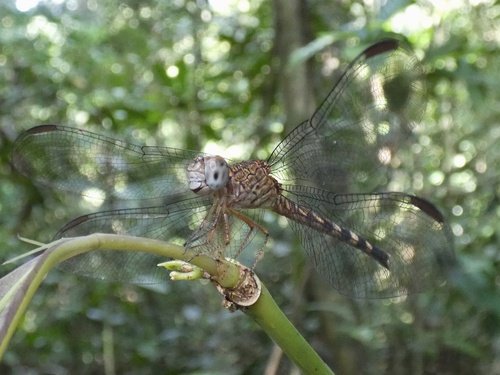
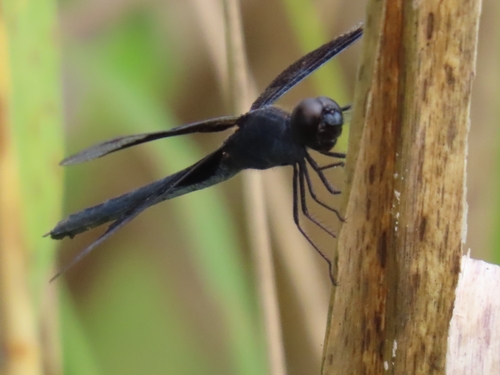
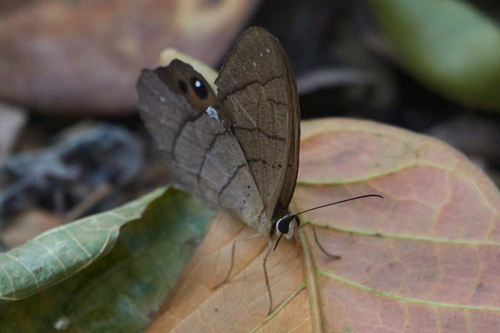
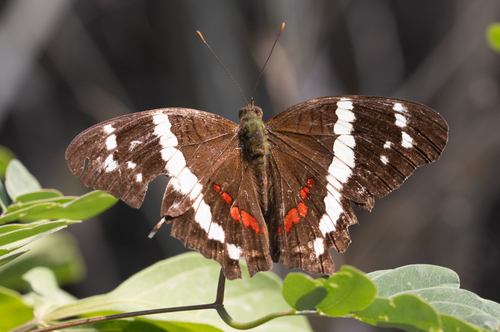
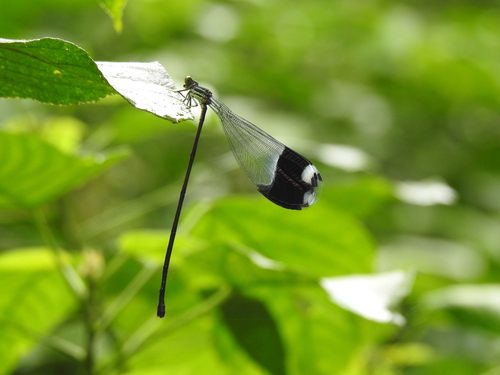
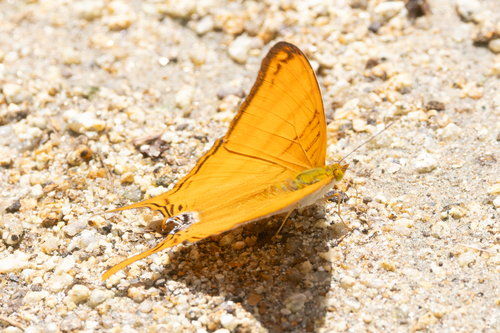
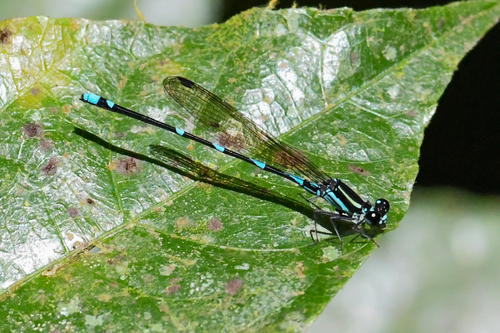
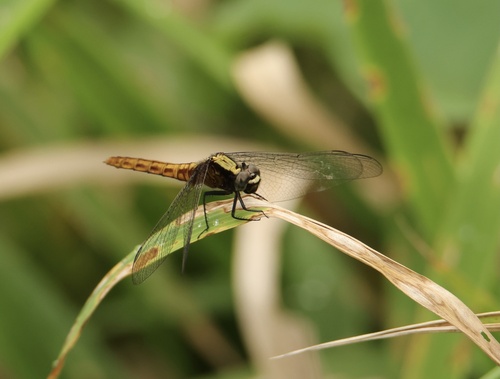
Closest Relatives at Darién National Park
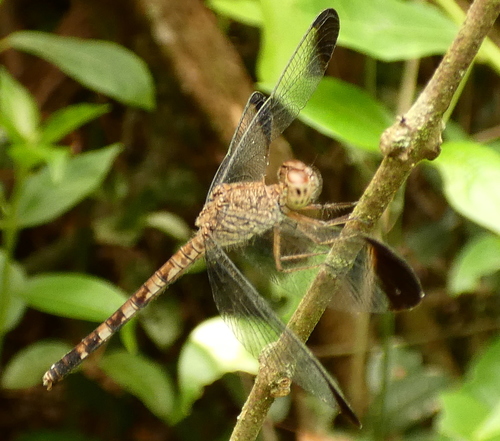
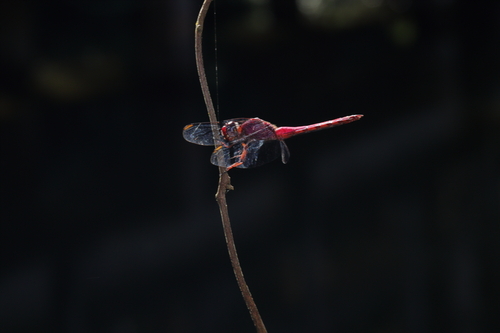
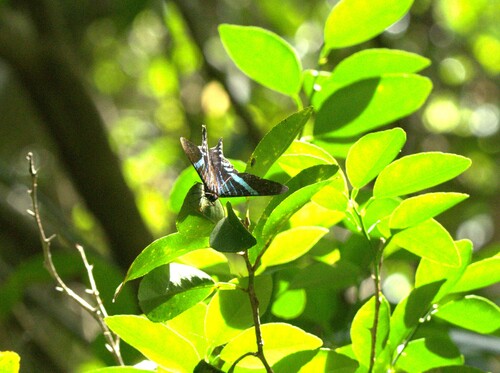
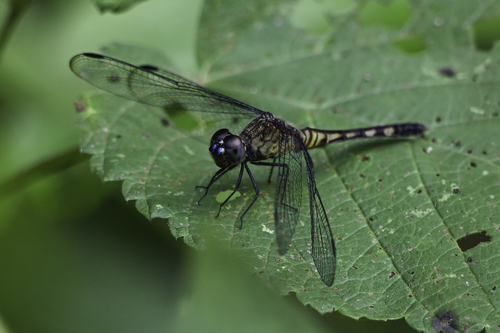
No species of the same family or order lives in Darién National Park, so these are its closest relatives here: other insects.
Before you go
What are the chances of seeing a Bullet Ant in Darién National Park?
Possible
About 20% of wildlife watchers report a Bullet Ant sighting in Darién National Park on a given day, based on 7 verified sightings from GBIF citizen-science data from 2019 to 2026. It is the 6th most-seen of the 16 insects we can rate there. Over three days the chance rises to about 50%, and over a week to about 80%, if each day is a fresh chance.
When is the best time to see a Bullet Ant in Darién National Park?
April, July and November–December
In those months about 30% of wildlife watchers report a Bullet Ant in Darién National Park on a given day, against under 5% in January, May and August, the lowest months. September has too few records to rate.
What time of day is best to see a Bullet Ant?
Between 7 and 10 pm
Across all the parks we cover, that three-hour window holds the most Bullet Ant sightings with a recorded time, and about 6 in 10 of them come between 6 am and 6 pm: it is seen both by day and at night.
Is Darién National Park the best place to see a Bullet Ant?
8th of 14
Of the 14 parks where we can rate Bullet Ant sightings, Darién National Park ranks 8th at about 20%. The best odds are in Braulio Carrillo National Park (Costa Rica, about 70%), Yasuní National Park (Ecuador, about 50%) and Manu National Park (Peru, about 50%). All parks ranked.
Where does the Bullet Ant sighting chance come from?
GBIF citizen-science records
It is estimated from how often the Bullet Ant is recorded against all the insects logged in Darién National Park (7 verified sightings from 2019 to 2026), calibrated against known sighting rates. Figures are rounded to the nearest 10% because citizen-science data supports honest approximations, not decimals, and months with records from fewer than five people show "—". How it works.
