Say's Phoebe

Say's Phoebe

Sayornis saya

Silhouette: Emily Willoughby · PhyloPic

LCLeast ConcernNTVUENCR
Daily sighting probability ~60% · Likely
at Death Valley National Park

In 3 days ~90% in a week >90%

891 Verified sightings at Death Valley National Park From 2019 to 2026
9,145 In all 23 parks
September Best month
☀️ Diurnal When it's spotted

About the Say's Phoebe

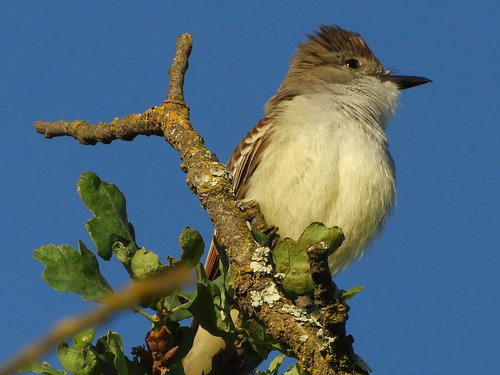
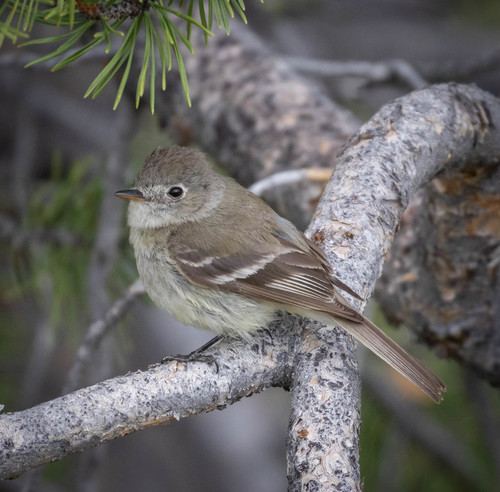
Say's phoebe (Sayornis saya) is a passerine bird in the tyrant flycatcher family, Tyrannidae. A common bird across western North America, it prefers dry, desolate areas. It was named for Thomas Say, an American naturalist.

Say's phoebe was formally described in 1825 by the French naturalist Charles Lucien Bonaparte from a specimen collected near Pueblo, Colorado. He coined the binomial name Muscicapa saya where the specific epithet was chosen to honour the American naturalist Thomas Say. The species is now placed in the genus Sayornis that was introduced by Bonaparte in 1854.

Two subspecies are recognised: It is gray-brown above with a black tail and buffy cinnamon below, becoming more orange around the vent. The tail is long and the primaries end just past the rump on resting birds. The wings seem pale in flight and resemble a female mountain bluebird. The juvenile is similar to adult, but has buffy orange to whitish wingbars and a yellow gape... Wikipedia →

Sounds

Call0:55

United States · 2023

© Richard E. Webster · XC1078492 · CC BY-NC-SA 4.0

Dawn song0:43

United States · 2025

© David Tattersley · XC1000433 · CC BY-NC-SA 4.0

Begging call0:27

United States · 2022

Anne · XC728995 · CC0

Global Distribution

Parks Where Found

# Park Country Daily sighting probability
1 Death Valley National Park 🇺🇸 United States
~60%
2 Badlands National Park 🇺🇸 United States
~50%
3 Big Bend National Park 🇺🇸 United States
~40%
4 Joshua Tree National Park 🇺🇸 United States
~40%
5 Guadalupe Mountains National Park 🇺🇸 United States
~20%
6 Zion National Park 🇺🇸 United States
~20%
7 Channel Islands National Park 🇺🇸 United States
~20%
8 El Vizcaíno Biosphere Reserve 🇲🇽 Mexico
~10%
9 Bahía de Loreto National Park 🇲🇽 Mexico
~10%
10 Grand Canyon National Park 🇺🇸 United States
~10%
11 Cumbres de Monterrey National Park 🇲🇽 Mexico
~10%
12 Saguaro National Park 🇺🇸 United States
~10%
13 Rocky Mountain National Park 🇺🇸 United States
<5%
14 Redwood National Park 🇺🇸 United States
<5%
15 Kluane National Park 🇨🇦 Canada
<5%
16 Elk Island National Park 🇨🇦 Canada
<5%
17 Denali National Park 🇺🇸 United States
<5%
18 Celestún Biosphere Reserve 🇲🇽 Mexico
<5%
19 Yosemite National Park 🇺🇸 United States
<5%
20 Yellowstone National Park 🇺🇸 United States
<5%
21 Banff National Park 🇨🇦 Canada
<5%
22 Sequoia and Kings Canyon National Parks 🇺🇸 United States
<5%
23 Grand Teton National Park 🇺🇸 United States
<5%

Cities Where Found

# City Country Daily sighting probability
1 Mesa 🇺🇸 United States
~30%
2 Las Vegas 🇺🇸 United States
~30%
3 Phoenix 🇺🇸 United States
~20%
4 Denver 🇺🇸 United States
~20%
5 León 🇲🇽 México
~20%
6 San Diego 🇺🇸 United States
~20%
7 Los Angeles 🇺🇸 United States
~20%
8 Toluca 🇲🇽 México
~10%
9 Tijuana 🇲🇽 México
~10%
10 San Francisco 🇺🇸 United States
~10%

Before you go

What are the chances of seeing a Say's Phoebe in Death Valley National Park?

Likely

About 60% of wildlife watchers report a Say's Phoebe sighting in Death Valley National Park on a given day, based on 891 verified sightings from GBIF citizen-science data from 2019 to 2026. It is the 3rd most-seen of the 213 birds we can rate there. Over three days the chance rises to about 90%, and over a week to over 90%, if each day is a fresh chance.

When is the best time to see a Say's Phoebe in Death Valley National Park?

June, September–October and December

In those months about 70% of wildlife watchers report a Say's Phoebe in Death Valley National Park on a given day, against about 30% in July, the lowest month.

What time of day is best to see a Say's Phoebe?

Between 8 and 11 am

Across all the parks we cover, that three-hour window holds the most Say's Phoebe sightings with a recorded time, and about 8 in 10 of them come between 6 am and 6 pm: it is a daytime animal.

Is Death Valley National Park the best place to see a Say's Phoebe?

Yes

Of the 23 parks where we can rate Say's Phoebe sightings, Death Valley National Park has the highest daily chance: about 60%. Next come Badlands National Park (United States, about 50%) and Big Bend National Park (United States, about 40%). All parks ranked.

Where does the Say's Phoebe sighting chance come from?

GBIF citizen-science records

It is estimated from how often the Say's Phoebe is recorded against all the birds logged in Death Valley National Park (891 verified sightings from 2019 to 2026), calibrated against known sighting rates. Figures are rounded to the nearest 10% because citizen-science data supports honest approximations, not decimals, and months with records from fewer than five people show "—". How it works.

← Back to Death Valley National Park